10/27/2013

smog, black smog

[ . BACK to WORLDKIGO TOP . ]
:::::::::::::::::::::::::::::::::::::::::::::::::::::::::::::::::::::::::::::::::::::::::::::::::::::::

smog, black smog

***** Location: India
***** Season: Autumn
***** Category: Humanity


*****************************
Explanation

smog (from burning little straw)
in Hindi Language - kaala dhua or dhua

In most of North Indian fields at the end of autumn or early winter, corn is harvested leaving a little portion of straw above the fields and since they could flatten the tires of tractors, the farmers burn them down. Later they plough the fields with their tractors. The smog is seen rising from fields this time.

Neelam Dadhwal


:::::::::::::::::::::::::::::::::::::::::::::::::::::::::::::::::::::::::::::::::::::::::::::::::::::::


quote
Delhi smog blamed on burning straw
November 2012
Farmers who burn straw are being blamed by officials for causing heavy smog over the Indian capital, Delhi, and sending air pollution way above recommended levels.


The haze was caused by fires in neighbouring states and not due to pollution by vehicles, Chief Minister Sheila Dikshit said.

Environmental groups maintain pollution by vehicles is the main cause.
Winter smogs are common in Delhi, but this year's haze has been severe.
source : www.bbc.co.uk/news


*****************************
Worldwide use


Hawaii

. Vog (Volcanic Smog) .


*****************************
Things found on the way


*****************************
HAIKU


early winter-
smog clears the corn fields
of last straw


Shared by Neelam Dadhwal
Haiku Culture Magazine - 2013


*****************************

Related words


[ . BACK to WORLDKIGO . TOP . ]
:::::::::::::::::::::::::::::::::::::::::::::::::::::::::::::::::::::::::::::::::::::::::::::::::::::::

10/21/2013

sindoor red powder

[ . BACK to WORLDKIGO TOP . ]
:::::::::::::::::::::::::::::::::::::::::::::::::::::::::::::::::::::::::::::::::::::::::::::::::::::::

sindoor red powder

***** Location: India
***** Season: Topic
***** Category: Humanity


*****************************
Explanation

quote
Sindooram (Sanskrit) and Telugu,Tamil,Kannada,Malayalam or Sindoor (Hindustani: सिन्दूर or سندور, Gujarati: સિંદૂર)
is a traditional red or orange-red colored cosmetic powder from India, usually worn by married women along the parting of their hair. Use of sindoor denotes that a woman is married in many Hindu communities, and ceasing to wear it usually implies widowhood. The main component of traditional sindoor is usually vermilion.


Sindoor is traditionally applied at the beginning or completely along the parting-line of a woman’s hair (also called maang) or as a dot on the forehead. Sindoor is the mark of a married woman in Hinduism. Single women wear the dot in different colors ("bindi" in Hindi) but do not apply sindoor in their maang. Hindu widows do not wear sindoor, signifying that their husband is no longer alive.

A version used in Hindu rituals or puja is known as Kumkum. This lends itself to the name of a wedding ritual in some Hindu communities, known as 'Haldi-Kumkum'. The sindoor is first applied to the woman by her husband on the day of her wedding and is called as Sindoor Dana ceremony. After this time she must apply this every day herself in the parting of her hairline.

The wiping off of the sindoor is very significant for a widow. There are many rituals associated with this practice. The most common being the mother-in-law or older sister-in-law wiping off the sindoor when the woman becomes a widow. The widow will break her bangles and remove her bindi as well. Many Hindu women will remove their nose ring and toe rings as well. The parting of hair is symbolic of river of red blood full of life. When the sindoor is removed then the river becomes barren, dry and empty. This custom is prevalent in rural areas and is followed by all castes and social ranks.

The red sindoor is significant for the married woman as she is full of colour. When she becomes a widow she adopts the white dress and removes all colour from her face including the bright red sindoor.

Methods and styles of applying the sindoor vary from personal choice to regional customs. Many new brides will fill the whole hair line with sindoor, while other married women may just apply a red spot at the end of the hair line and forehead. Recently, a triangle shape on the forehead pointing towards the nose, added with a diamond bindi for fashion is being worn by younger women.
© More in the WIKIPEDIA !


:::::::::::::::::::::::::::::::::::::::::::::::::::::::::::::::::::::::::::::::::::::::::::::::::::::::

*****************************
Worldwide use


*****************************
Things found on the way


*****************************
HAIKU


flowering jasmine . . .
the bridegroom puts sindoor
in her hair


Shared by Sandip Chauhan
Haiku Culture Magazine - 2013


*****************************

Related words

***** . Haiku from Punjab .


[ . BACK to WORLDKIGO . TOP . ]
:::::::::::::::::::::::::::::::::::::::::::::::::::::::::::::::::::::::::::::::::::::::::::::::::::::::

Karva Chauth festival

[ . BACK to WORLDKIGO TOP . ]
:::::::::::::::::::::::::::::::::::::::::::::::::::::::::::::::::::::::::::::::::::::::::::::::::::::::

Karva Chauth - Karwa Choudh festival

***** Location: India
***** Season: Autumn
***** Category: Observace


*****************************
Explanation

quote
Karwa Chauth (Hindi: करवा चौथ)
is an annual one-day festival celebrated by Hindu women in North India, the Indian state of Gujarat and parts of Pakistan in which married women fast from sunrise to moonrise for the safety and longevity of their husbands.
The fast is observed in the states of Uttarakhand, Uttar Pradesh, Himachal Pradesh, Jammu and Kashmir, Haryana, Indian Punjab, Rajasthan, Chhattisgarh, Madhya Pradesh and Gujarat.
The festival falls on the fourth day after the full moon, in the Hindu lunisolar calendar month of Kartik. Sometimes, unmarried women observe the fast for their fiancés or desired husbands.


Karwa is another word for pot (a small earthen pot of water) and chauth means 'fourth' in Hindi (a reference to the fact that the festival falls on the fourth day of the dark-fortnight, or krishna paksh, of the month of Kartik).

It is uncertain how the festival originated and how it came to be celebrated only in the northwestern part of the Indian subcontinent. One hypothesis is that military campaigns and long-distance travel usually resumed around the time of the festival, as the area dried and numerous rivers of the region (see Sapta Sindhu) subsided from the effects of the monsoon. Women observed the fast to pray for the safety of their husbands at this time as they ventured away from home. The festival coincides with the wheat-sowing time (i.e., the beginning of the Rabi crop cycle). Big earthen pots in which wheat is stored are sometimes called karwas, so the fast may have begun as a prayer for a good harvest in this predominantly wheat-eating region.

Sikhism and Karwa Chauth
The Story of Queen Veervati
The Legend of Mahabharata
The Legend of Karwa
The Story of Satyavan and Savitri

© More in the WIKIPEDIA !


:::::::::::::::::::::::::::::::::::::::::::::::::::::::::::::::::::::::::::::::::::::::::::::::::::::::


*****************************
Worldwide use


*****************************
Things found on the way


*****************************
HAIKU


Karwa Chauth
is an auspicious day and is mainly celebrated by newly weds in India, specially in Punjab, Haryana, Rajsthan, western UP, although it is observed all over India at the present time. On this day, the fourth day after the Sarad Purnima, the newly weds get dressed up gorgeously, sometimes in the bridal dresses, apply mehendi on their hands and fast from the sunrise to the moonrise in the evening. They offer prayers to Lord Shiva, his consort goddess Parvati and son Lord Ganesh for the long lives of their husbands.

When the moon rises they watch the moon through a sieve, then their husbands and in turn the husbands offer water to break their fasts and give gifts. The newly weds observe this in their mothers homes and the mothers-in-law bring them new dresses, ornaments and gifts.
At present women of all ages and unwed girls for their fiancés celebrate this function, too.

karwa chauth --
newly weds see the moon on
their husband's faces


Shared by Kumarendra Mallick
Haiku Culture Magazine - 2013


*****************************

Related words

. Festivals of India .


[ . BACK to WORLDKIGO . TOP . ]
:::::::::::::::::::::::::::::::::::::::::::::::::::::::::::::::::::::::::::::::::::::::::::::::::::::::

10/18/2013

hijra and eunuch

[ . BACK to WORLDKIGO TOP . ]
:::::::::::::::::::::::::::::::::::::::::::::::::::::::::::::::::::::::::::::::::::::::::::::::::::::::

hijra and eunuch

***** Location: India
***** Season: Topic
***** Category: Humanity


*****************************
Explanation

quote
In the culture of South Asia, hijras /eunuchs are physiological males who have feminine gender identity, adopt feminine gender roles, and wear women's clothing. The Hijra sanaths (Hindi: हिजड़ा, Urdu: ہِجڑا‎, Kannada: ಹಿಜಡಾ, Telugu: హిజ్ర Punjabi ਹਿਜੜਾ) are also known as chhakka in Kannada and Bambaiya Hindi, khusra (ਖੁਸਰਾ) in Punjabi and kojja in Telugu.


In Pakistan, the hijra gender role includes true intersex people (khusras), crossdressers (zenanas) and eunuchs (narnbans).
Hijras are also known as Aravani/Aruvani or Jagappa in other areas.

Hijras/Eunuchs have a long recorded history in the Indian subcontinent, from antiquity, as suggested by the Kama Sutra period, onwards. This history features a number of well-known roles within subcontinental cultures, part gender-liminal, part spiritual, and part survival.

In South Asia, many hijras live in well-defined, organized, all-hijra communities, led by a guru.These communities have sustained themselves over generations by "adopting" young boys who are rejected by, or flee their family of origin. Many work as sex workers for survival.

The word hijra is a Hindustani word, derived from the Arabic root hjr in its sense of "leaving one's tribe," and has been borrowed into Hindi. The Indian usage has traditionally been translated into English as "eunuch" or "hermaphrodite," where "the irregularity of the male genitalia is central to the definition."owever, in general hijras are born with typically male physiology, only a few having been born with male intersex variations. Some Hijras undergo an initiation rite into the hijra community called nirwaan, which refers to the removal of penis, testicles and scrotum.

Since the late 20th century, some hijra activists and Western non-government organizations (NGOs) have been lobbying for official recognition of the hijra as a kind of "third sex" or "third gender," as neither man nor woman.
© More in the WIKIPEDIA !


:::::::::::::::::::::::::::::::::::::::::::::::::::::::::::::::::::::::::::::::::::::::::::::::::::::::

*****************************
Worldwide use


*****************************
Things found on the way


*****************************
HAIKU


autumn breeze —
a group of hijras bless
the newlyweds

springtime son . . .
khusras coerce the family
through dance moves


Shared by Sandip Chauhan
Haiku Culture Magazine - 2013


*****************************

Related words


[ . BACK to WORLDKIGO . TOP . ]
:::::::::::::::::::::::::::::::::::::::::::::::::::::::::::::::::::::::::::::::::::::::::::::::::::::::

Sharad Purnima festival

[ . BACK to WORLDKIGO TOP . ]
:::::::::::::::::::::::::::::::::::::::::::::::::::::::::::::::::::::::::::::::::::::::::::::::::::::::

Sharad Purnima harvest festival

***** Location: India
***** Season: Autumn
***** Category: Humanity


*****************************
Explanation

quote
The Sharad Purnima or Kojaagari Purnima
or Kumar Purnima

is a harvest festival celebrated on the full moon day of the Hindu lunar month of Ashvin (September–October). It marks the end of monsoon.
There is a traditional celebration of the moon and is also called the 'Kaumudi celebration', Kaumudi meaning moonlight.


At night, goddess Lakshmi is worshiped and night vigil is observed. According to a folk-tale, once a king fell on evil days, and was in great financial straits, but then his queen observed this fast and night vigil, and worshiped the goddess of wealth, Laxmi. Consequently, they were blessed by the goddess and they regained their prosperity.

It is also believed that on this day as moon and the earth are very close to each other, the moon rays have certain healing properties of nourishing the body and the soul.

Sharad Purnima is known as Kumar Purnima or Lakshmi Puja in Odisha, an eastern state of India. Kumar Purnima is the full-moon day in the month of Ashvin in October. This autumn festival is one of the most popular and important festivals of Odisha. 'Kumar' or Kartikeya, the handsome son of Shiva was born on this day. He also became the God of War. As young girls always wish for a handsome husband, they propitiate Kumar who was most handsome among the Gods. But, peculiarly enough there is no ritual for the God, instead the Sun and the Moon are worshiped.
© More in the WIKIPEDIA !


:::::::::::::::::::::::::::::::::::::::::::::::::::::::::::::::::::::::::::::::::::::::::::::::::::::::

- quote
The importance of Sharad Purnima
Sharad Purnima, also known as Kojaagari Purnima, is celebrated on a full moon day of the Hindu lunar month of Ashwin. It is also known as Kaumudi (moonlight) celebration, as it is believed that on this day, the Moon through its beams showers amrit or elixir of life on earth. The brightness of the full moon brings special joy, especially after monsoon.


The ‘Sharad’ in Sharad Purnima signifies the ‘Sharad ritu’ (season) of the year. Basically a harvest festival, it also has religious significance. It is believed that whoever worships Goddess Lakshmi on this night and observes a fast is blessed even if Lakshmi Yoga does not exist in his/her horoscope.

Another belief is that Goddess Lakshmi was born on Sharad Purnima. Anyone observing this fast avoids solid foods. Upon completion of the fast, he/she must first taste a mixture of cold milk and rice flakes.

MORE
- source : www.ganeshaspeaks.com


*****************************
Worldwide use


*****************************
Things found on the way


*****************************
HAIKU


Today is autumn fullmoon, Kumaar Purnima, an auspicious day for worshipping the goddess of wealth (Lakshmi) in some regions in India, and for offering prayers to moon in other regions, specially in Odisha on the east coast of India. On this day young girls in Odisha offer prayers to Moon in order to be blessed with young and handsome bridegrooms.
Lovely dishes are prepared, girls sing folksongs and dance delicately.


autumn full moon --
every young man paints her face
in his sky


Shared by Kumarendra Mallick
Haiku Culture Magazine - 2013


*****************************

Related words

***** . INDIA - Festivals .


[ . BACK to WORLDKIGO . TOP . ]
:::::::::::::::::::::::::::::::::::::::::::::::::::::::::::::::::::::::::::::::::::::::::::::::::::::::

10/06/2013

Shraddha devotion

[ . BACK to WORLDKIGO TOP . ]
:::::::::::::::::::::::::::::::::::::::::::::::::::::::::::::::::::::::::::::::::::::::::::::::::::::

Shraddha devotion

***** Location: India
***** Season: Topic
***** Category: Humanity


*****************************
Explanation

quote
"Shraddha" is a Sanskrit word which has no equivalent in English, at best it can be understood as faith with love and reverence. It means devotion or passion towards anything or god.
© More in the WIKIPEDIA !

Shraddha may refer to:

Śrāddha (श्राद्ध, shraaddha)
Hindu ritual performed for one's ancestors, especially deceased parents.


The Shraadha period
in Hindu amanta calendar ( ending with amavasya ), second half of the month Bhadrapada is called Pitru Paksha: Pitripaksha or Shraddha paksha and its amavasya ( new moon ) is called sarvapitri amavasya. This part is considered inauspicious in muhurtshashtra (electional astrology). At this time (generally September) crops in India and Nepal are ready and the produce is offered as a mark of respect and gratitude (by way of pinda) first to the ancestors be they parents or forefathers before other festivals like Navaratri begin.

Many people visits Hindu pilgrimage site to perform, Shraadha ceremonies, like Haridwar, Nashik, Gaya etc. Haridwar is also known for its Hindu genealogy registers.
© More in the WIKIPEDIA !


Śraddhā (श्रद्धा, shraddhaa),
the Sanskrit term for "faith", in Hinduism, Buddhism, and Jainism.
Can be a girl's name in countries like India.
© More in the WIKIPEDIA !


*****************************
Worldwide use


*****************************
Things found on the way


*****************************
HAIKU


shraaddas-
the fasting and the feasting
pundits and crows


Angelee Deodhar

*****************************

Related words


[ . BACK to WORLDKIGO . TOP . ]
::::::::::::::::::::::::::::::::::::::::::::::::::::::::::::::::::::::::::::::::::::::::::::::::::::: 

9/27/2013

Mata Amritanandamayi

[ . BACK to WORLDKIGO TOP . ]
:::::::::::::::::::::::::::::::::::::::::::::::::::::::::::::::::::::::::::::::::::::::::::::::::::::

Mata Amritanandamayi

***** Location: India
***** Season: Autumn
***** Category: Humanity


*****************************
Explanation

quote
Mātā Amṛtānandamayī Devī
(born as Sudhamani Idamannel on 27 September 1953),
primarily known simply as Amma ["Mother"], is a Hindu spiritual leader and guru, who is revered as a saint by her followers. She is widely respected for her humanitarian activities.


She has been described as "the hugging saint".
© More in the WIKIPEDIA !


:::::::::::::::::::::::::::::::::::::::::::::::::::::::::::::::::::::::::::::::::::::::::::::::::::

*****************************
Worldwide use


*****************************
Things found on the way


*****************************
HAIKU


A mountain of love

The world celebrates Mata Amritanandamayi's 60th birthday today, Sep 27, 2013.

Mighty mountains break down with the passage of time to pebbles, gravels and sand grains. Has anybody any time observed sand grains, gravels and pebbles growing into mountains. Perhaps never. But it has happened in the case of Mata Amritanandamayi. Born in a poor environment and tortured by everybody, including parents and siblings, nobody could stop this lotus to bloom to unfold her beauty of mind and the fragrance of her heart.

Affectionately called as the 'hugging mother', Mata Amritanandamayi has lighted up the fire of love, friendship, peace and kindness among millions across the world. She has conquered the world without any weapon. She has wiped tears of million eyes, spread the light of education by helping the poor children, given shelter to the homeless, specially to the 2004 Sumatra tsunami victims and provided work to countless poor women. An incarnation of love, she has stood tall over decades by humanitarian activities. Love is her religion and kindness is her morning prayer.

Let us all come together to celebrate her birthday today.
May she live long and pour on the mankind her love and blessings!!

morning lotus --
the sunrays wake up
a sleeping bud


Shared by Kumarendra Mallick
Haiku Culture Magazine - 2013


*****************************

Related words


[ . BACK to WORLDKIGO . TOP . ]
::::::::::::::::::::::::::::::::::::::::::::::::::::::::::::::::::::::::::::::::::::::::::::::::::::: 

8/27/2013

Janmashtami

[ . BACK to WORLDKIGO TOP . ]
:::::::::::::::::::::::::::::::::::::::::::::::::::::::::::::::::::::::::::::::::::::::::::::::::::::

Janmashtami

***** Location: India
***** Season: Autumn
***** Category: Humanity


*****************************
Explanation

quote
Krishna Janmashtami
also known as Krishnashtami, Saatam Aatham, Gokulashtami, Ashtami Rohini, Srikrishna Jayanti, Sree Jayanti or sometimes merely as Janmashtami, is an annual commemoration of the birth of the Hindu deity Krishna, the eighth avatar of Vishnu.

The festival is celebrated on the eighth day (Ashtami) of the Krishna Paksha (dark fortnight) of the month of Bhadrapada (August–September; However, in both traditions it is the same day. So, we have works like Vishnudharmottara Purana saying Krishna Ashtami is in the Bhadrapada month and Skanda Purana stating that it falls in the month of Shravana) in the Hindu calendar. Rasa lila, dramatic enactments of the life of Krishna, are a special feature in regions of Mathura and Vrindavan, and regions following Vaishnavism in Manipur.


While the Rasa lila re-creates the flirtatious aspects of Krishna's youthful days, the Dahi Handi celebrate God's playful and mischievous side, where teams of young men form human towers to reach a high-hanging pot of butter and break it. This tradition, also known as uriadi, is a major event in Tamil Nadu on Gokulashtami.
© More in the WIKIPEDIA !

for Radha Astami, see below.

:::::::::::::::::::::::::::::::::::::::::::::::::::::::::::::::::::::::::::::::::::::::::::::::::::


. Bhagavad Gita and Krishna .

*****************************
Worldwide use


*****************************
Things found on the way


Radha Astami


Today is Radha Astami. (September 13, 2013)
Radha, it is believed, is no different from Krishna.
Both Radha and Krishna srt the ball of romance rolling in the minds of Indians. Love is sublime and love is sensual, too. Love is life and life is loe. Love and life are inseparable. These form two poles of the magnet. It is the front and rear end of the same boat to ferry all in the ocean of life.

On this auspicious day let us celebrate life, let us celebrate love, let us offer our prayers to Radha. Her union with Krishna forms the cosmic energy that drives man to be creative, and her separation from Krishna prompts man to transcend space and time to achieve superior goals. There can't be Krishna without Radha.
Life is incomplete without love. Glory to Radha rani.

Radha in smiles--
notes from His flute reaches
her waiting ears


Kumarendra Mallick

*****************************
HAIKU


Janmashtami--
the human tower
climbing up the sky


Shared by Pravat Kumar Padhy
Haiku Culture Magazine - 2013


.................................................................................


Today is Janmastami

Lord Krishna was born on this day. The Lord is very special to all Indians. He is worshipped not just a Creator or an Avtar (incarnation) but as one who has set standards in every aspect of life - war and peace, art and literature, love and life, friendship, protection of virtue, relationship as a son, a brother, a friend, a lover, and even a king! He was equal to his friends and enemies.

On His sacred birthday let us embibe His divine qualities to create a better and happier society based on love, affection, friendship and peace.

His affection to mother Yashoda is beyond every emotions. His love for Gopis, specially Radha, is exemplary. His four hands are symbols of four aspects of life: lotus for love of beauty and nature, conch is part of music and partly to give a wake-up call to rise above self, mace to discipline who errs and wheel (chakra) to move, to progress and initiate course corrections for the guilty.

Lord Krishna stands for love and virtue. May He bless us all on His birthday.

Janma means birth and astami means eighth, here eighth day according lunar calendar, i.e. he was born on eighth day of the dark phase of this lunar month.


Janmastami --
Krishna's flute plays the melody
of love


Shared by Kumarendra Mallick
Haiku Culture Magazine - 2013


:::::::::::::::::::::::::::::::::::::::::::::::::::::::::::::::::::::::::::::::::::::::::::::::::::::::


- quote
"Gita Jayanti" is the birthday of Bhagvad-Gita, the sacred text of the Hindus. It is celebrated on the 11th day of the waxing moon of Margaseersha month (December- January) in the Vedic almanac. It is believed the immortal "Bhagavad Gita" was revealed to Arjuna by Sri Krishna himself in the battlefield of Kurukshetra (in present day Haryana, India) a little over 5000 years ago. The text is written in third person, narrated by Sanjaya to King Dhritarashtra as it transpired between Sri Krishna and Arjuna. Sanjaya, the secretary of the blind King Dhritarashtra, had been blessed by his Guru, Vyasadev, with the power to remotely view the events taking place on the battlefield as they transpired.

Gita Jayanti Festival as the name suggests is a unique and exceptional festival dedicated to the birth of Srimad Bhagvad Gita, the holy book of Hindus. The festival is celebrated mainly in Kurukshetra, Haryana. The festival is very sacred to Hindus and is celebrated with immense devotion and dedication.to be the land where the essence of real Hinduism found place.
- source : www.kurukshetra.nic.in


Gita Jayanti--
pilgrims bow to the chants of
Virat Swaroop


Virat Swaroop =
The full form showing complete Godly manifestations of Shri Krishna on request of Arjuna on Kurukshetra battlefield while preaching sacred Gita.

- Shared by Neelam Dadhwal -
Haiku Culture Magazine, 2013


*****************************

Related words

***** . Haiku from Punjab .

***** . Haiku from Nepal .


[ . BACK to WORLDKIGO . TOP . ]
::::::::::::::::::::::::::::::::::::::::::::::::::::::::::::::::::::::::::::::::::::::::::::::::::::: 

7/31/2013

Punjab - Deodhar

[ . BACK to WORLDKIGO TOP . ]
:::::::::::::::::::::::::::::::::::::::::::::::::::::::::::::::::::::::::::::::::::::::::::::::::::::

Haiku in Punjabi - Angelee Deodhar

The origin of haiku in Punjabi begins with Prof Puran Singh’s translation of Hokku by Basho, Issa and Buson and his own collection of hokku Achan Chet Udarian in the early 20th century.
Then many poets came to write haiku in Hindi and Punjabi, chief among these was Prof Satya Bhushan Varma, the first Indian scholar of Japanese, who was a pioneer of haiku in several languages. He started the first haiku club in India and began publishing haiku in Hindi, Punjabi and several other Indian languages, in a bimonthly inland format called Haiku Patrika in the seventies.

Mr Satyanand Java, Satyapaul Chugh, Urmila Kaul, Mohan Ktiyal and Devki Aggarwal were well known for their Punjabi haiku. Amrita Pritam translated some haiku into Punjabi in a journal called Nagmani.

In 2000 Mr.Kashmiri Lal Chawla who was influenced by Hindi haiku founded the Muktsar group of poets to write haiku in Panjabi.

Around 2000 in Punjab, haiku was introduced by Parminder Sodhi in his book of translations of Japanese haiku Japani Haiku Shairi .
Mr. Amarjit Sathi Tiwana greatly influenced by Mr.Sodhi’s book, started writing and promoting Punjabi haiku in 2003 and created a Panjabi Haiku Blog in 2007  (haikupunjabi.wordpress.com). In this online project he introduces contemporary and classic haiku from around the world to speakers of Punjabi daily. There are 5 editors and over 200 contributors.

In 2007 he also started the Punjabi haiku group on Facebook which has 8 Admins and about 2000 members. From Punjabi Haiku Group on Facebook developed the Punjabi Haiku forum. Mr Tiwana has taken the promotion of haiku as his life work.
In 2008 he brought out his first book of haiku Nimakh (time taken to blink an eye) and poet Iqbal Deep brought out his collection Kshin.

In 2009, Mr Davinder Poonia published Kaniyaan and Mr.Amarjit Sathi Tiwana along with poet Gurpreet his second book Harey Harey Taarey, a collection of 135 children’s haiku from around the world. This book has been placed in many schools in Bhatinda and Mansa districts of Punjab and distributed free to introduce school children to haiku.


There are several other blogs and individual pages of poets writing haiku in Punjabi, but nothing on an organized or regular basis.
In 2010, the world's second online Panjabi book Trale Tupke was released - is a Haiku Shayari written by Mohan Gill which has about four hundred haiku in it.

In 2010, the Panjabi Haiku Forum in collaboration with the Department of Punjabi at the Punjabi University, Patiala organized the First International Punjabi Haiku Conference. A trilingual book in English, Hindi and Punjabi Blue Sky Ringing by the American poet John Brandi, with a Panjabi translation by Amarjit Sathi and translated into Hindi by Angelee Deodhar was released on this occasion,also Mr Gurmeet Sandhu’s Khiwan and Darbara Singh’s Pal Khin.

On 8th March, the International Women’s Day, the Second International Punjabi Haiku conference was held at the Punjabi University, Patiala where poets from India and abroad came to share their haiku and its related forms. The inaugural session of the conference was presided over by the Vice Chancellor of the university Dr. Jaspal Singh and Dr. Dalip Kaur Tiwana, a famous Punjabi novelist.

Five books of haiku were released on this occasion :

Haiku Bodh (Haiku Primer) by Mr Amarjit Sathi Tiwana.

Lishk by Mr Darbara Singh,

Namolian by Ms Arvinder Kaur,

One Moment Collection of Haikus, a trilingual book edited
and published by Dr. Mandeep Mann

Sargi Vela  by Mr.Kanwaljit Mangat.

Of these the most significant one is the Haiku Bodh (Haiku Primer)
by Mr Amarjit Sathi Tiwana.This book is the first of its kind and will be useful in introducing the novice poet to haiku and its related forms in Panjabi.

All the delegates were given a trilingual copy of the conference anthology containing 114 haiku by 38 poets.

The audience for haiku is large. There are 120 million Punjabi speakers, 80 million in Pakistan, 20-25 million in India and the rest spread around the world.

Today, a decade after its origin, Punjabi haiku has come into its own and one can read it at various sites. There is no formal Punjabi haiku society and no membership fees. All the efforts to propagate haiku in Punjabi have been consistently made
by Mr Amarjit Sathi Tiwana, who has spent a lot of his own money to make books of haiku available in schools and libraries of various colleges and universities.
However what is needed today is a bilingual/ trilingual approach so that Punjabi haiku can reach a much larger audience. We must aim at a bilingual English- Punjabi web presence (site or blog) and make books which are bilingual, so that English language poets abroad and poets from other parts of India can understand the Punjabi haiku.

Angelee Deodhar
July 2013


*****************************

Related words

***** . Haiku from Punjab .


[ . BACK to WORLDKIGO . TOP . ]
::::::::::::::::::::::::::::::::::::::::::::::::::::::::::::::::::::::::::::::::::::::::::::::::::::: 

6/12/2013

Lohri festival

[ . BACK to WORLDKIGO TOP . ]
:::::::::::::::::::::::::::::::::::::::::::::::::::::::::::::::::::::::::::::::::::::::::::::::::::::

Lohri festival

***** Location: India
***** Season: Winter
***** Category: Humanity


*****************************
Explanation


quote
Lohri (Punjabi: ਲੋਹੜੀ (Gurmukhi), लोहड़ी (Devanagari), لوہڑی (Shahmukhi)) is an extremely popular festival celebrated by the Punjabi people. This agricultural winter festival is celebrated in Punjab, Himachal Pradesh, Delhi, Uttrakhand and Jammu.

The origins of Lohri are many and link the festival to Punjab. Many people believe the festival was originally celebrated on winter solstice day, being the shortest day and the longest night of the year. With time, the festival spread to the states adjoining Punjab - Sindh, Jammu, Haryana, Himachal Pradesh and Delhi.

Indian origins
There are many origins of Lohri: all forming part of folklore. However, the main theme of Lohri is the belief that Lohri is the cultural celebration of the winter solstice. Lohri is meant to be celebrated on the shortest day of the year. A key feature of Lohri is the bonfire. Lighting of the fire has been common in winter solstice festivals throughout time: it signifies the return of longer days. For some the bonfire has a religious meaning, a remnant of pagan origins, perhaps? For others, the bonfire is no more than a tradition.

Going forward, instead of celebrating Lohri on the day winter solstice occurs, Punjabis celebrate it on the last day of the month during which winter solstice takes place. This is due to linking Lohri to the Bikrami calendar and the twinning of the festival with Makar Sankranti.

According to folk lore, in ancient times Lohri was celebrated on winter solstice day. It is for this reason that people believe the Lohri night is meant to be the longest night of the year and on the day after Lohri, day light is meant to increase. The day after Lohri is celebrated as Makar Sankranti when the days are meant to start getting longer.


However, scientifically, the shortest day of the year is around December 21–22 after which the days begin to get longer. Accordingly, winter solstice begins on December 21 or December 22 and Lohri ought to be celebrated on the day of winter solstice.
© More in the WIKIPEDIA !


Makara Sankranti is one of the most auspicious occasions for the Hindus, and is celebrated in almost all parts of India and Nepal in a myriad of cultural forms, with great devotion, fervour, and gaiety. It is a harvest festival.

Makara means Capricorn Zodiac Sign and Sankranti means transition of the Sun from one zodiac sign to another. Thus Makar Sankranti is the day that marks the transition of the Sun into Makara rashi (Capricorn) on its celestial path. The day is also believed to mark the arrival of spring in India.

Makara Sankranti is a solar event making it perhaps the only Indian festival whose date always falls on the same date on Gregorian calender every year: 14 January, with some exceptions, when the festival is celebrated on 13 January or 15 January.
© More in the WIKIPEDIA !


:::::::::::::::::::::::::::::::::::::::::::::::::::::::::::::::::::::::::::::::::::::::::::::::::::

*****************************
Worldwide use


*****************************
Things found on the way


*****************************
HAIKU


moonglow -
the echoes of Lohri songs
in the paddies

grandpa’s yard . . .
her hands are too small
for Lohri treats


Sandip Chauhan
Haiku Culture Magazine - 2013

:::::::::::::::::::::::::::::::::::::::::::::::::::::::::::::::::::::::::::::::::::::::::::::::::::::::


around the Lohri fire-
richshaw pullers share
sweets and peanuts


Angelee Deodhar, 2014

.......................................................................


late night...
by the ember of Lohri
the laughter of a family


Makar Sankranti ...
when being heartful looms on
the last piece of teel barfi

feasting in
the mejis under the clouds
drifting in spring


teel barfi - A sweet made up of sesame seeds and jaggery mostly and only in winter.

mejis - In Assam, people make huts known as meji to celebrate Bihu (a form of Makar Sankranti) with prayers, feasting, songs and dance.

- Shared by Neelam Dadhwal -
Haiku Culture Magazine, 2014


*****************************

Related words

***** . Haiku from Punjab .

***** . Haiku from Nepal .


[ . BACK to WORLDKIGO . TOP . ]
::::::::::::::::::::::::::::::::::::::::::::::::::::::::::::::::::::::::::::::::::::::::::::::::::::: 

5/17/2013

Punjabi University

[ . BACK to WORLDKIGO TOP . ]
:::::::::::::::::::::::::::::::::::::::::::::::::::::::::::::::::::::::::::::::::::::::::::::::::::::

Punjabi University

***** Location: India
***** Season: Topic
***** Category: humanity


*****************************
Explanation

quote
Punjabi University
is a higher education institute located in Patiala, Punjab, India. Punjabi University teaches and researches in science, engineering and technology, humanities, social sciences, performing arts and sports.


It was established on the 30 April 1962, and is only the second university in the world to be named after a language, after Hebrew University of Israel. Originally it was conceived as a unitary multi-faculty teaching and research university, primarily meant for the development and enrichment of Punjabi language and culture, but alive to the social and education requirements of the state.
© More in the WIKIPEDIA !


:::::::::::::::::::::::::::::::::::::::::::::::::::::::::::::::::::::::::::::::::::::::::::::::::::

*****************************
Worldwide use


*****************************
Things found on the way


*****************************
HAIKU


painting
the skies of Punjabi University
the golden amaltas


Shared by Sandip Sital Chauhan
Haiku Culture Magazine - 2013


. WKD : Amaltas, Amaltaas blossoms .
The Golden Shower Tree  (Cassia fistula)


*****************************

Related words

***** . Haiku from Punjab .


[ . BACK to WORLDKIGO . TOP . ]
::::::::::::::::::::::::::::::::::::::::::::::::::::::::::::::::::::::::::::::::::::::::::::::::::::: 

4/26/2013

Urs death anniversary

[ . BACK to WORLDKIGO TOP . ]
:::::::::::::::::::::::::::::::::::::::::::::::::::::::::::::::::::::::::::::::::::::::::::::::::::::

Urs death anniversary

***** Location: India
***** Season: Topid
***** Category: Humanity


*****************************
Explanation

quote
Urs (from Arabic: عرس‎, literally "wedding")
is the death anniversary of a Sufi saint in South Asia, usually held at the saint's dargah (shrine or tomb). South Asian Sufis are mainly Chishtiyya, and refer to their saints as lovers of God, the beloved. The death of a Sufi saint is regarded as wisaal (union with the beloved), and the death anniversary is celebrated as a wedding anniversary.


Urs rituals are generally performed by the custodians of the shrine, and usually include the singing of religious music such as qawwali. The Urs of Moinuddin Chishti at Dargah Sharif in Ajmer attracts more than 400,000 devotees each year.
© More in the WIKIPEDIA !


:::::::::::::::::::::::::::::::::::::::::::::::::::::::::::::::::::::::::::::::::::::::::::::::::::

Qawwali (Nastaʿlīq: قوّالی; Gurmukhī: ਕਵਾਲੀ; Devanāgarī: क़व्वाली)
is a form of Sufi devotional music popular in South Asia, particularly in the Punjab and Sindh regions of Pakistan, Hyderabad, Delhi and other parts of India. It is a musical tradition that stretches back more than 700 years.

Originally performed mainly at Sufi shrines or dargahs throughout South Asia, it has also gained mainstream popularity. Qawwali music received international exposure through the work of the late Pakistani singer Nusrat Fateh Ali Khan, largely due to several releases on the Real World label, followed by live appearances at WOMAD festivals. Other famous Qawwali singers include Pakistan's Sabri Brothers, Bahauddin Qutbuddin and Aziz Mian.
© More in the WIKIPEDIA !


*****************************
Worldwide use


*****************************
Things found on the way


*****************************
HAIKU


Urs celebrations
eating fragrant saffron biryani
as a qawwali resonates


Angelee Deodhar


*****************************

Related words

***** . Haiku from Punjab .


[ . BACK to WORLDKIGO . TOP . ]
::::::::::::::::::::::::::::::::::::::::::::::::::::::::::::::::::::::::::::::::::::::::::::::::::::: 

4/03/2013

Chandigarh

[ . BACK to WORLDKIGO TOP . ]
:::::::::::::::::::::::::::::::::::::::::::::::::::::::::::::::::::::::::::::::::::::::::::::::::::::

Chandigarh

***** Location: India
***** Season: Topic
***** Category: Earth


*****************************
Explanation

quote
Chandigarh is a city and union territory in India that serves as the capital of two states which is Haryana and Punjab. The name Chandigarh translates as "The Fort of Chandi". The name is derived from an ancient temple called Chandi Mandir, devoted to the Hindu goddess Chandi, near the city.

The city of Chandigarh was the first planned city in India post independence in 1947 (pre-independence planned cities include Dispur in Assam, New Delhi in Delhi, Jaipur in Rajasthan, etc.) and is known internationally for its architecture and urban design.[4] The city has projects designed by architects such as Le Corbusier, Pierre Jeanneret, Jane Drew, and Maxwell Fry. The city tops the list of Indian States and Union Territories with the highest per capita income in the country at Rs.99,262 at current prices and Rs.70,361 at constant prices (2006–2007). The city was reported in 2010 to be the "cleanest" in India, based on a national government study, and the territory also headed the list of Indian states and territories according to research condueted using 2005 data by Human Development Index.[7]
© More in the WIKIPEDIA !

:::::::::::::::::::::::::::::::::::::::::::::::::::::::::::::::::::::::::::::::::::::::::::::::::::


*****************************
Worldwide use


*****************************
Things found on the way


*****************************
HAIKU


Vernal equinox -
the City Beautiful's roundabouts
resplendent with flowers


. Angelee Deodhar .
Chandigarh, 2013


. Chrysanthemums Show in Chandigarh .   


:::::::::::::::::::::::::::::::::::::::::::::::::::::::::::::::::::::::::::::::::::::::::::::::::::::


Open hand in Chandigarh,
India is one of the most significant monuments of the city. The credit for laying down its plan goes to Le Corbusier. It is located in sector 1 in the Capitol Complex. Chandigarh open hand monument has been designed in the form of a giant hand made from metal sheets that rotates like a weathercock, indicating the direction of wind.
This giant hand is 14 metres high and weighs around 50 tonnes. The significance of open hand is that it conveys the social message of peace and unity that is "open to give & open to receive."
Open hand is the city's official emblem.
source : www.chandigarh.co.uk


spring rain-
the Open Hand swings
and swings about


Angelee Deodhar


:::::::::::::::::::::::::::::::::::::::::::::::::::::::::::::::::::::::::::::::::::::::::::::::::::::::


at open hand
looking back at my life
I smile


- Shared by Neelam Dadhwal -
Haiku Culture Magazine, 2013


*****************************

Related words

Rose Garden - Zakir Hussain Rose Garden
© More in the WIKIPEDIA !

the rose garden-
early dawn blushes
more colors


- Shared by Neelam Dadhwal -
Haiku Culture Magazine, 2013


:::::::::::::::::::::::::::::::::::::::::::::::::::::::::::::::::::::::::::::::::::::::::::::::::::::::


Rock Garden of Chandigarh is a Sculpture garden in Chandigarh, India, also known as Nek Chand's Rock Garden after its founder Nek Chand.
© More in the WIKIPEDIA !


the silence in me
these speaking statues
in the rock garden

- Shared by Neelam Dadhwal -
Haiku Culture Magazine, 2013

:::::::::::::::::::::::::::::::::::::::::::::::::::::::::::::::::::::::::::::::::::::::::::::::::::::


sharing their fragrance
with my grandson -
the Rose Festival


Angelee Deodhar 2014


:::::::::::::::::::::::::::::::::::::::::::::::::::::::::::::::::::::::::::::::::::::::::::::::::::::


The Grain market is situated in Sector - 26 Chandigarh , also houses city marketing committee. The specialty of this place is that city people and merchants throng this place from day to buy vegetables, pulses, dry fruits, fruits at wholesale rates. The merchandise is delivered from throughout India and from abroad. One can easily find non-seasonal fruits and vegetables here. The market marks beautiful and colorful presence of all kinds of vegetables and fruits and vendors, both males and females. One can also find here exotic plants and bulbs for sale in stores like Durga Seed Store. Many exotic dry fruits are imported from Iran, China like dates, apricots, etc.
source : wikimapia.org

canary melons--
the belly of a vendor
size of the sun

grain market--
over a tree many fruits
sparkling


Neelam Dadhwal


:::::::::::::::::::::::::::::::::::::::::::::::::::::::::::::::::::::::::::::::::::::::::::::::::::::::


***** . Haiku from Punjab .


[ . BACK to WORLDKIGO . TOP . ]
::::::::::::::::::::::::::::::::::::::::::::::::::::::::::::::::::::::::::::::::::::::::::::::::::::: 

3/14/2013

Nowruz New Year

[ . BACK to WORLDKIGO TOP . ]
:::::::::::::::::::::::::::::::::::::::::::::::::::::::::::::::::::::::::::::::::::::::::::::::::::::

Nowruz New Year

***** Location: India
***** Season: New Year
***** Category: Humanity


*****************************
Explanation

Newroz - "Persian New Year"


quote
Nowruz as celebrated by Parsis.
In the Fasli/Bastani variant of the Zoroastrian calendar, Navroz is always the day of the vernal equinox (nominally falling on March 21).
The Parsi New Year is celebrated as Jamshed Navroz across the world by the entire Parsi community. The festival falls on the first day of the first month of the Fasli calendar, followed by the Parsis. This falls in the month of March according to the Gregorian calendar. As the day commences with the advent of spring or Vernal Equinox, Jamshed Navroz is celebrated with immense fun and fervor.
© More in the WIKIPEDIA !


Agiary
A fire temple in Zoroastrianism is the place of worship for Zoroastrians. Zoroastrians revere fire in any form.
When the adherent enters the antechamber before a fire sanctum he or she will offer bone-dry sandalwood (or other sweet smelling wood) to the fire.
In present-day Zoroastrian tradition, the offering is never made directly, but placed in the care of the celebrant priest who, wearing a cloth mask over the nostrils and mouth to prevent pollution from the breath, will then - using a pair of silver tongs - place the offering in the fire. The priest will use a special ladle to proffer the holy ash to the layperson, who in turn daubs it on his or her forehead and eyelids, and may take some home for use after a Kushti ceremony.


A Zoroastrian priest does not preach or hold sermons, but rather just tends to the fire. Fire Temple attendance is particularly high during seasonal celebrations (Gahambars), and especially for the New Year (Noruz).
© More in the WIKIPEDIA !


:::::::::::::::::::::::::::::::::::::::::::::::::::::::::::::::::::::::::::::::::::::::::::::::::::

*****************************
Worldwide use


*****************************
Things found on the way


*****************************
HAIKU


Nowruz
the Agiary priest adds
some more sandalwood


Angelee Deodhar


*****************************

Related words

***** . New Year (shin-nen, shinnen 新年) .


[ . BACK to WORLDKIGO . TOP . ]
::::::::::::::::::::::::::::::::::::::::::::::::::::::::::::::::::::::::::::::::::::::::::::::::::::: 

3/03/2013

Golu Doll Festival

[ . BACK to WORLDKIGO TOP . ]
:::::::::::::::::::::::::::::::::::::::::::::::::::::::::::::::::::::::::::::::::::::::::::::::::::::

Golu Doll Festival

***** Location: India
***** Season: Spring
***** Category: Humanity


*****************************
Explanation


quote
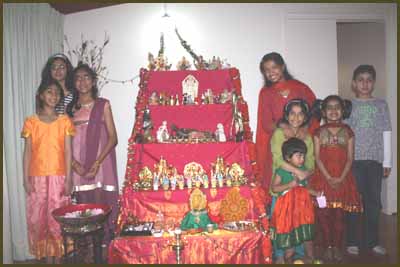
'In South India, a doll festival or the "Golu" festival marks Navrathri.
This nine day festival is celebrated in various manners in different parts of the country.
This is much similar to the Hina Matsuri festival of Japan, celebrated every year on March 3rd, often called the Girl's Festival.' Then again, the display of dolls with themes, remind one of the Janmashtami displays.

. . . This doll festival has many features similar to that of Japan. The dolls are usually handed down from mother to daughter, often the dolls on display being family heirlooms handed down over generations. It is also a doll festival exclusively by the women.
source : www.helium.com/items/

:::::::::::::::::::::::::::::::::::::::::::::::::::::::::::::::::::::::::::::::::::::::::::::::::::


quote
The Doll Festival
We have just celebrated Navratri, or the Festival of Nine Nights.
This Hindu festival is dedicated to our major goddesses (the ‘female principle’ of the universe). Of the nine days, three days each are devoted to the worship of
Durga (the Goddess of Valour),
Lakshmi (the Goddess of Wealth) and
Saraswati (the Goddess of Knowledge and Learning).


In different parts of India, this festival is celebrated differently. In Gujarat they dance the stick-dance (dandiya) all night long, the sticks symbolizing the sword with which the goddess Durga struck down the evil demon.
But in my state of Karnataka, we worship our goddesses by making doll displays of them. In Kannada, we call this Bombe Habba.
It’s also called Golu.
source : www.indianlink.com.au


*****************************
Worldwide use

Japan

. Hina Doll Festival (hina matsuri 雛祭り) .


*****************************
Things found on the way


*****************************
HAIKU


Hina Matsuri-
I give her a doll
with her grandmother's face


Angelee Deodhar
March 2013


*****************************

Related words

***** . Hina Doll Festival (hina matsuri 雛祭り) .


[ . BACK to WORLDKIGO . TOP . ]
:::::::::::::::::::::::::::::::::::::::::::::::::::::::::::::::::::::::::::::::::::::::::::::::::::::