[ . BACK to WORLDKIGO . TOP . ]
:::::::::::::::::::::::::::::::::::::::::::::::::::::::::::::::::::::::::::::::::::::::::::::::::::::
Janak Sapkota
"A young Nepalese contemplative poet with a prodigious talent for writing haiku, is a visionary mediator between the self and the spirit. In his haiku of radiant light and rare insights he marvels at the mystery. He is attentive both to the World and to the word. He is truly alive to the awe, to the awesomeness of the creation."
He has published Lights Along the Road (Bamboo Press, 2005), a collection of haiku co-authored with the American poet Suzy Conway. He won the Smurfit Samhain International Haiku Prize 2006 and the Seventh Annual Ukia Haiku Competition 2009. While on a writing residency at Cló Ceardlann na gCnoc, Ireland, he published Full Moon (Cló, 2010), a limited edition of his haiku with Irish language translations by Gabriel Rosenstock and images by Danielle Creenaune.
His haiku have appeared internationally in journals, magazines and newspapers such as The SHOp, Shamrock, Lishanu, Fri Haiku and Notes from the Gean. His recent collections include Whisper of Pines (Original Writing, 2012) a bilingual English-Irish edition with Gabriel Rosenstock and A Firefly Lights the Page (SanaSato, Finland, 2012), a bilingual English-Finnish edition by Arto Lappi.
:::::::::::::::::::::::::::::::::::::::::::::::::::::::::::::::::::::::::::::::::::::::::::::::::::::
in the refugee camp
the full moon strays tonight
into the water pitcher
a white pigeon
drops a feather in the yard
first winter snow
source : lishanu.com
.................................................................................
Whispers of Pines
Gabriel Rosenstock (Author)
Janak Sapkota (Author)
Superb Irish-language versions by Gabriel Rosenstock of a young Nepalese haikuist who is rapidly gaining recognition as an extraordinary talent. Text in English and Irish with a fascinating
interview with Janak conducted by Dr Mícheal Ó hAodha.
source : tobaccoroadpoet.com . PDF
:::::::::::::::::::::::::::::::::::::::::::::::::::::::::::::::::::::::::::::::::::::::::::::::::::::
. Haiku in Nepal - Introduction.
. WKD - Haiku from Nepal .
*****************************
BACK TO
Haiku Poets from India
[ . BACK to WORLDKIGO . TOP . ]
:::::::::::::::::::::::::::::::::::::::::::::::::::::::::::::::::::::::::::::::::::::::::::::::::::::
Showing posts with label Nepal. Show all posts
Showing posts with label Nepal. Show all posts
4/05/2012

2/28/2012
Haris Adhikari
[ . BACK to WORLDKIGO . TOP . ]
:::::::::::::::::::::::::::::::::::::::::::::::::::::::::::::::::::::::::::::::::::::::::::::::::::::
Haris Adhikari

Haris is from Nepal.
He is a graduate in English and American literature from Tribhuvan University. A member of The Society of Nepali Writers in English, he is a teacher of English by profession. Also, he is the editor of
Misty Mountain Review, an online journal of short poetry.
His poems have appeared in The Enchanting Verses Literary Review, Mad Swirl, Of Nepalese Clay, Poddle (Poddle Publications, Dublin), Locust Magazine, Snow Monkey Journal, The Applicant, and Cuckoo Quarterly, among others.
His other works are coming up in Buddhist Poetry Review and Essence Poetry Journal.
To read his other poems, visit this link:
http://ripplezhome.wordpress.com/
:::::::::::::::::::::::::::::::::::::::::::::::::::::::::::::::::::::::::::::::::::::::::::::::::::::
. Haiku poems composed in Sleshmantak ban .
Haris Adhikari
. Haiku in Nepal - Introduction.
. WKD - Haiku from Nepal .
*****************************
BACK TO
Haiku Poets from India
[ . BACK to WORLDKIGO . TOP . ]
:::::::::::::::::::::::::::::::::::::::::::::::::::::::::::::::::::::::::::::::::::::::::::::::::::::
:::::::::::::::::::::::::::::::::::::::::::::::::::::::::::::::::::::::::::::::::::::::::::::::::::::
Haris Adhikari

Haris is from Nepal.
He is a graduate in English and American literature from Tribhuvan University. A member of The Society of Nepali Writers in English, he is a teacher of English by profession. Also, he is the editor of
Misty Mountain Review, an online journal of short poetry.
His poems have appeared in The Enchanting Verses Literary Review, Mad Swirl, Of Nepalese Clay, Poddle (Poddle Publications, Dublin), Locust Magazine, Snow Monkey Journal, The Applicant, and Cuckoo Quarterly, among others.
His other works are coming up in Buddhist Poetry Review and Essence Poetry Journal.
To read his other poems, visit this link:
http://ripplezhome.wordpress.com/
:::::::::::::::::::::::::::::::::::::::::::::::::::::::::::::::::::::::::::::::::::::::::::::::::::::
. Haiku poems composed in Sleshmantak ban .
Haris Adhikari
. Haiku in Nepal - Introduction.
. WKD - Haiku from Nepal .
*****************************
BACK TO
Haiku Poets from India
[ . BACK to WORLDKIGO . TOP . ]
:::::::::::::::::::::::::::::::::::::::::::::::::::::::::::::::::::::::::::::::::::::::::::::::::::::
Sleshmantak ban Forest
[ . BACK to WORLDKIGO TOP . ]
:::::::::::::::::::::::::::::::::::::::::::::::::::::::::::::::::::::::::::::::::::::::::::::::::::::
Sleshmantak ban Forest
***** Location: Nepal
***** Season: Topic
***** Category: Earth
*****************************
Explanation
Sleshmantak ban is a small, serene forest
across the holy temple of Pashupatinath in Kathmandu.
- Reference -
quote
Don't make Sleshmantak forest a graveyard
KATHMANDU:
Sanatan Dharma Sewa Samiti (SDSS) has expressed its concern over the news reports carried out by some media that "some Christian people have made Sleshamantak forest at Pashupatinath area, which is said to be the center of the devotion of the Hindu people, a graveyard".
Issuing a press statement, the Samiti urged the Christian community not to convert Sleshamantak forest, a holy place listed in the world heritage list that has tourism, religious and cultural importance, into a graveyard. It also urged the government to manage a graveyard for the Christian community.
source : www.thehimalayantimes.com - 2011-01-27
*****************************
Worldwide use
*****************************
Things found on the way
*****************************
HAIKU
Haiku poems composed in Sleshmantak ban :
Birds singing
softly in the silence
to evoke my muse.
Yellow leaves falling,
slowly, to give way
to the new ones.
Sleshmantak ban:
a curtain to the eyes
of a stale city!
A mature monkey
jumps down the bush
to shatter the joy.
Haris Adhikari
Kathmandu, February 2012
*****************************
Related words
***** . Haiku from Nepal .
[ . BACK to WORLDKIGO . TOP . ]
:::::::::::::::::::::::::::::::::::::::::::::::::::::::::::::::::::::::::::::::::::::::::::::::::::::
:::::::::::::::::::::::::::::::::::::::::::::::::::::::::::::::::::::::::::::::::::::::::::::::::::::
Sleshmantak ban Forest
***** Location: Nepal
***** Season: Topic
***** Category: Earth
*****************************
Explanation
Sleshmantak ban is a small, serene forest
across the holy temple of Pashupatinath in Kathmandu.
- Reference -
quote
Don't make Sleshmantak forest a graveyard
KATHMANDU:
Sanatan Dharma Sewa Samiti (SDSS) has expressed its concern over the news reports carried out by some media that "some Christian people have made Sleshamantak forest at Pashupatinath area, which is said to be the center of the devotion of the Hindu people, a graveyard".
Issuing a press statement, the Samiti urged the Christian community not to convert Sleshamantak forest, a holy place listed in the world heritage list that has tourism, religious and cultural importance, into a graveyard. It also urged the government to manage a graveyard for the Christian community.
source : www.thehimalayantimes.com - 2011-01-27
*****************************
Worldwide use
*****************************
Things found on the way
*****************************
HAIKU
Haiku poems composed in Sleshmantak ban :
Birds singing
softly in the silence
to evoke my muse.
Yellow leaves falling,
slowly, to give way
to the new ones.
Sleshmantak ban:
a curtain to the eyes
of a stale city!
A mature monkey
jumps down the bush
to shatter the joy.
Haris Adhikari
Kathmandu, February 2012
*****************************
Related words
***** . Haiku from Nepal .
[ . BACK to WORLDKIGO . TOP . ]
:::::::::::::::::::::::::::::::::::::::::::::::::::::::::::::::::::::::::::::::::::::::::::::::::::::
2/08/2012
Shiva Ratri - Shivaratri
[ . BACK to WORLDKIGO . TOP . ]
:::::::::::::::::::::::::::::::::::::::::::::::::::::::::::::::::::::::::::::::::::::::::::::::::::::
Shiva Ratri Day / Night
***** Location: Nepal, India,
.........other Hindu Communities
***** Season: Early Spring
***** Category: Humanity
*****************************
Explanation
ratri (raatri) means night.

http://www.salagram.net/parishad88.htm
oooooooooooooooooooooooooooooooooooooo
This is Shiva Ratri Day in Neapl. It is the day in which Hindu people spend time singing and praising hymns of Shiva and Parvati.
Bamdev Sharma
xxxxxxxxxxxxxxxxxxxxxxxxxxxxxxxxxx
Quote from the Nepal Home Page
Nepal is the only Hindu kingdom in the world and thus the land of Lord Shiva, Lord of all Lords, for here you can feel his presence everywhere. Even in the sacred texts of the Hindus it has been stated that Mt. Kailash in the Himalayas is the abode of Lord Shiva or Mahadeva as he is also known. Shiva the Destroyer of Evil is among the most praised and worshipped of all the gods in the Hindu religion. Hindus all over the world know him through different names and forms. The country has thousands of idols and monuments, which glorify his name, the most common one being the Shiva Linga or the phallus of Shiva that represents him. For it is the Shiva linga that Hindus regard as the symbol of creation, the beginning of everything.
Shiva Ratri is the night of Lord Shiva when He himself was created by His own Divine Grace and Hindus all over the world celebrate this day with a lot of zeal and enthusiasm. Shiva Ratri literally means ' the night consecrated to Shiva'.
This auspicious festival falls on the fourteenth day of the waning moon in the month of Falgun, (February - March in the Gregorian calendar ). The temple of Pashupatinath in Kathmandu which is considered as one of the holiest shrines of the Hindus, glorifying Lord Shiva, thus receives more than 100,000 worshippers during the festival of Shiva Ratri. These worshippers come from far and wide to pay their respects and homage to Mahadev on his sacred day.
Pashupatinath temple is located at the eastern part of the Kathmandu valley on the banks of the holy river Bagmati. Pashupatinath, which literally means The Lord of animals is one of the many forms of the Lord. He is the guardian deity, protector of our Hindu Kingdom of Nepal, thus Shiva Ratri is one of the major festivals of Nepal. Pilgrims from all over Nepal as Pashupatinath Temple well as India come to Pashupatinath to worship and pray to the deity on his birthday and wash away all the sins committed by them. Only Hindus are allowed inside the temple and tourists are only permitted to observe the festival from across the Bagmati river.
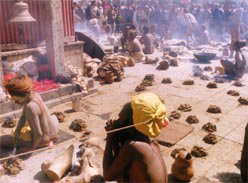
Shiva Ratri is a much anticipated festival by all Hindus. Pilgrims and yogis (holy men), from all over Southeast Asia come to Kathmandu weeks before the festival. On this holy day people fast through out the day. At dawn, worshippers take a holy bath or dip in the river and go to the temple to worship.
One of the interesting aspects of Shiva Ratri is that on this day devotees and non-devotees alike freely indulge in smoking intoxicating substances such as marijuana and bhang for it is the only day in the annual calendar when marijuana is legal.
Many people take these intoxicants in the belief that it pleases Lord Shiva for he too is said to be fond of it. Thus marijuana is taken as prasad, holy food blessed by the Gods and one can see eager tourists and faithful Nepalese flocking around the temple complex of the Ram Janaki Mandir across the Bagmati river opposite to the main temple complex of Pashupatinath lingering around sadhus and babas in the hope for some prasad from them.
The Puran, one of the many holy texts of the Hindus, tells us that if you worship Lord Shiva on this day all your sins will be forgiven. Giving an examle the puran talks about an event that occurred ages before about a hunter from Benares. This man worshipped Lord Shiva unknowingly on Shiva Ratri and he was forgiven for all his sins.
On Shiva Ratri the temple of Pashupatinath is filled with worshippers. Devotees are not distinguished as poor or rich but treated equally for Lord Shiva treats us all equally. Even the King of Nepal and the royal family pay homage to the Pashupatunath on this day along with the thousands that gather to celebrate the festival. Thus the festival of Shiva Ratri shows the devotion and faith Nepalese have towards the Hindu religion.
Article by Avigya Karki.
Photographs collected from Deependra Bajracharya and Madhup Mangal.
http://www.nepalhomepage.com/society/festivals/shivaratri.html
© Nepal Home Page
:::::::::::::::::::::::::::::::::::::::::::::::::::::::::::::::::::::::::::::::::::::::::::::::::::::
India
quote
Maha Shivratri (Hindi:महाशिवरात्रि, Kannada:ಮಹಾ ಶಿವರಾತ್ರಿ, Tamil:மகா சிவராத்திரி, Telugu:మహాశివరాత్రి,
is a Hindu festival celebrated every year in reverence of Lord Shiva. Alternate common names/spellings include Maha Sivaratri, Shivaratri, Sivarathri, and Shivaratri. Shivaratri literally means the great night of Shiva or the night of Shiva. It is celebrated every year on the 13th night/14th day of the Maagha or Phalguna month of the Hindu calendar.
Since many different calendars are followed by various ethno-linguistic groups of India, the month and the Tithi name are not uniform all over India. Celebrated in the dark fortnight or Krishna Paksha(waning moon) of the month of Maagha according to the Shalivahana or Gujarati Vikrama or Phalguna according to the Vikrama era.
The festival is principally celebrated by offerings of Bael or Bilva/Vilvam leaves to Lord Shiva, all day fasting and an all night long vigil. In accordance with scriptural and discipleship traditions, penances are performed in order to gain boons in the practice of Yoga and meditation, in order to reach life's summum bonum steadily and swiftly.

A week long International Mandi Shivratri Fair held at Mandi in the Indian state of Himachal Pradesh every year is one of the major tourist attractions in the state.
More in the Wikipedia
:::::::::::::::::::::::::::::::::::::::::::::::::::::::::::::::::::::::::::::::::::::::::::::::::::::
Kerala, India
Maha Shiva Ratri or the Night of Lord Shiva, commemorates the day on which the Father of the Gods saved the world by drinking the deadly Kaalakoodum poison.
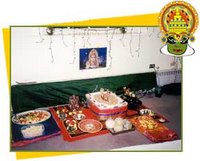
Fasting and worship marks the day for the worship of Shiva. Devotees visit the numerous Shiva Temples - both big and small - around the state and smear their bodies with holy ash while chanting prayers to the Lord. The prayers go on all through the night and early next morning, after a purifying bath, prayers are offered once again to Shiva.
The most famous of the Maha Shiva Ratri celebrations are held in Aluva, on the banks of the Periyar River.
An idol of the Lord is created on the sandy bank of the river for the thousands of pilgrims, who visit it to offer their prayers. People from all walks of life assemble for the great fair that is held. An exhibition and sale of goods is on during the celebrations. Cultural shows and dances are staged through the night to keep the pilgrims awake. Many devotees offer sacrifices to their ancestors in the morning after the holy night.
© Kerala Hotels and Tours
LINKS from India in the World Kigo Library
Shiva Ratri Night : All information and more LINKS
Shiva Ratri Night (2) : INDIA Saijiki
http://www.shaivam.org/siddomain/fesshivp.html
:::::::::::::::::::::::::::::::::::::::::::::::::::::::::::::::::::::::::::::::::::::::::::::::::::::
Trinidad
Maha Shiva Raatri

© Pandit Bhadase Maharaj
Maha Shiva Raatri means the great night of Lord Shiva and it is observed on the fourteenth lunar night(chaturdasi)of the dark forthnight(Krishna Paksh) in the Hindu month of Phalgun. This corresponds to late February and early March in the English calendar.
Maha Shiva Raatri's time duration is such that the lunar day or thithi (chaturdasi in this case)must pass through midnight.A great deal of preparation is involved in order to celebrate this religious event since it requires the performance of Pooja(prayers).
Lord Shiva is the Devta or diety worshipped here. His worship is done in the form of a Lingam Pooja.
The Lingam is a stone with an oval shape and it represents the abstract form of God.
During Maha Shiva Raatri, Hindus in Trinidad observe fasting. They abstain from eating and drinking forbidden foods and they will make all the necessary preparations for the Pooja which begins at sunset.
Actually, the complete Maha Shiva Raatri Pooja consists of four individual poojas.The first Pooja starts at sunset and with two hour intervals,the remaining three is done. The last one must finish at midnight. A vigil is maintained all night until before sunrise of the next morning. Bhajans and kirtan (hymns and praises) are encouraged in order to maintain this vigil and also discourses relevant to the occasion are read.
The first Pooja culminates with the offering of milk; at the end of the second Dahee or curds are offered ; at the end of the third Ghee (cow's butter) is offered and at the end of the last Pooja, honey is offered on the Lingam.
From midnight until before sunrise next morning, Jal or water is offered on the Lingam . However, the most important article of worship in this Pooja is Bail leaves (the leaves of the wood apple tree). These leaves are exceedingly loved by Lord Shiva and the offering of same brings some form of spiritual elevation to the person who has made such an offering. In order to achieve the maximum benefits,the services of a qualified Pandit (Hindu priest) is very important in performing this Pooja.
Important Notes On Maha Shiva Raatri.....
Lord Shiva grants His blessings to His devotees who worships Him on the night of Maha Shiva Raatri.Worshiping Him on this night promotes spiritual growth.
Maha Shiva Raatri does not in any way relate to the birthday or the wedding of Lord Shiva.Any such discourses read on this night is purely coincidental and does not indicate that these incidents took place on the night of Maha Shiva Raatri.
Care should be taken in the selection of a Lingam. A Lingam with an image of Lord Shiva and /or His consort Parvati or a snake as is commonly seen, is NOT considered as a Lingam but as a Murti. Therefore, it is not appropriate to use such, as a Lingam for this purpose. The Lingam is a representation of the infinite form of God, without beginning and without end and this cannot be effectively represented by a Lingam with a human resemblance.
The offering of Jal (water) on the Lingam should NOT extend on to daytime of the following day. The word Raatri means night and any worship that extends into daytime violates the concept of night and day and constitutes sin.
Shiva Raatri.....
Shiva Raatri occurs once a month on the night of the fourteenth lunar day of Krishna Paksh or the dark forthnight.There are eleven Shiva Raatris in a year but in Malmaas, there is one more and in Kshai Maas there is another. Lord Shiva is worshipped at this time with all the grandeur of Maha Shiva Raatri.The worship of the Murti can also be done at this time.
The importance of time.....
Since Maha Shiva Raatri must go past midnight of the night in question, the chances are that the thithi or lunar day (chaturdashi in this case) might not last until the next morning. For example, it might finish at two o'clock in the morning; how does this affect the proceedings?
The celebrations can continue as normal and conclude at two o'clock in the morning or it can continue and conclude before the sun rises.This would be a matter of personal choice. In any event, both ways are in accordance with the Shastric (recommended) principles and are acceptable.
Pandit Bhadase Maharaj
http://www.trinihindu.faithweb.com/mahashivaraatri.htm
*****************************
Worldwide use
*****************************
Things found on the way
waning moon-
she places bilva leaves
on the Shiva lingam
all day long
the temple bells resound
- Mahashivratri
Angelee Deodhar
March 2013
Bael (Aegle marmelos)
(also known as Bengal quince, stone apple or wood apple), Bilva is a species of tree native to India.
The Bilva tree grows in almost all parts of India, irrespective of the nature of the soil, and is bitter, astringent and dry by nature. Tall and austere, with a stern aspect, gnarled trunk and sharp thorns, the Bilva is undoubtedly Lord Shiva’s tree. Shiva is always worshipped with its leaves, and it is said that this tree is much loved by him.
http://en.wikipedia.org/wiki/Bael
The lingam (also, linga, ling, Shiva linga, Shiv ling, , liṅgaṃ, meaning "mark", "sign", "inference" ) is a representation of the Hindu deity Shiva used for worship in temples
http://en.wikipedia.org/wiki/Lingam
"If you make the slightest effort to progress along the path of liberation, the Lord will help you a hundred-fold. Shivaratri conveys that hope to you. The moon, which is the presiding deity of the mind of man, wanes until the fourteenth day after full moon. It is just a tiny curve of glimmering glow. The mind should be starved into the condition, so that man becomes free.
Spend all the days with Shiva, and the conquest of the mind is easy. Spend the fourteenth day of the waning moon with Shiva, reaching the climax of the spiritual effort on the final day, and success is yours. That is why all Chaturdashis of the dark haif of every month are called Shivaratris, that is why the Chaturdashi of the Magha month is called Mahashivaratri.
That is a day of special dedication to Shiva."
http://www.ssso.net/shiva/shiva-2.htm
Nataraja's dance
having drunk the soma -
He moves mountains
Angelee Deodhar
2014
*****************************
HAIKU
mountain
under the veil of horizon
to become fire.
morning chase
falcon's headlong dart
coloured by rainbow.
Bamdev Sharma, Nepal, 2006
xxxxxxxxxxxxxxxxxxxxxxxxxxxxx
Shiva raatri ~
"Aum Nama Shivaaya' resonates
in camphor fumes
bhakta saagaram
shiva raatri mahaatmyam
pratyaksham shiva rahasyam
[ Sanskrit]
ocean of devotees ~
Shiva raatri's greatness
makes visible
Shiva's mysteries
Narayanan Raghunathan
xxxxxxxxxxxxxxxxxxxxxxxxxxxxx
great Shiva Night -
the stray dogs downstream
find extra rations
Gabi Greve, Nepal 1979
:::::::::::::::::::::::::::::::::::::::::::::::::::::::::::::::::::::::::::::::::::::::::::::::::::::
Maha Shivaratri -
the drunken friends
stagger home
Shared by Satdeep Gill
Joys of Japan, February 2012
*****************************
Related words
***** Festivals of India, all are kigo
***** . Daijizaiten 大自在天 Mahesvara Japan
[ . BACK to WORLDKIGO TOP . ]
:::::::::::::::::::::::::::::::::::::::::::::::::::::::::::::::::::::::::::::::::::::::::::::::::::::
:::::::::::::::::::::::::::::::::::::::::::::::::::::::::::::::::::::::::::::::::::::::::::::::::::::
Shiva Ratri Day / Night
***** Location: Nepal, India,
.........other Hindu Communities
***** Season: Early Spring
***** Category: Humanity
*****************************
Explanation
ratri (raatri) means night.

http://www.salagram.net/parishad88.htm
oooooooooooooooooooooooooooooooooooooo
This is Shiva Ratri Day in Neapl. It is the day in which Hindu people spend time singing and praising hymns of Shiva and Parvati.
Bamdev Sharma
xxxxxxxxxxxxxxxxxxxxxxxxxxxxxxxxxx
Quote from the Nepal Home Page
Nepal is the only Hindu kingdom in the world and thus the land of Lord Shiva, Lord of all Lords, for here you can feel his presence everywhere. Even in the sacred texts of the Hindus it has been stated that Mt. Kailash in the Himalayas is the abode of Lord Shiva or Mahadeva as he is also known. Shiva the Destroyer of Evil is among the most praised and worshipped of all the gods in the Hindu religion. Hindus all over the world know him through different names and forms. The country has thousands of idols and monuments, which glorify his name, the most common one being the Shiva Linga or the phallus of Shiva that represents him. For it is the Shiva linga that Hindus regard as the symbol of creation, the beginning of everything.
Shiva Ratri is the night of Lord Shiva when He himself was created by His own Divine Grace and Hindus all over the world celebrate this day with a lot of zeal and enthusiasm. Shiva Ratri literally means ' the night consecrated to Shiva'.
This auspicious festival falls on the fourteenth day of the waning moon in the month of Falgun, (February - March in the Gregorian calendar ). The temple of Pashupatinath in Kathmandu which is considered as one of the holiest shrines of the Hindus, glorifying Lord Shiva, thus receives more than 100,000 worshippers during the festival of Shiva Ratri. These worshippers come from far and wide to pay their respects and homage to Mahadev on his sacred day.
Pashupatinath temple is located at the eastern part of the Kathmandu valley on the banks of the holy river Bagmati. Pashupatinath, which literally means The Lord of animals is one of the many forms of the Lord. He is the guardian deity, protector of our Hindu Kingdom of Nepal, thus Shiva Ratri is one of the major festivals of Nepal. Pilgrims from all over Nepal as Pashupatinath Temple well as India come to Pashupatinath to worship and pray to the deity on his birthday and wash away all the sins committed by them. Only Hindus are allowed inside the temple and tourists are only permitted to observe the festival from across the Bagmati river.

Shiva Ratri is a much anticipated festival by all Hindus. Pilgrims and yogis (holy men), from all over Southeast Asia come to Kathmandu weeks before the festival. On this holy day people fast through out the day. At dawn, worshippers take a holy bath or dip in the river and go to the temple to worship.
One of the interesting aspects of Shiva Ratri is that on this day devotees and non-devotees alike freely indulge in smoking intoxicating substances such as marijuana and bhang for it is the only day in the annual calendar when marijuana is legal.
Many people take these intoxicants in the belief that it pleases Lord Shiva for he too is said to be fond of it. Thus marijuana is taken as prasad, holy food blessed by the Gods and one can see eager tourists and faithful Nepalese flocking around the temple complex of the Ram Janaki Mandir across the Bagmati river opposite to the main temple complex of Pashupatinath lingering around sadhus and babas in the hope for some prasad from them.
The Puran, one of the many holy texts of the Hindus, tells us that if you worship Lord Shiva on this day all your sins will be forgiven. Giving an examle the puran talks about an event that occurred ages before about a hunter from Benares. This man worshipped Lord Shiva unknowingly on Shiva Ratri and he was forgiven for all his sins.
On Shiva Ratri the temple of Pashupatinath is filled with worshippers. Devotees are not distinguished as poor or rich but treated equally for Lord Shiva treats us all equally. Even the King of Nepal and the royal family pay homage to the Pashupatunath on this day along with the thousands that gather to celebrate the festival. Thus the festival of Shiva Ratri shows the devotion and faith Nepalese have towards the Hindu religion.
Article by Avigya Karki.
Photographs collected from Deependra Bajracharya and Madhup Mangal.
http://www.nepalhomepage.com/society/festivals/shivaratri.html
© Nepal Home Page
:::::::::::::::::::::::::::::::::::::::::::::::::::::::::::::::::::::::::::::::::::::::::::::::::::::
India
quote
Maha Shivratri (Hindi:महाशिवरात्रि, Kannada:ಮಹಾ ಶಿವರಾತ್ರಿ, Tamil:மகா சிவராத்திரி, Telugu:మహాశివరాత్రి,
is a Hindu festival celebrated every year in reverence of Lord Shiva. Alternate common names/spellings include Maha Sivaratri, Shivaratri, Sivarathri, and Shivaratri. Shivaratri literally means the great night of Shiva or the night of Shiva. It is celebrated every year on the 13th night/14th day of the Maagha or Phalguna month of the Hindu calendar.
Since many different calendars are followed by various ethno-linguistic groups of India, the month and the Tithi name are not uniform all over India. Celebrated in the dark fortnight or Krishna Paksha(waning moon) of the month of Maagha according to the Shalivahana or Gujarati Vikrama or Phalguna according to the Vikrama era.
The festival is principally celebrated by offerings of Bael or Bilva/Vilvam leaves to Lord Shiva, all day fasting and an all night long vigil. In accordance with scriptural and discipleship traditions, penances are performed in order to gain boons in the practice of Yoga and meditation, in order to reach life's summum bonum steadily and swiftly.

A week long International Mandi Shivratri Fair held at Mandi in the Indian state of Himachal Pradesh every year is one of the major tourist attractions in the state.
More in the Wikipedia
:::::::::::::::::::::::::::::::::::::::::::::::::::::::::::::::::::::::::::::::::::::::::::::::::::::
Kerala, India
Maha Shiva Ratri or the Night of Lord Shiva, commemorates the day on which the Father of the Gods saved the world by drinking the deadly Kaalakoodum poison.
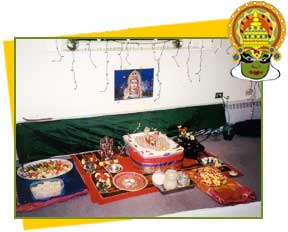
Fasting and worship marks the day for the worship of Shiva. Devotees visit the numerous Shiva Temples - both big and small - around the state and smear their bodies with holy ash while chanting prayers to the Lord. The prayers go on all through the night and early next morning, after a purifying bath, prayers are offered once again to Shiva.
The most famous of the Maha Shiva Ratri celebrations are held in Aluva, on the banks of the Periyar River.
An idol of the Lord is created on the sandy bank of the river for the thousands of pilgrims, who visit it to offer their prayers. People from all walks of life assemble for the great fair that is held. An exhibition and sale of goods is on during the celebrations. Cultural shows and dances are staged through the night to keep the pilgrims awake. Many devotees offer sacrifices to their ancestors in the morning after the holy night.
© Kerala Hotels and Tours
LINKS from India in the World Kigo Library
Shiva Ratri Night : All information and more LINKS
Shiva Ratri Night (2) : INDIA Saijiki
http://www.shaivam.org/siddomain/fesshivp.html
:::::::::::::::::::::::::::::::::::::::::::::::::::::::::::::::::::::::::::::::::::::::::::::::::::::
Trinidad
Maha Shiva Raatri

© Pandit Bhadase Maharaj
Maha Shiva Raatri means the great night of Lord Shiva and it is observed on the fourteenth lunar night(chaturdasi)of the dark forthnight(Krishna Paksh) in the Hindu month of Phalgun. This corresponds to late February and early March in the English calendar.
Maha Shiva Raatri's time duration is such that the lunar day or thithi (chaturdasi in this case)must pass through midnight.A great deal of preparation is involved in order to celebrate this religious event since it requires the performance of Pooja(prayers).
Lord Shiva is the Devta or diety worshipped here. His worship is done in the form of a Lingam Pooja.
The Lingam is a stone with an oval shape and it represents the abstract form of God.
During Maha Shiva Raatri, Hindus in Trinidad observe fasting. They abstain from eating and drinking forbidden foods and they will make all the necessary preparations for the Pooja which begins at sunset.
Actually, the complete Maha Shiva Raatri Pooja consists of four individual poojas.The first Pooja starts at sunset and with two hour intervals,the remaining three is done. The last one must finish at midnight. A vigil is maintained all night until before sunrise of the next morning. Bhajans and kirtan (hymns and praises) are encouraged in order to maintain this vigil and also discourses relevant to the occasion are read.
The first Pooja culminates with the offering of milk; at the end of the second Dahee or curds are offered ; at the end of the third Ghee (cow's butter) is offered and at the end of the last Pooja, honey is offered on the Lingam.
From midnight until before sunrise next morning, Jal or water is offered on the Lingam . However, the most important article of worship in this Pooja is Bail leaves (the leaves of the wood apple tree). These leaves are exceedingly loved by Lord Shiva and the offering of same brings some form of spiritual elevation to the person who has made such an offering. In order to achieve the maximum benefits,the services of a qualified Pandit (Hindu priest) is very important in performing this Pooja.
Important Notes On Maha Shiva Raatri.....
Lord Shiva grants His blessings to His devotees who worships Him on the night of Maha Shiva Raatri.Worshiping Him on this night promotes spiritual growth.
Maha Shiva Raatri does not in any way relate to the birthday or the wedding of Lord Shiva.Any such discourses read on this night is purely coincidental and does not indicate that these incidents took place on the night of Maha Shiva Raatri.
Care should be taken in the selection of a Lingam. A Lingam with an image of Lord Shiva and /or His consort Parvati or a snake as is commonly seen, is NOT considered as a Lingam but as a Murti. Therefore, it is not appropriate to use such, as a Lingam for this purpose. The Lingam is a representation of the infinite form of God, without beginning and without end and this cannot be effectively represented by a Lingam with a human resemblance.
The offering of Jal (water) on the Lingam should NOT extend on to daytime of the following day. The word Raatri means night and any worship that extends into daytime violates the concept of night and day and constitutes sin.
Shiva Raatri.....
Shiva Raatri occurs once a month on the night of the fourteenth lunar day of Krishna Paksh or the dark forthnight.There are eleven Shiva Raatris in a year but in Malmaas, there is one more and in Kshai Maas there is another. Lord Shiva is worshipped at this time with all the grandeur of Maha Shiva Raatri.The worship of the Murti can also be done at this time.
The importance of time.....
Since Maha Shiva Raatri must go past midnight of the night in question, the chances are that the thithi or lunar day (chaturdashi in this case) might not last until the next morning. For example, it might finish at two o'clock in the morning; how does this affect the proceedings?
The celebrations can continue as normal and conclude at two o'clock in the morning or it can continue and conclude before the sun rises.This would be a matter of personal choice. In any event, both ways are in accordance with the Shastric (recommended) principles and are acceptable.
Pandit Bhadase Maharaj
http://www.trinihindu.faithweb.com/mahashivaraatri.htm
*****************************
Worldwide use
*****************************
Things found on the way
waning moon-
she places bilva leaves
on the Shiva lingam
all day long
the temple bells resound
- Mahashivratri
Angelee Deodhar
March 2013
Bael (Aegle marmelos)
(also known as Bengal quince, stone apple or wood apple), Bilva is a species of tree native to India.
The Bilva tree grows in almost all parts of India, irrespective of the nature of the soil, and is bitter, astringent and dry by nature. Tall and austere, with a stern aspect, gnarled trunk and sharp thorns, the Bilva is undoubtedly Lord Shiva’s tree. Shiva is always worshipped with its leaves, and it is said that this tree is much loved by him.
http://en.wikipedia.org/wiki/Bael
The lingam (also, linga, ling, Shiva linga, Shiv ling, , liṅgaṃ, meaning "mark", "sign", "inference" ) is a representation of the Hindu deity Shiva used for worship in temples
http://en.wikipedia.org/wiki/Lingam
"If you make the slightest effort to progress along the path of liberation, the Lord will help you a hundred-fold. Shivaratri conveys that hope to you. The moon, which is the presiding deity of the mind of man, wanes until the fourteenth day after full moon. It is just a tiny curve of glimmering glow. The mind should be starved into the condition, so that man becomes free.
Spend all the days with Shiva, and the conquest of the mind is easy. Spend the fourteenth day of the waning moon with Shiva, reaching the climax of the spiritual effort on the final day, and success is yours. That is why all Chaturdashis of the dark haif of every month are called Shivaratris, that is why the Chaturdashi of the Magha month is called Mahashivaratri.
That is a day of special dedication to Shiva."
http://www.ssso.net/shiva/shiva-2.htm
Nataraja's dance
having drunk the soma -
He moves mountains
Angelee Deodhar
2014
*****************************
HAIKU
mountain
under the veil of horizon
to become fire.
morning chase
falcon's headlong dart
coloured by rainbow.
Bamdev Sharma, Nepal, 2006
xxxxxxxxxxxxxxxxxxxxxxxxxxxxx
Shiva raatri ~
"Aum Nama Shivaaya' resonates
in camphor fumes
bhakta saagaram
shiva raatri mahaatmyam
pratyaksham shiva rahasyam
[ Sanskrit]
ocean of devotees ~
Shiva raatri's greatness
makes visible
Shiva's mysteries
Narayanan Raghunathan
xxxxxxxxxxxxxxxxxxxxxxxxxxxxx
great Shiva Night -
the stray dogs downstream
find extra rations
Gabi Greve, Nepal 1979
:::::::::::::::::::::::::::::::::::::::::::::::::::::::::::::::::::::::::::::::::::::::::::::::::::::
Maha Shivaratri -
the drunken friends
stagger home
Shared by Satdeep Gill
Joys of Japan, February 2012
*****************************
Related words
***** Festivals of India, all are kigo
***** . Daijizaiten 大自在天 Mahesvara Japan
[ . BACK to WORLDKIGO TOP . ]
:::::::::::::::::::::::::::::::::::::::::::::::::::::::::::::::::::::::::::::::::::::::::::::::::::::
12/30/2011
Haiku in Nepal
[ . BACK to Worldkigo TOP . ]
:::::::::::::::::::::::::::::::::::::::::::::::::::::::::::::::::::::::::::::::::::::::::::::::::::::
Haiku in Nepal
....................... Haiku Poets from Nepal
. Haris Adhikari .
. Mukul Dahal .
. Dr. Ananda Raj Joshi .
. Janak Sapkota .
Bamdev Sharma
:::::::::::::::::::::::::::::::::::::::::::::::::::::::::::::::::::::::::::::::::::::::::::::::::::::
Mohan Bahadur Kayastha
Senior litterateur Ram Kumar Pande Friday released two books – Phoolko Varsa, a collection of Nepali Tankas by Vishnu Bahadur Singh and
Tareli, a collection of Haikus by Mohan Bahadur Kayastha –
amidst the function in Kathmandu. Haiku, a popular form of poetic expression in Japan, has been in vogue in Nepal since the last four decades while the tanka that is similar to haiku in structure and theme, is the recent literary experiment in the realm of Nepali literature.
Commenting on the works, senior literary figure Muktinath Sharma said that Singh and Kayastha had contributed to enlarge the scope of Nepali literature by bringing out collections of tankas and haiku.
Pande shed light on the history and tradition of haiku and tanka. “Both are short forms of poetry and reflect the universal elements of human life and nature. Love, natural beauty and human predicament find place in them.”
“It is new experiment in Nepali poetry,” said Singh, author of anthology of tankas. He said that new experiment led to the birth of new things.
Kayastha said that he composed the haiku to express inner human feelings and sentiments.
Literary figures Pushkar Lohani and Chet Nath Dhamala also expressed their views at the function jointly organised by the Haiku Study Nepal and the International Nepali Literary Society.
© Copyright 2005. Gorkhapatra Sansthan.
http://www.gorkhapatra.org.np/pageloader.php?file=2005/05/21//topstories/main21
oooooooooooooooooooooooooooooooooooooooooooooo
Taba Maru, Amogha Tamrakar
the literary nickname of Amogha Tamrakar, a poet, born on 1956 at Kathmandu.
His publications include Lakasan lanpu hila bi and memegu bakhan ( Environment will change its way and other short stories) (1992), Newa Haiku (1993) and Birahaya Mye, Thwa Gazal / Gazal collection (2002), Jigu Aela (2002), Padhya Kewa (2002), Jigu Kawita (2002) and Chivar'ya Mikhaye (2002).
http://www.poetrypoems.com/tabamaru/
oooooooooooooooooooooooooooooooooooooooooooooo
Vihod Gauchah
We are
from the country
where dogs are worshipped.
I have a desire
to wear
a garland of desires
Nowadays
life pinches
even in a dream
Quote from an interview:
He explained the first haiku as "satirical, we are like dogs", the second as "never been fulfilled", and the third as "painful".
His haiku were philosophical and at the same time satirical protesting against the darker side of Nepali life.
From Tanka and Haiku in Nepal
by Noriko Mizusaki, 2003
http://www1.odn.ne.jp/~cat32320/mag5/haiku-nepal-en.htm
:::::::::::::::::::::::::::::::::::::::::::::::::::::::::::::::::::::::::::::::::::::::::::::::::::::
National Haiku Festival
The National Haiku Festival will be organised for the first time in Nepal on February 25, 2006 to mark the golden jubilee of the establishment of diplomatic relations between Nepal and Japan. Books on Haiku will be displayed and a book titled
Andha Alchhi (Haiku collection)
will be released at the festival, which will be organised by the Royal Nepal Academy (RNA) and Nepal Nippon Research Centre.
Two committees have been formed under the chairmanship of Ram Kumar Pandey and coordination of RNA member Bhuwan Dhungana to mark the occasion.
http://www.southasianmedia.net/cnn.cfm?id=270914&category=Culture&Country=NEPAL
RSS
KATHMANDU, Feb. 25, 2006:
The first national Haiku Festival held on the occasion of the Golden Jubilee of the establishment of Diplomatic Relations between Japan and the Kingdom of Nepal concluded here today.
The festival was organized jointly by the Poetry Department of Royal Nepal Academy and Nepal-Nippon Research Centre with the objective of promoting Haiku in Nepali.
Some 25 haiku poets recited around 50 haiku at the festival where compilation of haiku and books related to haiku were on display.
Speaking on the occasion, Vice Chancellor of Royal Nepal Academy Prof. Dr Basudev Tripathi said like gazal haiku has become a part of the Nepali literary traditions and enjoys popularity among the readers.
Second Secretary at the Embassy of Japan Daiji Sasai lauded the efforts made by Nepali men of letters in promoting the core aspect of Japanese literature such as Haiku in Nepali language as well and expressed the confidence that such programme would further deepen the cultural relationship between the two countries.
Coordinator of the Festival Bhuvan Dhungana, General Secretary of the Research Centre Prof. Ram Kumar Pandey and other speakers expressed their views at the programme chaired by litterateur Ram Dayal Rakesh.
:::::::::::::::::::::::::::::::::::::::::::::::::::::::::::::::::::::::::::::::::::::::::::::::::::::
Nepalese Haiku Online
Saawan ko mausam
Mehgai ko rimjhim
Varsha ko bhel.
Anjuli bhari
Aashirvaad sath rahyo
Purai umer bhari
Bhok le ranthan
Chhapro ko ghar
Khuldaina Aal-Maari
Naaz
... ... ...
1.
Silence--a strangled
Telephone has forgotten
That it should ring
-Michael R. Collings
2.
A mountain village
under the pilled-up snow
the sound of water.
-Shiki Masaoka
3.
धर्तीको आँसु
पुछ्नु पर्ला भनेर
लुकेछ सुर्य
-रत्न शम्शेर थापा
4.
लाशको नदि
माझीको ढडियामा
फिस्स हाँस्दछ
-गोविन्द गिरि
surendras and online haiku forum
:::::::::::::::::::::::::::::::::::::::::::::::::::::::::::::::::::::::::::::::::::::::::::::::::::::
BOOKS
Empty Moon: Belly Full.
Haiku from India and Nepal
by John Brandi
Using the medium of haiku poetry, John Brandi, poet, essayist and passionate traveller, shares his experiences, insights and observations from his years on the road as a traveler in India and Nepal.
*****************************
Things found on the way
The Haiku Scene of India
. WKD : Haiku from Nepal .
[ . BACK to WORLDKIGO . TOP . ]
:::::::::::::::::::::::::::::::::::::::::::::::::::::::::::::::::::::::::::::::::::::::::::::::::::::
:::::::::::::::::::::::::::::::::::::::::::::::::::::::::::::::::::::::::::::::::::::::::::::::::::::
Haiku in Nepal
....................... Haiku Poets from Nepal
. Haris Adhikari .
. Mukul Dahal .
. Dr. Ananda Raj Joshi .
. Janak Sapkota .
Bamdev Sharma
:::::::::::::::::::::::::::::::::::::::::::::::::::::::::::::::::::::::::::::::::::::::::::::::::::::
Mohan Bahadur Kayastha
Senior litterateur Ram Kumar Pande Friday released two books – Phoolko Varsa, a collection of Nepali Tankas by Vishnu Bahadur Singh and
Tareli, a collection of Haikus by Mohan Bahadur Kayastha –
amidst the function in Kathmandu. Haiku, a popular form of poetic expression in Japan, has been in vogue in Nepal since the last four decades while the tanka that is similar to haiku in structure and theme, is the recent literary experiment in the realm of Nepali literature.
Commenting on the works, senior literary figure Muktinath Sharma said that Singh and Kayastha had contributed to enlarge the scope of Nepali literature by bringing out collections of tankas and haiku.
Pande shed light on the history and tradition of haiku and tanka. “Both are short forms of poetry and reflect the universal elements of human life and nature. Love, natural beauty and human predicament find place in them.”
“It is new experiment in Nepali poetry,” said Singh, author of anthology of tankas. He said that new experiment led to the birth of new things.
Kayastha said that he composed the haiku to express inner human feelings and sentiments.
Literary figures Pushkar Lohani and Chet Nath Dhamala also expressed their views at the function jointly organised by the Haiku Study Nepal and the International Nepali Literary Society.
© Copyright 2005. Gorkhapatra Sansthan.
http://www.gorkhapatra.org.np/pageloader.php?file=2005/05/21//topstories/main21
oooooooooooooooooooooooooooooooooooooooooooooo
Taba Maru, Amogha Tamrakar
the literary nickname of Amogha Tamrakar, a poet, born on 1956 at Kathmandu.
His publications include Lakasan lanpu hila bi and memegu bakhan ( Environment will change its way and other short stories) (1992), Newa Haiku (1993) and Birahaya Mye, Thwa Gazal / Gazal collection (2002), Jigu Aela (2002), Padhya Kewa (2002), Jigu Kawita (2002) and Chivar'ya Mikhaye (2002).
http://www.poetrypoems.com/tabamaru/
oooooooooooooooooooooooooooooooooooooooooooooo
Vihod Gauchah
We are
from the country
where dogs are worshipped.
I have a desire
to wear
a garland of desires
Nowadays
life pinches
even in a dream
Quote from an interview:
He explained the first haiku as "satirical, we are like dogs", the second as "never been fulfilled", and the third as "painful".
His haiku were philosophical and at the same time satirical protesting against the darker side of Nepali life.
From Tanka and Haiku in Nepal
by Noriko Mizusaki, 2003
http://www1.odn.ne.jp/~cat32320/mag5/haiku-nepal-en.htm
:::::::::::::::::::::::::::::::::::::::::::::::::::::::::::::::::::::::::::::::::::::::::::::::::::::
National Haiku Festival
The National Haiku Festival will be organised for the first time in Nepal on February 25, 2006 to mark the golden jubilee of the establishment of diplomatic relations between Nepal and Japan. Books on Haiku will be displayed and a book titled
Andha Alchhi (Haiku collection)
will be released at the festival, which will be organised by the Royal Nepal Academy (RNA) and Nepal Nippon Research Centre.
Two committees have been formed under the chairmanship of Ram Kumar Pandey and coordination of RNA member Bhuwan Dhungana to mark the occasion.
http://www.southasianmedia.net/cnn.cfm?id=270914&category=Culture&Country=NEPAL
RSS
KATHMANDU, Feb. 25, 2006:
The first national Haiku Festival held on the occasion of the Golden Jubilee of the establishment of Diplomatic Relations between Japan and the Kingdom of Nepal concluded here today.
The festival was organized jointly by the Poetry Department of Royal Nepal Academy and Nepal-Nippon Research Centre with the objective of promoting Haiku in Nepali.
Some 25 haiku poets recited around 50 haiku at the festival where compilation of haiku and books related to haiku were on display.
Speaking on the occasion, Vice Chancellor of Royal Nepal Academy Prof. Dr Basudev Tripathi said like gazal haiku has become a part of the Nepali literary traditions and enjoys popularity among the readers.
Second Secretary at the Embassy of Japan Daiji Sasai lauded the efforts made by Nepali men of letters in promoting the core aspect of Japanese literature such as Haiku in Nepali language as well and expressed the confidence that such programme would further deepen the cultural relationship between the two countries.
Coordinator of the Festival Bhuvan Dhungana, General Secretary of the Research Centre Prof. Ram Kumar Pandey and other speakers expressed their views at the programme chaired by litterateur Ram Dayal Rakesh.
:::::::::::::::::::::::::::::::::::::::::::::::::::::::::::::::::::::::::::::::::::::::::::::::::::::
Nepalese Haiku Online
Saawan ko mausam
Mehgai ko rimjhim
Varsha ko bhel.
Anjuli bhari
Aashirvaad sath rahyo
Purai umer bhari
Bhok le ranthan
Chhapro ko ghar
Khuldaina Aal-Maari
Naaz
... ... ...
1.
Silence--a strangled
Telephone has forgotten
That it should ring
-Michael R. Collings
2.
A mountain village
under the pilled-up snow
the sound of water.
-Shiki Masaoka
3.
धर्तीको आँसु
पुछ्नु पर्ला भनेर
लुकेछ सुर्य
-रत्न शम्शेर थापा
4.
लाशको नदि
माझीको ढडियामा
फिस्स हाँस्दछ
-गोविन्द गिरि
surendras and online haiku forum
:::::::::::::::::::::::::::::::::::::::::::::::::::::::::::::::::::::::::::::::::::::::::::::::::::::
BOOKS
Empty Moon: Belly Full.
Haiku from India and Nepal
by John Brandi
Using the medium of haiku poetry, John Brandi, poet, essayist and passionate traveller, shares his experiences, insights and observations from his years on the road as a traveler in India and Nepal.
*****************************
Things found on the way
The Haiku Scene of India
. WKD : Haiku from Nepal .
[ . BACK to WORLDKIGO . TOP . ]
:::::::::::::::::::::::::::::::::::::::::::::::::::::::::::::::::::::::::::::::::::::::::::::::::::::
8/21/2006
Tumeric (ukon)
[ . BACK to Worldkigo TOP . ]
:::::::::::::::::::::::::::::::::::::::::::::::::::::::::::::::::::::::::::::::::::::::::::::::::::::
Tumeric, Kurkuma
***** Location: India
***** Season: Various, see below
***** Category: Plant
*****************************
Explanation
fresh tumeric, kigo for winter
tumeric powder, non-seasonal topic
Tumeric is called manjal in the South and haldi in the North; it has been used by Indians from time immemorial. Now modern science has woken up to the medicinal value of Haldi [turmeric] claiming it to have great antiseptic properties.
The ancient Indians knew about it and Indian cooking uses it extensively.
Women apply turmeric on their faces even now! A cream called, ‘fair and lovely’ proudly claims to have turmeric and chandan [sandalwood] in its composition. It is supposed to clear the skin of pimples, acne – keeps one looking young!
Most of our Indian dishes use a pinch of dried turmeric powder while cooking.
In Maharashtra – in January we get fresh Turmeric – which looks like a bigger version of ginger . . . and it is used as a vegetable – a whole dish prepared with Haldi!
Fingers get yellow even while cutting! Children hate to eat it and adults know the value of it – so you can easily imagine the mealtime scene!
Kala Ramesh
xxxxxxxxxxxxxxxxxxxxxxxxxxxxx
Turmeric (Curcuma longa/domestica)
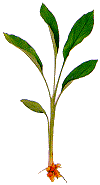
Turmeric is the boiled, dried, cleaned and polished rhizomes Curcuma longa. The plant is a herbaceous perennial, 60-90 cm high, with a short stem and tufted leaf. There are 7 to 12 leaves, the leaf sheaths forms the pseudo stem. The lamina is green above and pale green below and has a length of 30-40 cm and width 8-12 cm. Inflorescence is a central spike of 10-15 cm length. 1-4 flowers are born in axil of the bract opening one at a time. About 30 flowers are produced in a spike. Seeds are produced in capsules and there will be one to numerous sunken capsules in an inflorescence.
Origin and Distribution
It is a native of India. Apart from India, it is cultivated in Pakistan, Malaysia, Myanmar, Vietnam, Thailand, Philippines, Japan, Korea, China, Sri Lanka, Nepal, East & West Africa, South Pacific Islands, Malagasy, Caribbean Islands and Central America.
In India, it is cultivated in the States of Andhra Pradesh, Maharashtra, Orissa, Tamil Nadu, Karnataka and Kerala.
Turmeric is a tropical crop cultivated from sea level to 1200 meter MSL. It grows in light black, black clayey loams and red soils in irrigated and rainfed conditions. The crop cannot stand water logging or alkalinity.
Uses
Turmeric is used to flavour and to colour foodstuffs. It is a principal ingredient in curry powder. Turmeric oleoresin is used in brine pickles and to some extend in mayonnaise and relish formulations, non-alcoholic beverages, gelatins, butter and cheese etc. The colour curcumin extracted from turmeric is used as a colourant.
Turmeric is also used as a dye in textile industry. It is used in the preparation of medicinal oils, ointments and poultice. It is stomachic, carminative, tonic, blood purifier and an antiseptic. It is used in cosmetics. The aqueous extracts has biopesticidal properties.
Other names for this plant
Spanish : Curcuma
French : Curcuma
German : Kurkuma Gelbwurzel
Swedish : Gurkmeja
Arabic : Kurkum
Dutch : Geelwortel
Italian : Curcuma
Polish: Ostryż długi, Szafranindyjski; Kłącze kurkumy (turmeric rhizome)
Portuguese : Acafrao-da-India, Açafrão da Índia
Russian : Zholty Imbir Имбирь жёлтый, Имбирь желтый,
Japanese : Ukon
Chinese : Yu.Chin
© indianspices.com
Read more Indian names of this plant here:
http://indianspices.com/html/s062etur.htm
xxxxxxxxxxxxxxxxxxxxxxxxxxxxx
*****************************
Worldwide use
Japan
kigo for early autumn
Ukon 鬱金 ウコン, kizomegusa きぞめぐさ
flowers of tumeric, ukon no hana 鬱金の花
kizomegusa きぞめぐさ "yellow dye plant"
It is grown mostly in Okinawa and Kyushu. It is now widely used for medical purposes, we get fresh spring or autumn ukon tablets, which are said to help people who drink a lot of alcohol.
It is also widely used for dyeing in natural colors.
. WASHOKU - Ukon hangover drink -
*****************************
Things found on the way
*****************************
HAIKU
winter evening . . .
fresh salad on the menu
the kid bites into haldi
morning sun. . .
after a face-wash
she comes out glowing
Kala Ramesh
:::::::::::::::::::::::::::::::::::::::::::::::::::::::::::::::::::::::::::::::::::::::::::::::::::::::
in lieu of saffron
a pinch of turmeric in my pilaf -
autumn sun
- Shared by Sandip Sital Chauhan -
Joys of Japan, 2012
Pilaf (also known as pilau and plov),
is a dish in which rice is cooked in a seasoned broth. In some cases, the rice may also attain its brown color by being stirred with bits of cooked onion, as well as a large mix of spices. Depending on the local cuisine, it may also contain meat and vegetables.
© More in the WIKIPEDIA !
*****************************
Related words
***** Food from India
[ . BACK to Worldkigo TOP . ]
:::::::::::::::::::::::::::::::::::::::::::::::::::::::::::::::::::::::::::::::::::::::::::::::::::::
:::::::::::::::::::::::::::::::::::::::::::::::::::::::::::::::::::::::::::::::::::::::::::::::::::::
Tumeric, Kurkuma
***** Location: India
***** Season: Various, see below
***** Category: Plant
*****************************
Explanation
fresh tumeric, kigo for winter
tumeric powder, non-seasonal topic
Tumeric is called manjal in the South and haldi in the North; it has been used by Indians from time immemorial. Now modern science has woken up to the medicinal value of Haldi [turmeric] claiming it to have great antiseptic properties.
The ancient Indians knew about it and Indian cooking uses it extensively.
Women apply turmeric on their faces even now! A cream called, ‘fair and lovely’ proudly claims to have turmeric and chandan [sandalwood] in its composition. It is supposed to clear the skin of pimples, acne – keeps one looking young!
Most of our Indian dishes use a pinch of dried turmeric powder while cooking.
In Maharashtra – in January we get fresh Turmeric – which looks like a bigger version of ginger . . . and it is used as a vegetable – a whole dish prepared with Haldi!
Fingers get yellow even while cutting! Children hate to eat it and adults know the value of it – so you can easily imagine the mealtime scene!
Kala Ramesh
xxxxxxxxxxxxxxxxxxxxxxxxxxxxx
Turmeric (Curcuma longa/domestica)

Turmeric is the boiled, dried, cleaned and polished rhizomes Curcuma longa. The plant is a herbaceous perennial, 60-90 cm high, with a short stem and tufted leaf. There are 7 to 12 leaves, the leaf sheaths forms the pseudo stem. The lamina is green above and pale green below and has a length of 30-40 cm and width 8-12 cm. Inflorescence is a central spike of 10-15 cm length. 1-4 flowers are born in axil of the bract opening one at a time. About 30 flowers are produced in a spike. Seeds are produced in capsules and there will be one to numerous sunken capsules in an inflorescence.
Origin and Distribution
It is a native of India. Apart from India, it is cultivated in Pakistan, Malaysia, Myanmar, Vietnam, Thailand, Philippines, Japan, Korea, China, Sri Lanka, Nepal, East & West Africa, South Pacific Islands, Malagasy, Caribbean Islands and Central America.
In India, it is cultivated in the States of Andhra Pradesh, Maharashtra, Orissa, Tamil Nadu, Karnataka and Kerala.
Turmeric is a tropical crop cultivated from sea level to 1200 meter MSL. It grows in light black, black clayey loams and red soils in irrigated and rainfed conditions. The crop cannot stand water logging or alkalinity.
Uses
Turmeric is used to flavour and to colour foodstuffs. It is a principal ingredient in curry powder. Turmeric oleoresin is used in brine pickles and to some extend in mayonnaise and relish formulations, non-alcoholic beverages, gelatins, butter and cheese etc. The colour curcumin extracted from turmeric is used as a colourant.
Turmeric is also used as a dye in textile industry. It is used in the preparation of medicinal oils, ointments and poultice. It is stomachic, carminative, tonic, blood purifier and an antiseptic. It is used in cosmetics. The aqueous extracts has biopesticidal properties.
Other names for this plant
Spanish : Curcuma
French : Curcuma
German : Kurkuma Gelbwurzel
Swedish : Gurkmeja
Arabic : Kurkum
Dutch : Geelwortel
Italian : Curcuma
Polish: Ostryż długi, Szafranindyjski; Kłącze kurkumy (turmeric rhizome)
Portuguese : Acafrao-da-India, Açafrão da Índia
Russian : Zholty Imbir Имбирь жёлтый, Имбирь желтый,
Japanese : Ukon
Chinese : Yu.Chin
© indianspices.com
Read more Indian names of this plant here:
http://indianspices.com/html/s062etur.htm
xxxxxxxxxxxxxxxxxxxxxxxxxxxxx
*****************************
Worldwide use
Japan
kigo for early autumn
Ukon 鬱金 ウコン, kizomegusa きぞめぐさ
flowers of tumeric, ukon no hana 鬱金の花
kizomegusa きぞめぐさ "yellow dye plant"
It is grown mostly in Okinawa and Kyushu. It is now widely used for medical purposes, we get fresh spring or autumn ukon tablets, which are said to help people who drink a lot of alcohol.
It is also widely used for dyeing in natural colors.
. WASHOKU - Ukon hangover drink -
*****************************
Things found on the way
*****************************
HAIKU
winter evening . . .
fresh salad on the menu
the kid bites into haldi
morning sun. . .
after a face-wash
she comes out glowing
Kala Ramesh
:::::::::::::::::::::::::::::::::::::::::::::::::::::::::::::::::::::::::::::::::::::::::::::::::::::::
in lieu of saffron
a pinch of turmeric in my pilaf -
autumn sun
- Shared by Sandip Sital Chauhan -
Joys of Japan, 2012
Pilaf (also known as pilau and plov),
is a dish in which rice is cooked in a seasoned broth. In some cases, the rice may also attain its brown color by being stirred with bits of cooked onion, as well as a large mix of spices. Depending on the local cuisine, it may also contain meat and vegetables.
© More in the WIKIPEDIA !
*****************************
Related words
***** Food from India
[ . BACK to Worldkigo TOP . ]
:::::::::::::::::::::::::::::::::::::::::::::::::::::::::::::::::::::::::::::::::::::::::::::::::::::
7/05/2006
Sesame
[ . BACK to worldkigo TOP . ]
:::::::::::::::::::::::::::::::::::::::::::::::::::::::::::::::::::::::::::::::::::::::::::::::::::::
Sesame (til, gingili)
goma 胡麻 sesame
***** Location: India, other areas
***** Season: Late Autumn
***** Category: Plant
*****************************
Explanation
Sesame (Sesamum indicum L.) is an ancient cultigen. Today, it is mostly grown in India and the Far East (China, Korea), but its origin is probably tropic Africa (although some other sources seem to favour an Indian origin).
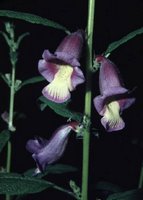
Sesame is among the most important oil seeds of mankind, and one of its oldest. There are very different kinds of sesame oil available, and some knowledge about their culinary properties is required to make a competent choice.
Oriental sesame oil owes its characteristic flavour to a huge number of compounds which form only during the toasting procedure. Toasted sesame seeds are a common spice in Eastern Asia; it is often sprinkled over Japanese and Korean dishes.
Read more and look at more photos of Gernot Katzer:
Sesame, (Sesamum indicum L.) : Spice Pages
Various names for the Sesame in India, this is the beginning of a list:
Gujarati : Mittho-tel, Tal
Hindi : Til, Gingli
Marathi : Til, Ashadital, Bariktil
Nepali : Til
Punjabi : Til
Sanskrit : Tila
Tamil : Ellu, Yellu, Jinjili
:::::::::::::::::::::::::::::::::::::::::::::::::::::::::::::::::::::::::::::::::::::::::::::::::::::
Til oil - which is called - Nalla ennai, meaning 'good oil' has been in use by Tamizhs for centuries.
When we were children my mother use to rub Til oil on our hair every Saturday. A ritual that she meticulously followed for years. She would rub and coax the oil in gently into the scalp and the movement used to be so soothing. . . an experience in itself.
pickle making:
the smell of sesame seeds
as it bursts in oil
kala ramesh
*****************************
Worldwide use
Japan
sesame, goma ゴマ、ごま、胡麻
fresh sesame seeds, shin goma 新胡麻
cutting sesame plants, goma karu 胡麻刈る
............. MORE
Goma ... Sesame KIGO in mid-Autumn
This plant has been know to Japan since olden times. Its oil and seeds are ingredients of the Japanese quisine. The seeds are harvested in September.
The seeds come in four colors, white, black, golden and green.
Sesame Tofu (gomadoofu 胡麻豆腐)、a kind of pudding, is one of the best treats of the Zen kitchen.
See the SESAME SUMMER KIGO below.
Gabi Greve
:::::::::::::::::::::::::::::::::::::::::::::::::::::::::::::::::::::::::::::::::::::::::::::::::::::
Tibet
Tilopa
One of the famous Mahasiddhas, Tilopa, is closely related to the Sesame plant.
Some wall paintings in Tibet show him pounding sesame seeds in a mortar. As the oil is within the seed, but not visible, so is enlightenment innate to a human being.
Tilopa pounding Sesame
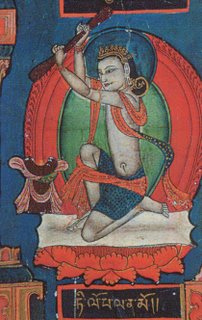
© Photo from an article by Rob Linrothe
Orientations Volume 37 - April 2006
................................
Tilopa (988-1069)
was born a brahmin in India, but he renounced the world while still quite young to become an ascetic. After a short period, he had a vision of a dakini who gave him an explicit tantric initiation that connected him directly with the Void. She enjoined him to throw away his monk's robes, to act spontaneously and to practice in secret.
He became a wandering yogi and received instructions from several siddhas. In Bengal he spent twelve years earning his living by producing oil from sesame seed during the day, and working in the service of a prostitute by night, thus abjuring completely his brahmin status. (Tilopa was named for the til or sesame seed.)
Later on, meditating in a seclusion in a tiny grass hut, he came face-to-face with the form of Buddha Vajradhara. The Kagyu denomination holds the Mahamudra teachings that were received directly from Vajradhara via Tilopa.
Following that realization, this unpredictable and powerful master wandered about the country teaching and performing miracles.
He is considered a master in the attitude and techniques of four distinct transmissions.
http://www.khandro.net/TibBud_Tilopa.htm
*****************************
Things found on the way
Sesame cookies with haiku inside!
www.boisepoetry.com/news.htm
*****************************
HAIKU
Two Haiga from Japan
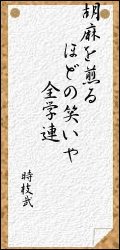
胡麻を煎るほどの笑いや全学連
goma o iru hodo no warai ya zen gakuren
such a laugh
when roasting sesame seeds -
All Japan Students Association
(Tr. Gabi Greve)
時枝武
Zengakuren (全学連)
All-Japan Federation of Students' Self-Governing Associations
xxxxxxxxxxxxxx
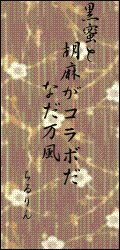
黒蜜と胡麻がコラボだなだ万風
kuromitsu to goma ga korabo da nada manpuu
black honey and
sesame in collaboration -
what a desert pudding !
(Tr. Gabi Greve)
ちるりん さん
http://haiku.blog.livedoor.com/ichiran.php?kg=8681
xxxxxxxxxxxxxxxxxxxxxxxxxxxxx
Stray sesame seed
Lodged in the stapler
Breakfast at his desk again
George M. Wallace: A fool in the Forest
xxxxxxxxxxxxxxxxxxxxxxxxxxxxx
enlightenment
not too far away
sesame paste on my bread
Gabi Greve, March 2006
xxxxxxxxxxxxxxxxxxxxxxxxxxxxx
Eat you up then
enlightenment through gingili gingili
it's so easy so easy!
Aju Mukhopadhyay, India
xxxxxxxxxxxxxxxxxxxxxxxxxxxxx
On Saturdays, before rubbing the oil on the head, two things are traditionally done:
1. The oil is to slightly heated before such a bath is taken/given.
2. Mother or some other elder of the house dips her/his finger into the oil bowl and make seven (five for girls) dots of oil on the right thigh (left for female).
Seven signify the seven mythological Aswathaamaa, Bali, Vyaasaa, Hanumaan, Vibishanaa, Kripa and Parasurama – all these are believed to have no death - "chiranjeevi" ie living for ever.
Five signify the five mythological "kanyaa" ( exact equivalent –
virgin ) but generally here refers to exceptionally virtuous women held in high esteem - Akalya, Draupadi, Sita, Tara and Mandotari.
The idea of keeping the dots – the person being given the oil bath is to be like them or to be blessed by them.
saturday
he has sesame oil bath
with the seven
all over body
nalla ennai cools her
five smiling
alone
she remembers mom
taking oilbath
fragrance
sesame oil lingers on hair
saturday morning
Diwali
kid shows off in new clothes
after oil bath
A.Thiagarajan
:::::::::::::::::::::::::::::::::::::::::::::::::::::::::::::::::::::::::::::::::::::::::::::::::::::
sesame flowers -
a yellow sun slips
from a monk's fist
- Shared by Harvinder Dhaliwal -
Joys of Japan, 2012
*****************************
Related words
***** Sesame Kigo for Summer
sowing sesame, goma maki 胡麻蒔き
sesame flowers, goma no hana 胡麻の花
:::::::::::::::::::::::::::::::::::::::::::::::::::::::::::::::::::::::::::::::::::::::::::::::::::::::::::::::::::::::::::
[ . BACK to DARUMA MUSEUM TOP . ]
[ . BACK to WORLDKIGO . TOP . ]
- #goma #sesame -
:::::::::::::::::::::::::::::::::::::::::::::::::::::::::::::::::::::::::::::::::::::::::::::::::::::::::::::::::::::::::::
:::::::::::::::::::::::::::::::::::::::::::::::::::::::::::::::::::::::::::::::::::::::::::::::::::::
Sesame (til, gingili)
goma 胡麻 sesame
***** Location: India, other areas
***** Season: Late Autumn
***** Category: Plant
*****************************
Explanation
Sesame (Sesamum indicum L.) is an ancient cultigen. Today, it is mostly grown in India and the Far East (China, Korea), but its origin is probably tropic Africa (although some other sources seem to favour an Indian origin).
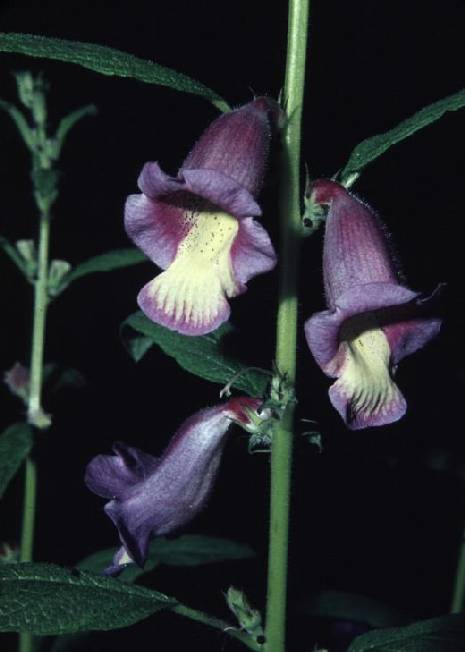
Sesame is among the most important oil seeds of mankind, and one of its oldest. There are very different kinds of sesame oil available, and some knowledge about their culinary properties is required to make a competent choice.
Oriental sesame oil owes its characteristic flavour to a huge number of compounds which form only during the toasting procedure. Toasted sesame seeds are a common spice in Eastern Asia; it is often sprinkled over Japanese and Korean dishes.
Read more and look at more photos of Gernot Katzer:
Sesame, (Sesamum indicum L.) : Spice Pages
Various names for the Sesame in India, this is the beginning of a list:
Gujarati : Mittho-tel, Tal
Hindi : Til, Gingli
Marathi : Til, Ashadital, Bariktil
Nepali : Til
Punjabi : Til
Sanskrit : Tila
Tamil : Ellu, Yellu, Jinjili
:::::::::::::::::::::::::::::::::::::::::::::::::::::::::::::::::::::::::::::::::::::::::::::::::::::
Til oil - which is called - Nalla ennai, meaning 'good oil' has been in use by Tamizhs for centuries.
When we were children my mother use to rub Til oil on our hair every Saturday. A ritual that she meticulously followed for years. She would rub and coax the oil in gently into the scalp and the movement used to be so soothing. . . an experience in itself.
pickle making:
the smell of sesame seeds
as it bursts in oil
kala ramesh
*****************************
Worldwide use
Japan
sesame, goma ゴマ、ごま、胡麻
fresh sesame seeds, shin goma 新胡麻
cutting sesame plants, goma karu 胡麻刈る
............. MORE
Goma ... Sesame KIGO in mid-Autumn
This plant has been know to Japan since olden times. Its oil and seeds are ingredients of the Japanese quisine. The seeds are harvested in September.
The seeds come in four colors, white, black, golden and green.
Sesame Tofu (gomadoofu 胡麻豆腐)、a kind of pudding, is one of the best treats of the Zen kitchen.
See the SESAME SUMMER KIGO below.
Gabi Greve
:::::::::::::::::::::::::::::::::::::::::::::::::::::::::::::::::::::::::::::::::::::::::::::::::::::
Tibet
Tilopa
One of the famous Mahasiddhas, Tilopa, is closely related to the Sesame plant.
Some wall paintings in Tibet show him pounding sesame seeds in a mortar. As the oil is within the seed, but not visible, so is enlightenment innate to a human being.
Tilopa pounding Sesame
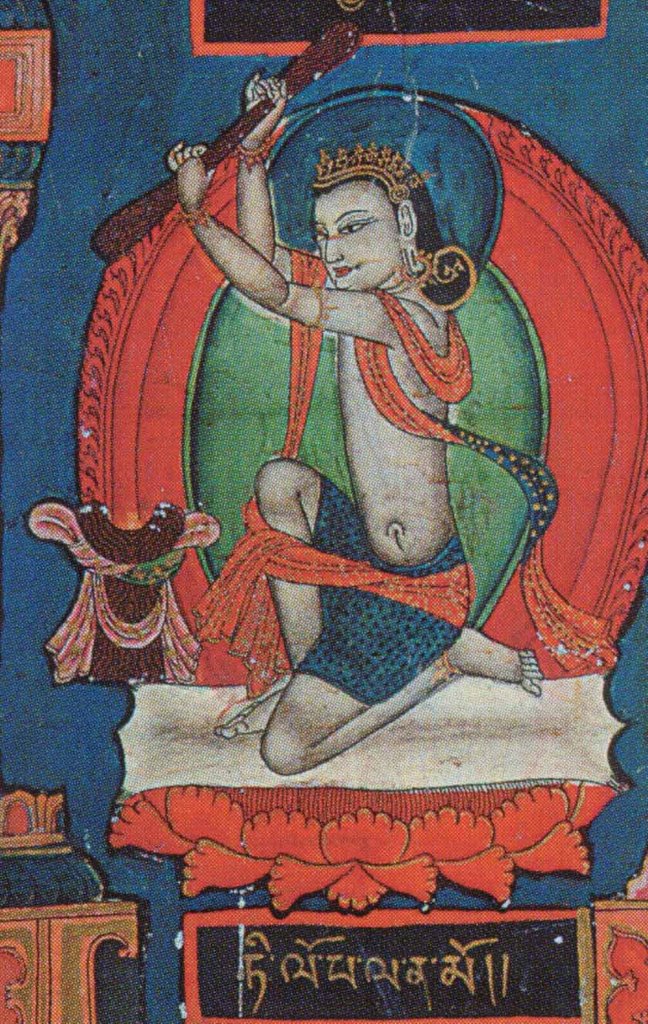
© Photo from an article by Rob Linrothe
Orientations Volume 37 - April 2006
................................
Tilopa (988-1069)
was born a brahmin in India, but he renounced the world while still quite young to become an ascetic. After a short period, he had a vision of a dakini who gave him an explicit tantric initiation that connected him directly with the Void. She enjoined him to throw away his monk's robes, to act spontaneously and to practice in secret.
He became a wandering yogi and received instructions from several siddhas. In Bengal he spent twelve years earning his living by producing oil from sesame seed during the day, and working in the service of a prostitute by night, thus abjuring completely his brahmin status. (Tilopa was named for the til or sesame seed.)
Later on, meditating in a seclusion in a tiny grass hut, he came face-to-face with the form of Buddha Vajradhara. The Kagyu denomination holds the Mahamudra teachings that were received directly from Vajradhara via Tilopa.
Following that realization, this unpredictable and powerful master wandered about the country teaching and performing miracles.
He is considered a master in the attitude and techniques of four distinct transmissions.
http://www.khandro.net/TibBud_Tilopa.htm
*****************************
Things found on the way
Sesame cookies with haiku inside!
www.boisepoetry.com/news.htm
*****************************
HAIKU
Two Haiga from Japan

胡麻を煎るほどの笑いや全学連
goma o iru hodo no warai ya zen gakuren
such a laugh
when roasting sesame seeds -
All Japan Students Association
(Tr. Gabi Greve)
時枝武
Zengakuren (全学連)
All-Japan Federation of Students' Self-Governing Associations
xxxxxxxxxxxxxx
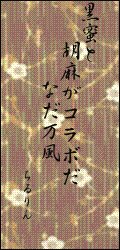
黒蜜と胡麻がコラボだなだ万風
kuromitsu to goma ga korabo da nada manpuu
black honey and
sesame in collaboration -
what a desert pudding !
(Tr. Gabi Greve)
ちるりん さん
http://haiku.blog.livedoor.com/ichiran.php?kg=8681
xxxxxxxxxxxxxxxxxxxxxxxxxxxxx
Stray sesame seed
Lodged in the stapler
Breakfast at his desk again
George M. Wallace: A fool in the Forest
xxxxxxxxxxxxxxxxxxxxxxxxxxxxx
enlightenment
not too far away
sesame paste on my bread
Gabi Greve, March 2006
xxxxxxxxxxxxxxxxxxxxxxxxxxxxx
Eat you up then
enlightenment through gingili gingili
it's so easy so easy!
Aju Mukhopadhyay, India
xxxxxxxxxxxxxxxxxxxxxxxxxxxxx
On Saturdays, before rubbing the oil on the head, two things are traditionally done:
1. The oil is to slightly heated before such a bath is taken/given.
2. Mother or some other elder of the house dips her/his finger into the oil bowl and make seven (five for girls) dots of oil on the right thigh (left for female).
Seven signify the seven mythological Aswathaamaa, Bali, Vyaasaa, Hanumaan, Vibishanaa, Kripa and Parasurama – all these are believed to have no death - "chiranjeevi" ie living for ever.
Five signify the five mythological "kanyaa" ( exact equivalent –
virgin ) but generally here refers to exceptionally virtuous women held in high esteem - Akalya, Draupadi, Sita, Tara and Mandotari.
The idea of keeping the dots – the person being given the oil bath is to be like them or to be blessed by them.
saturday
he has sesame oil bath
with the seven
all over body
nalla ennai cools her
five smiling
alone
she remembers mom
taking oilbath
fragrance
sesame oil lingers on hair
saturday morning
Diwali
kid shows off in new clothes
after oil bath
A.Thiagarajan
:::::::::::::::::::::::::::::::::::::::::::::::::::::::::::::::::::::::::::::::::::::::::::::::::::::
sesame flowers -
a yellow sun slips
from a monk's fist
- Shared by Harvinder Dhaliwal -
Joys of Japan, 2012
*****************************
Related words
***** Sesame Kigo for Summer
sowing sesame, goma maki 胡麻蒔き
sesame flowers, goma no hana 胡麻の花
:::::::::::::::::::::::::::::::::::::::::::::::::::::::::::::::::::::::::::::::::::::::::::::::::::::::::::::::::::::::::::
[ . BACK to DARUMA MUSEUM TOP . ]
[ . BACK to WORLDKIGO . TOP . ]
- #goma #sesame -
:::::::::::::::::::::::::::::::::::::::::::::::::::::::::::::::::::::::::::::::::::::::::::::::::::::::::::::::::::::::::::
4/20/2006
Parijaat blossoms
[ . BACK to Worldkigo TOP . ]
:::::::::::::::::::::::::::::::::::::::::::::::::::::::::::::::::::::::::::::::::::::::::::::::::::::
Parijaat blossoms
***** Location: India
***** Season: Autumn
***** Category: Plant
*****************************
Explanation
Parijaat blossoms , Parijat blossoms

"Har Singar", "Sephali" "Sephalika"
and "Night Jasmine"
Indian celestial tree
quote
Nyctanthes arbor-tristis (Night-flowering Jasmine) is a species of Nyctanthes, native to southern Asia, from northern Pakistan and Nepal south through northern India and southeast to Thailand.
commonly known as
Night-flowering Jasmine
Coral Jasmine
Parijat (also spelled Paarijat or Paarijaata)
Harsingar
Shephali, Shefali
Maramalli or Pavazha malli in Tamil
(Also spelled pavaza malli or pavala malli)
The tree is sometimes called the "tree of sorrow", because the flowers lose their brightness during daytime; the scientific name arbor-tristis also means "sad tree".
The flowers are gently shaken from the tree and used as offerings in temples.
The flowers can also be used as a source of yellow dye for clothing.
The flower is the official flower of the state of West Bengal, India, and for Kanchanaburi Province, Thailand.
Mythology
Parijat appears in several Hindu myths. In one myth, which appears in Srimad Bhagavatam, the Mahabharata and the Vishnu Purana, Parijat appeared as the result of the Samudra manthan (Churning of the Milky Ocean). In another myth, Parijat was brought to earth by Krishna from Indra's garden.
In Hindu mythology, there is a story involving Lord Krishna about a parijat and Krishna's two wives, Satyabhama and Rukmini. Satyabhama wanted this "Parijat" tree from the Heaven to be planted in her garden. Rukmini too, took a fancy to the flower. Krishna, wanting to keep both his wives happy, planted this tree so that the flowers fell in Rukmini’s garden while the tree remained in Satyabhama’s garden.

Krishna Taking The Parijat Tree
The tree was planted in the garden of Indra, the Lord of Heavens. Even as Krishna stole a branch of the tree he was spotted by Indra. However, Indra desisted from placing a curse on Krishna since he was an incarnation of Vishnu. Still, Indra put forth a curse on the stolen branch that it will never bear fruit even though the flowers may bloom on the tree. Since the day the tree was planted at Barabanki (the wives' garden), it flowers but does not reproduce, because it has no seeds and the branch cannot take root.
© More in the WIKIPEDIA !
:::::::::::::::::::::::::::::::::::::::::::::::::::::::::::::::::::::::::::::::::::::::::::::::::::
One special Parijaat Tree
Village Kintur, about 38 km east of district headquarters Barabanki was named after Kunti, mother of the Pandavas. There are a number ancient temples and their remains around this place. Nearby a temple established by Kunti, is a special tree called Parijaat. There are a number of sayings about this tree, which have popular acceptance. One being the Parijaat Tree.
This tree blossoms very occasionally, with very few flower, but when it does, that is after the 'Ganga Dashehra', spreads its fragrance far and wide. The age of this tree is said to be 1000 to 5000 years. The perimeter of the trunk of this tree is around 50 feet and height of around 45 feet.
© More in the WIKIPEDIA !
*****************************
Worldwide use
*****************************
Things found on the way
*****************************
HAIKU
gentle drizzle
moistening my cheek
parijat blossom
Kala Ramesh
This poem is dedicated to Kala Ramesh's father, Dr. N. Krishnaswamy (86 years), a practicing doctor and allergy specialist at Chennai, and to her mother, Mrs. Kalyani Krishnaswamy (75 years), an inspiring Tamil poet, and to their love of parijat blossoms and respect for Mother Nature.
source : www.ahapoetry.com / TRIPARSHVA RENGA, 2007
:::::::::::::::::::::::::::::::::::::::::::::::::::::::::::::::::::::::::::::::::::::::::::::::::::::
drifting scent of parijata ...
I gently let go
of her cold hand
- Shared by Sandip Sital Chauhan -
Joys of Japan, August 2012
:::::::::::::::::::::::::::::::::::::::::::::::::::::::::::::::::::::::::::::::::::::::::::::::::::::
hope returns
with the fragrant autumn breeze--
shefali flowers
scent of shefali
in the autumn breeze--
a forgotten promise
scent of shefali--
the vermillion smeared goddess
in the temple

- Shared by Arvinder Kaur -
Joys of Japan, 2012
..........................................................................
Parijat with white petals and deep orange stem is believed to be a flower of the heavenly garden (Nandan Kanan). Lord Vishnu is fone of this flower. It has a mild enchanting aroma.
good monsoon --
parijat forms a carpet
on the ground
Kumarendra Mallick
*****************************
Related words
***** . Jasmine, Jasmin (matsurika) .
Jasminum officinale
[ . BACK to WORLDKIGO . TOP . ]
:::::::::::::::::::::::::::::::::::::::::::::::::::::::::::::::::::::::::::::::::::::::::::::::::::::
:::::::::::::::::::::::::::::::::::::::::::::::::::::::::::::::::::::::::::::::::::::::::::::::::::::
Parijaat blossoms
***** Location: India
***** Season: Autumn
***** Category: Plant
*****************************
Explanation
Parijaat blossoms , Parijat blossoms
"Har Singar", "Sephali" "Sephalika"
and "Night Jasmine"
Indian celestial tree
quote
Nyctanthes arbor-tristis (Night-flowering Jasmine) is a species of Nyctanthes, native to southern Asia, from northern Pakistan and Nepal south through northern India and southeast to Thailand.
commonly known as
Night-flowering Jasmine
Coral Jasmine
Parijat (also spelled Paarijat or Paarijaata)
Harsingar
Shephali, Shefali
Maramalli or Pavazha malli in Tamil
(Also spelled pavaza malli or pavala malli)
The tree is sometimes called the "tree of sorrow", because the flowers lose their brightness during daytime; the scientific name arbor-tristis also means "sad tree".
The flowers are gently shaken from the tree and used as offerings in temples.
The flowers can also be used as a source of yellow dye for clothing.
The flower is the official flower of the state of West Bengal, India, and for Kanchanaburi Province, Thailand.
Mythology
Parijat appears in several Hindu myths. In one myth, which appears in Srimad Bhagavatam, the Mahabharata and the Vishnu Purana, Parijat appeared as the result of the Samudra manthan (Churning of the Milky Ocean). In another myth, Parijat was brought to earth by Krishna from Indra's garden.
In Hindu mythology, there is a story involving Lord Krishna about a parijat and Krishna's two wives, Satyabhama and Rukmini. Satyabhama wanted this "Parijat" tree from the Heaven to be planted in her garden. Rukmini too, took a fancy to the flower. Krishna, wanting to keep both his wives happy, planted this tree so that the flowers fell in Rukmini’s garden while the tree remained in Satyabhama’s garden.

Krishna Taking The Parijat Tree
The tree was planted in the garden of Indra, the Lord of Heavens. Even as Krishna stole a branch of the tree he was spotted by Indra. However, Indra desisted from placing a curse on Krishna since he was an incarnation of Vishnu. Still, Indra put forth a curse on the stolen branch that it will never bear fruit even though the flowers may bloom on the tree. Since the day the tree was planted at Barabanki (the wives' garden), it flowers but does not reproduce, because it has no seeds and the branch cannot take root.
© More in the WIKIPEDIA !
:::::::::::::::::::::::::::::::::::::::::::::::::::::::::::::::::::::::::::::::::::::::::::::::::::
One special Parijaat Tree
Village Kintur, about 38 km east of district headquarters Barabanki was named after Kunti, mother of the Pandavas. There are a number ancient temples and their remains around this place. Nearby a temple established by Kunti, is a special tree called Parijaat. There are a number of sayings about this tree, which have popular acceptance. One being the Parijaat Tree.
This tree blossoms very occasionally, with very few flower, but when it does, that is after the 'Ganga Dashehra', spreads its fragrance far and wide. The age of this tree is said to be 1000 to 5000 years. The perimeter of the trunk of this tree is around 50 feet and height of around 45 feet.
© More in the WIKIPEDIA !
*****************************
Worldwide use
*****************************
Things found on the way
*****************************
HAIKU
gentle drizzle
moistening my cheek
parijat blossom
Kala Ramesh
This poem is dedicated to Kala Ramesh's father, Dr. N. Krishnaswamy (86 years), a practicing doctor and allergy specialist at Chennai, and to her mother, Mrs. Kalyani Krishnaswamy (75 years), an inspiring Tamil poet, and to their love of parijat blossoms and respect for Mother Nature.
source : www.ahapoetry.com / TRIPARSHVA RENGA, 2007
:::::::::::::::::::::::::::::::::::::::::::::::::::::::::::::::::::::::::::::::::::::::::::::::::::::
drifting scent of parijata ...
I gently let go
of her cold hand
- Shared by Sandip Sital Chauhan -
Joys of Japan, August 2012
:::::::::::::::::::::::::::::::::::::::::::::::::::::::::::::::::::::::::::::::::::::::::::::::::::::
hope returns
with the fragrant autumn breeze--
shefali flowers
scent of shefali
in the autumn breeze--
a forgotten promise
scent of shefali--
the vermillion smeared goddess
in the temple
- Shared by Arvinder Kaur -
Joys of Japan, 2012
..........................................................................
Parijat with white petals and deep orange stem is believed to be a flower of the heavenly garden (Nandan Kanan). Lord Vishnu is fone of this flower. It has a mild enchanting aroma.
good monsoon --
parijat forms a carpet
on the ground
Kumarendra Mallick
*****************************
Related words
***** . Jasmine, Jasmin (matsurika) .
Jasminum officinale
[ . BACK to WORLDKIGO . TOP . ]
:::::::::::::::::::::::::::::::::::::::::::::::::::::::::::::::::::::::::::::::::::::::::::::::::::::
10/14/2005
Ananda Joshi
[ . BACK to Worldkigo TOP . ]
:::::::::::::::::::::::::::::::::::::::::::::::::::::::::::::::::::::::::::::::::::::::::::::::::::::
Dr. Ananda Joshi
Dr. Ananda Joshi is a pioneer leading poet of Nepal Bhasa new poetry.
His published three poetry books " Visthapit Ji - Ji Makhu", "Koshaloha" and " Ananda Joshi ya Kavita・." are regarded as the milestones in the Nepalese New Poetry. He is also a Haiku poet, he has already published many haiku in the various magazines.
According to him "Haiku is one of the proper ways to present the interlinkages between nature, resources and human actions. Though it is a small canvas, it is a powerful medium for new form of expression of live-situation, feelings and visions.
At present, Haiku becomes one of the essential components of Nepalese life."
His new Haiku book, named "Ananda Joshi's 101 Haiku" is going to publish shortly.

Dr. Ananda Raj Joshi is one of the distinguished Environmental Management Experts and Former Director General of South Asia Co-operative Environment Programme (SACEP) and South Asian Seas Programme (SAS), Sri Lanka.
Dr. Ananda Raj Joshi
Nepal Bhasa (नेपाल भाषा, also known as Newah Bhaye and Newari) is one of the major languages of Nepal.
Read more about the language : Wikipedia
:::::::::::::::::::::::::::::::::::::::::::::::::::::::::::::::::::::::::::::::::::::::::::::::::::::
Sound of a gong
in the silent night
Oasis, he is
Seasons have come and passed
Plants bear no leaves or flowers
Change is handicapped
You also have a flame within you
You traded the flame to survive
Now you are dark as night
:::::::::::::::::::::::::::::::::::::::::::::::::::::::::::::::::::::::::::::::::::::::::::::::::::::
Modern Haiku : Concept and Future Directives
Recently a workshop related to Modern Haiku in Nepal was organized by the Haiku Foundation. In this workshop, the founder and leading modern poet Dr. Ananda Joshi presented a paper on the concept and future direction of Modern Haiku entitled “ Modern Haiku : Concept, Status and Future Directive Policies”. In the presentation, he gave a new concept integrating three interrelated and interdependent components: Life, Environment (surrounding features), and Development (Fig. 1). Modern haiku‘s dimension and coverage have already changed. At present, modern life and issues are quite different and complex and a lot of new issues and challenges are emerging in the ecological systems, surroundings, and life supporting mechanisms. The people of today, their habitat’s status, their work and other activities influence the topics and contents of modern haiku.
Modern haiku poets need to consider not only nature, but other components such as physical, biological, social, economic and cultural aspects. Therefore, this is the only way to express the carrying capacity of resources, needs of people, as well as present and future development. He has also given some examples of modern Nepalbhasa haikus. The workshop was participated by haiku poets, poets, writers, journalists and critics. His concept was new not only to Nepal but to the other countries as well. The participants accepted this concept and expressed their views to implement this modern concept.

This paper has been published in the haiku magazine “Newa Haiku, Vol 8 & 9, 2013” and in the book, named “Today’s Poetry: Living Footsteps”, written by Dr. Ananda Joshi

Two Haiku books
“Borderless Word : Borderless Me” and
“New Direction: Ripples of Awareness”,
one book on philosophy of poetry and haiku
“Today’s Poetry : Living Footsteps”, and one book of modern poetry
“The Erupted Fujiama : Revolution’s First Voice” authored by Dr. Ananda Joshi ,
one of the founders and leading modern poets of Nepalbhasa of Nepal, were published. These books have given a new vision and direction in the development of modern poetry and haiku in Nepal.

*****************************
BACK TO
Haiku Poets from Nepal
[ . BACK to WORLDKIGO . TOP . ]
:::::::::::::::::::::::::::::::::::::::::::::::::::::::::::::::::::::::::::::::::::::::::::::::::::::
:::::::::::::::::::::::::::::::::::::::::::::::::::::::::::::::::::::::::::::::::::::::::::::::::::::
Dr. Ananda Joshi
Dr. Ananda Joshi is a pioneer leading poet of Nepal Bhasa new poetry.
His published three poetry books " Visthapit Ji - Ji Makhu", "Koshaloha" and " Ananda Joshi ya Kavita・." are regarded as the milestones in the Nepalese New Poetry. He is also a Haiku poet, he has already published many haiku in the various magazines.
According to him "Haiku is one of the proper ways to present the interlinkages between nature, resources and human actions. Though it is a small canvas, it is a powerful medium for new form of expression of live-situation, feelings and visions.
At present, Haiku becomes one of the essential components of Nepalese life."
His new Haiku book, named "Ananda Joshi's 101 Haiku" is going to publish shortly.

Dr. Ananda Raj Joshi is one of the distinguished Environmental Management Experts and Former Director General of South Asia Co-operative Environment Programme (SACEP) and South Asian Seas Programme (SAS), Sri Lanka.
Dr. Ananda Raj Joshi
Nepal Bhasa (नेपाल भाषा, also known as Newah Bhaye and Newari) is one of the major languages of Nepal.
Read more about the language : Wikipedia
:::::::::::::::::::::::::::::::::::::::::::::::::::::::::::::::::::::::::::::::::::::::::::::::::::::
Sound of a gong
in the silent night
Oasis, he is
Seasons have come and passed
Plants bear no leaves or flowers
Change is handicapped
You also have a flame within you
You traded the flame to survive
Now you are dark as night
:::::::::::::::::::::::::::::::::::::::::::::::::::::::::::::::::::::::::::::::::::::::::::::::::::::
Modern Haiku : Concept and Future Directives
Recently a workshop related to Modern Haiku in Nepal was organized by the Haiku Foundation. In this workshop, the founder and leading modern poet Dr. Ananda Joshi presented a paper on the concept and future direction of Modern Haiku entitled “ Modern Haiku : Concept, Status and Future Directive Policies”. In the presentation, he gave a new concept integrating three interrelated and interdependent components: Life, Environment (surrounding features), and Development (Fig. 1). Modern haiku‘s dimension and coverage have already changed. At present, modern life and issues are quite different and complex and a lot of new issues and challenges are emerging in the ecological systems, surroundings, and life supporting mechanisms. The people of today, their habitat’s status, their work and other activities influence the topics and contents of modern haiku.
Modern haiku poets need to consider not only nature, but other components such as physical, biological, social, economic and cultural aspects. Therefore, this is the only way to express the carrying capacity of resources, needs of people, as well as present and future development. He has also given some examples of modern Nepalbhasa haikus. The workshop was participated by haiku poets, poets, writers, journalists and critics. His concept was new not only to Nepal but to the other countries as well. The participants accepted this concept and expressed their views to implement this modern concept.

This paper has been published in the haiku magazine “Newa Haiku, Vol 8 & 9, 2013” and in the book, named “Today’s Poetry: Living Footsteps”, written by Dr. Ananda Joshi

Two Haiku books
“Borderless Word : Borderless Me” and
“New Direction: Ripples of Awareness”,
one book on philosophy of poetry and haiku
“Today’s Poetry : Living Footsteps”, and one book of modern poetry
“The Erupted Fujiama : Revolution’s First Voice” authored by Dr. Ananda Joshi ,
one of the founders and leading modern poets of Nepalbhasa of Nepal, were published. These books have given a new vision and direction in the development of modern poetry and haiku in Nepal.

*****************************
BACK TO
Haiku Poets from Nepal
[ . BACK to WORLDKIGO . TOP . ]
:::::::::::::::::::::::::::::::::::::::::::::::::::::::::::::::::::::::::::::::::::::::::::::::::::::
2/01/2005
Bamdev Sharma
[ . BACK to WORLDKIGO . TOP . ]
:::::::::::::::::::::::::::::::::::::::::::::::::::::::::::::::::::::::::::::::::::::::::::::::::::::
Bamdev Sharma
Bamdev Sharma is an English Language Teacher from Dang in Nepal who intends to make a career of creative writing. He started writing in 1994.
Bamdev Sharma, Nepal
:::::::::::::::::::::::::::::::::::::::::::::::::::::::::::::::::::::::::::::::::::::::::::::::::::::
Cool night
jackdows' wings squeeze
white wintry spot.
In the paddy field
a boulder stands for the songs
each time.
Thread of life
from the garment of the sky
falls as hailstone.
mountain
under the veil of horizon
to become fire
morning chase
falcon's headlong dart
coloured by rainbow
Spring 2006
:::::::::::::::::::::::::::::::::::::::::::::::::::::::::::::::::::::::::::::::::::::::::::::::::::::
Sprouting shoots
snow's grappling loose
under sunny marks.
waspy clouds
over pouring with jewels
pulling rocks
lightening --
December's hidden purple
in the dry ivy
long way
meandering walks swerving
waiting chilly wind
:::::::::::::::::::::::::::::::::::::::::::::::::::::::::::::::::::::::::::::::::::::::::::::::::::::
whistling meadow -
sheep in a solitary ramble
drench and splash
parsimonious butterflies
in a ferocious windy tangle
clasping benign sepals
. Butterfly Haiku
*****************************
Related words
***** Haiku in Nepal
[ . BACK to WORLDKIGO . TOP . ]
:::::::::::::::::::::::::::::::::::::::::::::::::::::::::::::::::::::::::::::::::::::::::::::::::::::
:::::::::::::::::::::::::::::::::::::::::::::::::::::::::::::::::::::::::::::::::::::::::::::::::::::
Bamdev Sharma
Bamdev Sharma is an English Language Teacher from Dang in Nepal who intends to make a career of creative writing. He started writing in 1994.
Bamdev Sharma, Nepal
:::::::::::::::::::::::::::::::::::::::::::::::::::::::::::::::::::::::::::::::::::::::::::::::::::::
Cool night
jackdows' wings squeeze
white wintry spot.
In the paddy field
a boulder stands for the songs
each time.
Thread of life
from the garment of the sky
falls as hailstone.
mountain
under the veil of horizon
to become fire
morning chase
falcon's headlong dart
coloured by rainbow
Spring 2006
:::::::::::::::::::::::::::::::::::::::::::::::::::::::::::::::::::::::::::::::::::::::::::::::::::::
Sprouting shoots
snow's grappling loose
under sunny marks.
waspy clouds
over pouring with jewels
pulling rocks
lightening --
December's hidden purple
in the dry ivy
long way
meandering walks swerving
waiting chilly wind
:::::::::::::::::::::::::::::::::::::::::::::::::::::::::::::::::::::::::::::::::::::::::::::::::::::
whistling meadow -
sheep in a solitary ramble
drench and splash
parsimonious butterflies
in a ferocious windy tangle
clasping benign sepals
. Butterfly Haiku
*****************************
Related words
***** Haiku in Nepal
[ . BACK to WORLDKIGO . TOP . ]
:::::::::::::::::::::::::::::::::::::::::::::::::::::::::::::::::::::::::::::::::::::::::::::::::::::
Subscribe to:
Posts (Atom)


 Posts
Posts


