[ . BACK to TOP . ]
:::::::::::::::::::::::::::::::::::::::::::::::::::::::::::::::::::::::::::::::::::::::::::::::::::::
Indian Music
by Narayanan Raghunathan
Indian Classical Music is a Vast Ocean considered to be Anaadi { Beginningless]
Revelations by tradtionalists. Shruthi, Raag[am], and Thaala{m], are the three major aspects of Indian Classical Music. Shruthi may be roughly called the Drone! Shruthi in Sanskrit { and in many Indian Languages ] means A Revelation heard.
Rig Yajur Saama and Atharva are the four Vedas [ vid ~ to Know ] Revealed and hence Shruthi. In Indian music Tampura (Tanpura) plays the Shruthi. It may be roughly treated as a static cord in western music terminology.
The Saptha Swaras [ The seven basic notes ] make the Raag[am]. But the Raaga or Raagam is not simply an ascending and descending scale of fixed notes. It has a unique Bhaavam[ Mood Expression, Life]. There are Innumerable Raagam[s].
Thaal[am] is the Rhythmic Gait [ Beat roughly ]
But unlike western beats which are near here cyclic rhythms are used, which in extravagant theoretical way we can assert there are infinite Thaal[am]s. But then few finite easy ones are practised generally.
Technically twenty two Shruthis are practised. Or basic drone pitch.
There are two very major distinct styles of Indian Classical Music practised.
Karnaatik [South Indian] and Hindusthani [ North Indian].
The Hindusthani music has two major branches the older traditional "Dhrupad" style and the later "Khayaal" style. The semi-neo classical Thumri, Ghazal, Tappa Tarana, Quwaali etc. are secondary off shoot genres. Bhajans are a traditional genre sung in Dhyaana[m] and prayer.
All these use the Raag[am] and Thaal[am].
Raag [ Hindusthani ] Raagam [ Karnaatik ] , Raga ~ This word can variously mean colour, design, symmetry, organization. desire, etc ~
Thaal [ Hindusthani ] Thaalam { Karnatik } ~ Is Rtam Rhythm. That which is intrinsic to things.
The music exists in reference in the Indian Religio-mystic context as "Naada Brahman."
"Naada" is eternal indivisible resonant sounds soaked in innumerables silences.
Brahman is All this and Not All This.
The Turiya Awastha and Aum [Pranava] too.
Here are some of the topics that will be covered separately.
1] Raag[am]
2] Taal[am]
3] Shruthi
4] Pallavi
5] Anu Pallavi
6] Charanam
7] Geetham
8] Karnaatik
9] Hindusthani
10 ] Dhrupad
11 ] Khayaal
12 ] Vilambit
13 ] Dhrut
14 ] Arohana[m]
15 ] Avarohana[m]
16 ] Layam.
17 ] Aavarthanam
18 ] Thani Aavarthanam
19 ] Thumri
20 ] Ghazal
21 ] Thaanam
22 ] Taan
23 ] Gharaana
24 ] Swara[m]
25 ] Krithi
26 ] Keerthanam
27 ] Bhajan[ai]
28 ] Sahithy[am]
29 ] Naadam
30 ] Brahman
31 ] Naada Brahma[n]m
32 ] Naatya
33 ] Nrittha
34 ] Naatya Shaasthram
35 ] Maatra
36 ] Mudra
37 ] Bhaava
38 ] Rasa
39 ] Nava Rasa
40 ] Karana
41 ] Bharatha Muni
42 ] Bharatha Naatyam
43 ] Kathak
44 ] Odissi
45 ] Kathakali
46 ] Mohinyaattam
47 ] Koodiyaattam
48 ] Yaksha gaana
49 ] Manipuri
50 ] Sitar
51 ] Veena
52 ] Bansuri
53 ] Sarod
54 ] Shehnai
55 ] Naagaswaram
56 ] Gottu Vaadyam
57 ] Mridangam
58 ] Pakhawaj
59 ] Tabla
60 ] Chenda
61 } Maddalam
62 ] Edaykka
63 ] Udukku
64 ] Abhoga
65 ] Alamkara
66 ] Antara
Narayanan Raghunathan
2006
:::::::::::::::::::::::::::::::::::::::::::::::::::::::::::::::::::::::::::::::::::::::::::::::::::::
BACK TO
. Music of India .
[ . BACK to WORLDKIGO . TOP . ]
:::::::::::::::::::::::::::::::::::::::::::::::::::::::::::::::::::::::::::::::::::::::::::::::::::::
6/21/2006

6/15/2006
Puja, pooja, prayer
[ . BACK to WORLDKIGO TOP . ]
:::::::::::::::::::::::::::::::::::::::::::::::::::::::::::::::::::::::::::::::::::::::::::::::::::::
Puja, pooja, prayer
***** Location: India
***** Season: Topic
***** Category: Humanity
*****************************
Explanation
quote
Pūjā or alternative transliteration Pooja,
(Devanagari: पूजा) (Sanskrit: reverence, honour, adoration, or worship)
is a religious ritual performed by Hindus as an offering to various deities, distinguished persons, or special guests. It is done on a variety of occasions and settings, from daily puja done in the home, to temple ceremonies and large festivals, or to begin a new venture. Puja is modeled on the idea of giving a gift or offering to a deity or important person and receiving their blessing (Ashirvad). The two main areas where puja is performed is in the home and at public temples. There are many variations in scale, offering, and ceremony.
Puja is also performed on special occasions such as Durga Puja and Lakshmi Puja. The puja ritual is performed by Hindus worldwide. Various poojas are performed at various times of the day and on various occasions.
Temple puja
Guru puja
Short list of puja festivals
Diwali/Deepavali/Lakshmi Puja
Durga Puja
Ganesh Chaturthi
Holi
Kali Puja
Maha Shivaratri
Rath Yatra/Jagannath Puja
Raksha Bandhan
Saraswati Puja
© More in the WIKIPEDIA !
Pooja (Islam)
:::::::::::::::::::::::::::::::::::::::::::::::::::::::::::::::::::::::::::::::::::::::::::::::::::

Ganga puja (ritual of prayers) for the Ganges at Dasawamedh Ghat.
source : fredcan on flickr
*****************************
Worldwide use
*****************************
Things found on the way
*****************************
HAIKU
puja thali ~
my beaded rakhi thread
soaked in tears
Sandip Sital Chauhan
rakhi thread
Raksha Bandhan - Bond of Protection
:::::::::::::::::::::::::::::::::::::::::::::::::::::::::::::::::::::::::::::::::::::::::::::::::::::
gathering jasmine
in my duppatta -
morning pooja
Arvinder Kaur
. Dupatta scarf .
:::::::::::::::::::::::::::::::::::::::::::::::::::::::::::::::::::::::::::::::::::::::::::::::::::::
. WKD : Kanjak puja ritual .
. WKD : Parikrama circumambulation .
. WKD : Sari robes and puja .
. WKD : Shiva Raatri Night Pooja .
*****************************
Related words
. Faith and Prayer .
kitoo 祈祷 is often translated as "prayer"
and related kigo
[ . BACK to WORLDKIGO . TOP . ]
:::::::::::::::::::::::::::::::::::::::::::::::::::::::::::::::::::::::::::::::::::::::::::::::::::::
:::::::::::::::::::::::::::::::::::::::::::::::::::::::::::::::::::::::::::::::::::::::::::::::::::::
Puja, pooja, prayer
***** Location: India
***** Season: Topic
***** Category: Humanity
*****************************
Explanation
quote
Pūjā or alternative transliteration Pooja,
(Devanagari: पूजा) (Sanskrit: reverence, honour, adoration, or worship)
is a religious ritual performed by Hindus as an offering to various deities, distinguished persons, or special guests. It is done on a variety of occasions and settings, from daily puja done in the home, to temple ceremonies and large festivals, or to begin a new venture. Puja is modeled on the idea of giving a gift or offering to a deity or important person and receiving their blessing (Ashirvad). The two main areas where puja is performed is in the home and at public temples. There are many variations in scale, offering, and ceremony.
Puja is also performed on special occasions such as Durga Puja and Lakshmi Puja. The puja ritual is performed by Hindus worldwide. Various poojas are performed at various times of the day and on various occasions.
Temple puja
Guru puja
Short list of puja festivals
Diwali/Deepavali/Lakshmi Puja
Durga Puja
Ganesh Chaturthi
Holi
Kali Puja
Maha Shivaratri
Rath Yatra/Jagannath Puja
Raksha Bandhan
Saraswati Puja
© More in the WIKIPEDIA !
Pooja (Islam)
:::::::::::::::::::::::::::::::::::::::::::::::::::::::::::::::::::::::::::::::::::::::::::::::::::

Ganga puja (ritual of prayers) for the Ganges at Dasawamedh Ghat.
source : fredcan on flickr
*****************************
Worldwide use
*****************************
Things found on the way
*****************************
HAIKU
puja thali ~
my beaded rakhi thread
soaked in tears
Sandip Sital Chauhan
rakhi thread
Raksha Bandhan - Bond of Protection
:::::::::::::::::::::::::::::::::::::::::::::::::::::::::::::::::::::::::::::::::::::::::::::::::::::
gathering jasmine
in my duppatta -
morning pooja
Arvinder Kaur
. Dupatta scarf .
:::::::::::::::::::::::::::::::::::::::::::::::::::::::::::::::::::::::::::::::::::::::::::::::::::::
. WKD : Kanjak puja ritual .
. WKD : Parikrama circumambulation .
. WKD : Sari robes and puja .
. WKD : Shiva Raatri Night Pooja .
*****************************
Related words
. Faith and Prayer .
kitoo 祈祷 is often translated as "prayer"
and related kigo
[ . BACK to WORLDKIGO . TOP . ]
:::::::::::::::::::::::::::::::::::::::::::::::::::::::::::::::::::::::::::::::::::::::::::::::::::::
Rollerskates
nnnnnnnnnnnn TOP nnnnnnnnnnnnn
Rollerskates, Roller-skates, roller skates
***** Location: India, worldwide
***** Season: All Summer
***** Category: Humanity
*****************************
Explanation
This is one sport that is becoming very popular in India.
Schools encourage this sport for its easy to learn . . . and children do well in competitions.
Since we do not have snow and ice . . . ice-skating is extremely rare.
Roller-skates on roads and hilly slopes is very common in Pune - where I live.
We have roller-skating clubs on apartment terraces . . . It's fun to see kids moving on wheels. . . so effortlessly
Kala Ramesh
*****************************
Worldwide use
Roller Parade in Belgium
Roller skating is a very popular summer activity in Belgium. Brussels boasts the "Roller Parade" every Friday evening during summer months, when roller skaters, plus some cyclists, follow a set (but varying) route round the centre of Brussels, some 20 km or so, under police protection.
I happened to be standing at a street corner, chatting with a friend, one Friday evening this summer, when the police arrived and cordoned off the street, then followed the lead car playing good rhythmical music, a group of roller skaters distributing sweets to the bystanders, and finally a large group of skaters in the gathering dusk, many with headlights shining on their helmets, dashing along at
terrific speed. The cyclists following them, had some problems keeping up! The whole parade was closed by a first aid van, gathering in the skaters who had given up (very few indeed).
Brussels now allows roller skaters to use cycle lanes (and they have often overtaken me on the bike), and several police officers have been trained to work on skates in various settings.
Isabelle Prondzynski
*****************************
Things found on the way
*****************************
HAIKU
roller-skates . . .
taking the street-corner
the curve of her hips
Kala Ramesh
xxxxxxxxxxxxxxxxxxxxxxxxxxxxx
deepening dusk
bunch of lights, gliding helmets --
roller parade
Isabelle Prondzynski
xxxxxxxxxxxxxxxxxxxxxxxxxxxxx
saw this one in lancaster county:
it is fall, raining, yellow leaves on dark asphalt, traffic jam in a tiny amish town. sitting. sitting. taking comfort in the beauty of the fallen leaves. a fiftysomething amish man, carrying an umbrella to keep him dry, rolls by on his neongreenwheeled rollerblades, passing us all...
passing the traffic jam
the amish man
on roller blades
susan delphine delaney
plano, texas
*****************************
Related words
*****
[ . BACK to WORLDKIGO . TOP . ]
:::::::::::::::::::::::::::::::::::::::::::::::::::::::::::::::::::::::::::::::::::::::::::::::::::::
Rollerskates, Roller-skates, roller skates
***** Location: India, worldwide
***** Season: All Summer
***** Category: Humanity
*****************************
Explanation
This is one sport that is becoming very popular in India.
Schools encourage this sport for its easy to learn . . . and children do well in competitions.
Since we do not have snow and ice . . . ice-skating is extremely rare.
Roller-skates on roads and hilly slopes is very common in Pune - where I live.
We have roller-skating clubs on apartment terraces . . . It's fun to see kids moving on wheels. . . so effortlessly
Kala Ramesh
*****************************
Worldwide use
Roller Parade in Belgium
Roller skating is a very popular summer activity in Belgium. Brussels boasts the "Roller Parade" every Friday evening during summer months, when roller skaters, plus some cyclists, follow a set (but varying) route round the centre of Brussels, some 20 km or so, under police protection.
I happened to be standing at a street corner, chatting with a friend, one Friday evening this summer, when the police arrived and cordoned off the street, then followed the lead car playing good rhythmical music, a group of roller skaters distributing sweets to the bystanders, and finally a large group of skaters in the gathering dusk, many with headlights shining on their helmets, dashing along at
terrific speed. The cyclists following them, had some problems keeping up! The whole parade was closed by a first aid van, gathering in the skaters who had given up (very few indeed).
Brussels now allows roller skaters to use cycle lanes (and they have often overtaken me on the bike), and several police officers have been trained to work on skates in various settings.
Isabelle Prondzynski
*****************************
Things found on the way
*****************************
HAIKU
roller-skates . . .
taking the street-corner
the curve of her hips
Kala Ramesh
xxxxxxxxxxxxxxxxxxxxxxxxxxxxx
deepening dusk
bunch of lights, gliding helmets --
roller parade
Isabelle Prondzynski
xxxxxxxxxxxxxxxxxxxxxxxxxxxxx
saw this one in lancaster county:
it is fall, raining, yellow leaves on dark asphalt, traffic jam in a tiny amish town. sitting. sitting. taking comfort in the beauty of the fallen leaves. a fiftysomething amish man, carrying an umbrella to keep him dry, rolls by on his neongreenwheeled rollerblades, passing us all...
passing the traffic jam
the amish man
on roller blades
susan delphine delaney
plano, texas
*****************************
Related words
*****
[ . BACK to WORLDKIGO . TOP . ]
:::::::::::::::::::::::::::::::::::::::::::::::::::::::::::::::::::::::::::::::::::::::::::::::::::::
6/09/2006
Ritusamharam
[ . BACK to TOP . ]
:::::::::::::::::::::::::::::::::::::::::::::::::::::::::::::::::::::::::::::::::::::::::::::::::::::
Ritusamharam by Kalidasa
*****************************
Ritusamhara
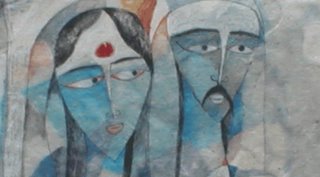
By Dr. Madhuri Bhosale
She has a deep and abiding interest in classical literature and folk art. Her series of paintings inspired by Kalidasa's Raghuvansham, Ritusamharam, Kumarsambhavam and projects a sense of originality.
http://www.himalayaartgallery.com/artist.htm
[ . BACK to WORLDKIGO . TOP . ]
:::::::::::::::::::::::::::::::::::::::::::::::::::::::::::::::::::::::::::::::::::::::::::::::::::::
:::::::::::::::::::::::::::::::::::::::::::::::::::::::::::::::::::::::::::::::::::::::::::::::::::::
Ritusamharam by Kalidasa
*****************************
Ritusamhara
SEASONS OF INDIA by Kala Ramesh The relationship between Man and Nature Beginning from literature, ayur veda [medical sciences] to music and dance - India has believed and advocated the harmony between man and nature. The word, Yoga is derived from the Sanskrit root- yuj- meaning to bind, join. It also means union. Yoga asanas are poses emulating the tree, the birds and the animals and through the practice of these postures, one discovers the art of living a healthy and disease-free life. "Nature has a life of its own in Indian thought- it enshrines centers of power, radiating holiness, plenitude and beauty" says Chandra Rajan - in KALIDASA- the loom of life. Kalidasa is the greatest poet and playwright in classical Sanskrit literature and one of the greatest in world literature. Taking Kalidasa's RITUSAMHARAM [the gathering of the seasons] a poem in six cantos, in which the writer talks of the 6 Seasons, namely, Summer- Rains- Autumn- Frost- Winter - and Spring, I have co-related it to Haiku and Indian seasons. For more about the Seasons in Indian Haiku, click here. Translations of the verses are taken from Penguin classics - KALIDASA -The Loom of Time A Selection of His Plays and Poems By Chandra Rajan xxxxxxxxxxxxxxxxxxxxxxxxxxxxx Summer – called Grishma –in the months of Jaishthya and Aashadh Approximately- May and June India is a tropical country - steamy and humid - sultry and unbearably in the Summer months. The Summer months gradually begins from March end – gets severe during the month of May tapering off by end June- when the whole of India talks of nothing but the impending monsoons! The month of May does bring the summer showers but it lasts for a few days and the earth seems drier and angrier than ever before. The best part of Summer is that it is the season of Mangoes – the king of fruits. Endless varieties of mangoes will be available. Kids have their two month summer vacation and . . . . . coaching camps and personality development classes will be in full swing . . . Canto I - Summer 1. The sun blazing fiercely, the moon longed for eagerly, deep waters inviting to plunge in continually, days drawing to a close in quiet beauty, the tide of desire running low: scorching summer is now here, my love. 9. Gazing all night longingly on the faces of lovely women sleeping happy on terraces of sparkling white mansions, the moon pales at dawn struck by guilty shame. 20. A cobra overcome by thirst darts his forked tongue out to lick the breeze; the brilliance of his crest-jewel flashes struck by brilliant sunbeams; burning from Summer’s heat and his own fiery poison he does not attack the assemblage of frogs xxxxxxxxxxxxxxxxxxxxxxxxxxxxx Rains – called Varsha in the months of Shravan and Bhadrapad - approximately corresponds to July and August The monsoon brings with it the smiles of India. India being purely an agricultural country, the timely rains are extremely important to farmers. On the Konkan coast the rains begin by June end and goes on till September beginning. Good heavy rains are witnessed in these areas. Down south – Chennai and neighbouring places get their rainfall in Oct / Nov. - mostly cyclonic rains, causing great devastation at times. Sadly when one part of India suffers deficient rains, a few states might be suffering the ravages of floods. Canto II - Rains 1. With streaming clouds trumpeting like haughty tuskers, with lightning-banners and drum beats of thunder claps, in towering majesty, the season of rains welcome to lovers, now comes like a king, my love. 6. A bevy of peacocks that sounds ever-delightful, eagerly watching out for this festive moment, caught up in a flurry of billing and fondling, now begin to dance, gorgeous plumage spread out wide. 9. Dotting the woodlands are charming glades by streams, haunted by timorous gazelles easily alarmed - tremulous eyes like blue water lilies, enchanting - and the heart is twisted with sudden longing. xxxxxxxxxxxxxxxxxxxxxxxxxxxxx Autumn called Sharad, in the months of Aashwin and kartik, approximately in September and October Autumn in India – is not of the leaf dropping kind! Leaving summer far behind - having had good rains – Autumn brings joy and festivals into focus. It is the days of Navrathri [9 night’s festival] and Diwali [festival of lamps] Holidays and family gatherings . . . India also experiences the second summer in end October when expensive clothes are aired after the long monsoon . . . food stuffs are dried Canto III - Autumn 1. Robed in pale silk plumes of kasa blooms, full-blown lotuses her beautiful face, the calls of rapturous wild geese the music of her anklet bells, ripening grain, lightly bending, her lissome form: Autumn has now arrived, enchanting as a bride. 7. Splendidly jeweled by numberless star-clusters, night wraps herself in moonlight’s shining robe when the moon her face struggles free of obscuring clouds. day by day, she grows like a young girl stepping gracefully into proud womanhood. 26. Full-blown lotuses, pale-pink, her face, deep-blue lilies unfolding, her dark eyes, fresh white Kasa blooms, her bright robe, glowing with the brilliance of moon-lotuses, may this Autumn, like your beloved lost in love for you, fully grant your heart’s highest happiness. xxxxxxxxxxxxxxxxxxxxxxxxxxxxx The Season of Frost – called Hemant – occurs in the months of Margshishya-Pousha -approximately in November and December. The nip in the morning air . . . the biting cold in the nights . . . time for Kashmir shawls and woollen sweaters to make an appearance . . . an increased demand for skin creams and messages! Fresh fruits like the famous- Kulu apples from Kashmir, vegetables like peas and many other varieties of carrots etc – would be seen in abundance in the markets. The season of frost is the time in India – when art flourishes. From North to South- East to West – concerts and sammelans abound in India during this time Chennai is renowned for their December music season. When hundreds of associations called sabha, hold concerts throughout the day running through the whole month and more. Canto IV - Season of Frost 1. The sudden burst of the barley’s young shoots shows delighted; Lodhras are in full bloom; paddy golden ripe; lotuses all withered: thick-falling dews usher this season of frost. 8. Fields richly covered with ripening rice where charming does roam in herds are sonorous with the calls of damsel cranes. Ah! What restlessness they arouse! 10. Languishing blanched in the chilling frost ever-shivering in the blowing wind, like a sprightly girl parted from her love, the Priyangu now grows pale, my love. xxxxxxxxxxxxxxxxxxxxxxxxxxxxx Winter called Shishir - in the months of Magh and Phalgun English calendar months are Jan and Feb [approximately] Winter in India is never as severe as in the western countries. Snow is unknown to us unless we go to the Himalayas or to Jammu! But even then, our winter can be freezing cold with temperature dropping extremely low and the very poor and the homeless have a difficult time coping with winter. January 14th is Sankranti or Pongal - the harvest festival celebrated all over India. Fresh sugar-cane would be transported in vans and carts. In Chennai – the December music season spills into the Pongal dance festival. All over India – music mahotsavs are held. With our hearts brimming in aesthetic emotion - we await the arrival of spring . . . Canto V – Winter 1. Stacks of ripe rice and sugar-cane cover the earth; The air rings with the hidden calls of curlews; Love grows exuberant: Dear to lovely women, Winter is now here; hear now, my love. 3. Neither liquid sandal chilled by moonlight, nor breezes cool with falling dew, nor terraces of mansions bright with the autumnal moon, delight the mind at this time of the year. 4. Cold, cold, with heavy dews falling thick, and colder yet with the moonbeams’ icy glitter, lit with ethereal beauty by wan stars, these nights give no comfort or joy to people. xxxxxxxxxxxxxxxxxxxxxxxxxxxxx Spring known as Vasant - in the months of Chaitra and Vaishakh English calendar months of March and April [approximately] Spring strides in stealthily . . . called basant or vasant, spring has inspired many Indian artists in all art forms. We even have a Raga named after Spring in Hindustani classical music. Raga Basant- is a beautiful lilting raga, whether it is sung or played on an instrument. For children – spring is exam time! India has always given emphasis on good education and so every child almost is under pressure to perform well . . . the competition being very stiff – things are stressful for school goers. Canto VI – Spring 1. Sprays of full blown mango blossoms – his sharp arrows, honey-bees in rows- the humming bowstring; warrior-Spring set to break the hearts of Love’s devotees, is now approaching, my love. 18. Glancing at the amarnath’s blossoming sprays glowing in exquisite loveliness, just-revealed, -loveliness that rightly belongs to the beloved’s face- how can a sensitive heart not flutter in panic stung by proud Love’s flying arrows, my love? 20. Lost already to beautiful girls, are not young men’s hearts pounded to bits by Kimsuke blossoms bright as parrots’ beaks? Are they not already burnt by the golden champa’s brilliant blooms? And now, the cuckoo with its honey-sweet notes sounds their death knell. |
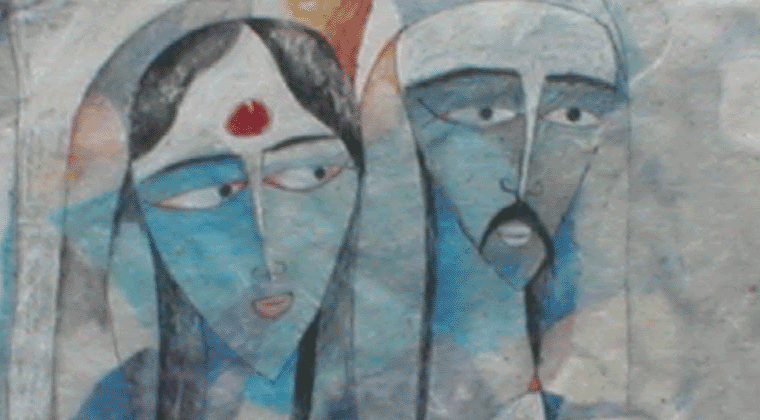
By Dr. Madhuri Bhosale
She has a deep and abiding interest in classical literature and folk art. Her series of paintings inspired by Kalidasa's Raghuvansham, Ritusamharam, Kumarsambhavam and projects a sense of originality.
http://www.himalayaartgallery.com/artist.htm
[ . BACK to WORLDKIGO . TOP . ]
:::::::::::::::::::::::::::::::::::::::::::::::::::::::::::::::::::::::::::::::::::::::::::::::::::::
Rice
[ . BACK to Worldkigo TOP . ]
:::::::::::::::::::::::::::::::::::::::::::::::::::::::::::::::::::::::::::::::::::::::::::::::::::::
Rice plant , Vrihi (Oryza sativa)
***** Location: India
***** Season: Various
***** Category: Plant
*****************************
Explanation
The main entry about the rice plants in Japan is . . .稲 HERE !
:::::::::::::::::::::::::::::::::::::::::::::::::::::::::::::::::::::::::::::::::::::::::::::::::::
The god Shiva called rice Vrihi, in Sanskrit. India is one of the original centres of rice cultivation. The rice harvesting area in India is the world's largest. Indian rice cultivation is found in all states, but West Bengal, Uttar Pradesh, Madhya Pradesh, Orissa and Bihar are the major producing states.
The early Kharif growing season lasts from March-May to June-October; the mid-Kharif season from June-October to November-February, and the Rabi season from November-February to March-June.

About 600 improved varieties of indica rice have been released for cultivation since 1965, but Basmati rice is still planted over large areas. Rice-based production systems provide the main income and employment for more than 50 million households.
Rice is the staple food for 65% of the total population in India. The Indian population was about 1 billion people in 2000 and is still growing at a high rate (1.7% per year). Although the country exports several varieties of rice, many scientists have expressed concern that current Indian rice production techniques cannot sustain the growing domestic population. India has a large number of rice dishes and many of them are very simple to prepare. Indian pilaf rice is very flavourful and fluffy when cooked with Basmati rice.
http://www.fao.org/rice2004/en/p6.htm
*****************************
Worldwide use
*****************************
Things found on the way
Vrihi (Oryza sativa)
Asko Parpola has assumed that the cultivation of rice have spread from the Ganges valley to Swat, Pirak (Kachi plain) and Gujarat during the first quarter of the second millennium BC. He says that the rice undoubtedly came from the Ganges valley, and this suggests a new level of mobility in the North India.
Again he says that, the etymology of the Vedic word for rice does not tally with the Proto-Austro-Asiatic words. Asko Parpola considers that the words for rice in Tamil ( arici) and Sanskrit (vrihi) have failed to demonstrate with any certainty the influences of the Austro- Asiatic loan words on the oldest phase of Indo-Aryan in the northwest.
The meaning of the word Vrihi includes a grain, paddy, and a grain of paddy. It is a varshic crop. Mahavrihi , vrihisrestam are the names of a kind of rice. Vyhreya is that which is related to vrihi. Vyhreyam is the field in which the vrihi is grown. Bahuvrihi is the place where there is plenty of vrihi grain.
Vrihyagaram means a granary.
Read all about it HERE !
. . . A Study on the Origin of the word Vrihi
by Dr. V. Sankaran Nair
*****************************
HAIKU
harvesting rice ~
the long grain
of basmati
harvest time ~
a scarecrow defends
the rice fields
paddy fields ~
a slingshot drives
the crows away
entering her new
home a bride topples
a can of rice grains
a wedding ~
guests sprinkle rice
upon the couple
a belch breaks
the ensuing silence ~
a meal of rice
Gautam Nadkarni, India
xxxxxxxxxxxxxxxxxxxxxxxxxxxxxxxxxxxxxxx
rice field
maidens harvesting
bent like their sickles
wind caresses
the paddy field -
a green wave flows
wedding over
yellow rice on the couple -
a few on me too
B.Vadivelrajan, India
xxxxxxxxxxxxxxxxxxxxxxxxxxxxxxxxxxxxxxx
moonlit paddy field
plants sway their heads in delight;
as vast as the earth
Aju Mukhopadhyay, India, 2007
:::::::::::::::::::::::::::::::::::::::::::::::::::::::::::::::::::::::::::::::::::::::::::::::::::::::
Kharif crops in India
denotes the agricultural crops grown in summer and harvested in autumn season. Major Kharif crops are Paddy, Cotton, Groundnut, Millet, and Sorghum. Besides India, Pakistan and Bangladesh also use these terms to describe their cropping season. The term comes from an Arabic word which means "autumn."
These crops rely on monsoon water for their proper growth.
© More in the WIKIPEDIA !
kharif crops--
slowly the parched lands
turns green
- Shared by Neelam Dadhwal -
Haiku Culture Magazine, 2013
:::::::::::::::::::::::::::::::::::::::::::::::::::::::::::::::::::::::::::::::::::::::::::::::::::::::
Rabi crops in India
denotes the agricultural crops grown in winter and harvested in spring season. Major rabi crops are Wheat, Mustard, Oats, Chickpea, Linseed, Barley. Besides India, Pakistan and Bangladesh also use these terms to describe their cropping season. The term comes from an Arabic word which means "spring."
© More in the WIKIPEDIA !
sowing rabi crop
slips under a farmer's feet
morning cold
- Shared by Neelam Dadhwal -
Haiku Culture Magazine, 2013
*****************************
Related words
***** Rice in Japan and its kigo
*****************************
[ . BACK to WORLDKIGO . TOP . ]
:::::::::::::::::::::::::::::::::::::::::::::::::::::::::::::::::::::::::::::::::::::::::::::::::::::::
:::::::::::::::::::::::::::::::::::::::::::::::::::::::::::::::::::::::::::::::::::::::::::::::::::::
Rice plant , Vrihi (Oryza sativa)
***** Location: India
***** Season: Various
***** Category: Plant
*****************************
Explanation
The main entry about the rice plants in Japan is . . .稲 HERE !
:::::::::::::::::::::::::::::::::::::::::::::::::::::::::::::::::::::::::::::::::::::::::::::::::::
The god Shiva called rice Vrihi, in Sanskrit. India is one of the original centres of rice cultivation. The rice harvesting area in India is the world's largest. Indian rice cultivation is found in all states, but West Bengal, Uttar Pradesh, Madhya Pradesh, Orissa and Bihar are the major producing states.
The early Kharif growing season lasts from March-May to June-October; the mid-Kharif season from June-October to November-February, and the Rabi season from November-February to March-June.

About 600 improved varieties of indica rice have been released for cultivation since 1965, but Basmati rice is still planted over large areas. Rice-based production systems provide the main income and employment for more than 50 million households.
Rice is the staple food for 65% of the total population in India. The Indian population was about 1 billion people in 2000 and is still growing at a high rate (1.7% per year). Although the country exports several varieties of rice, many scientists have expressed concern that current Indian rice production techniques cannot sustain the growing domestic population. India has a large number of rice dishes and many of them are very simple to prepare. Indian pilaf rice is very flavourful and fluffy when cooked with Basmati rice.
http://www.fao.org/rice2004/en/p6.htm
*****************************
Worldwide use
*****************************
Things found on the way
Vrihi (Oryza sativa)
Asko Parpola has assumed that the cultivation of rice have spread from the Ganges valley to Swat, Pirak (Kachi plain) and Gujarat during the first quarter of the second millennium BC. He says that the rice undoubtedly came from the Ganges valley, and this suggests a new level of mobility in the North India.
Again he says that, the etymology of the Vedic word for rice does not tally with the Proto-Austro-Asiatic words. Asko Parpola considers that the words for rice in Tamil ( arici) and Sanskrit (vrihi) have failed to demonstrate with any certainty the influences of the Austro- Asiatic loan words on the oldest phase of Indo-Aryan in the northwest.
The meaning of the word Vrihi includes a grain, paddy, and a grain of paddy. It is a varshic crop. Mahavrihi , vrihisrestam are the names of a kind of rice. Vyhreya is that which is related to vrihi. Vyhreyam is the field in which the vrihi is grown. Bahuvrihi is the place where there is plenty of vrihi grain.
Vrihyagaram means a granary.
Read all about it HERE !
. . . A Study on the Origin of the word Vrihi
by Dr. V. Sankaran Nair
*****************************
HAIKU
harvesting rice ~
the long grain
of basmati
harvest time ~
a scarecrow defends
the rice fields
paddy fields ~
a slingshot drives
the crows away
entering her new
home a bride topples
a can of rice grains
a wedding ~
guests sprinkle rice
upon the couple
a belch breaks
the ensuing silence ~
a meal of rice
Gautam Nadkarni, India
xxxxxxxxxxxxxxxxxxxxxxxxxxxxxxxxxxxxxxx
rice field
maidens harvesting
bent like their sickles
wind caresses
the paddy field -
a green wave flows
wedding over
yellow rice on the couple -
a few on me too
B.Vadivelrajan, India
xxxxxxxxxxxxxxxxxxxxxxxxxxxxxxxxxxxxxxx
moonlit paddy field
plants sway their heads in delight;
as vast as the earth
Aju Mukhopadhyay, India, 2007
:::::::::::::::::::::::::::::::::::::::::::::::::::::::::::::::::::::::::::::::::::::::::::::::::::::::
Kharif crops in India
denotes the agricultural crops grown in summer and harvested in autumn season. Major Kharif crops are Paddy, Cotton, Groundnut, Millet, and Sorghum. Besides India, Pakistan and Bangladesh also use these terms to describe their cropping season. The term comes from an Arabic word which means "autumn."
These crops rely on monsoon water for their proper growth.
© More in the WIKIPEDIA !
kharif crops--
slowly the parched lands
turns green
- Shared by Neelam Dadhwal -
Haiku Culture Magazine, 2013
:::::::::::::::::::::::::::::::::::::::::::::::::::::::::::::::::::::::::::::::::::::::::::::::::::::::
Rabi crops in India
denotes the agricultural crops grown in winter and harvested in spring season. Major rabi crops are Wheat, Mustard, Oats, Chickpea, Linseed, Barley. Besides India, Pakistan and Bangladesh also use these terms to describe their cropping season. The term comes from an Arabic word which means "spring."
© More in the WIKIPEDIA !
sowing rabi crop
slips under a farmer's feet
morning cold
- Shared by Neelam Dadhwal -
Haiku Culture Magazine, 2013
*****************************
Related words
***** Rice in Japan and its kigo
*****************************
[ . BACK to WORLDKIGO . TOP . ]
:::::::::::::::::::::::::::::::::::::::::::::::::::::::::::::::::::::::::::::::::::::::::::::::::::::::
6/01/2006
Chitra Rajappa
[ . BACK to TOP . ]
:::::::::::::::::::::::::::::::::::::::::::::::::::::::::::::::::::::::::::::::::::::::::::::::::::::
Chitra Rajappa
Short Biography
I am a researcher in Computational Chemistry based in Bangalore.
I have an abiding interest in reading poetry and literature.
I came across haiku poetry for the first time in 2002 and have since attempted to write some of my own.
Chitra Rajappa
:::::::::::::::::::::::::::::::::::::::::::::::::::::::::::::::::::::::::::::::::::::::::::::::::::::
Chitra Rajappa penned a poem about thunder in Bangalore, India. Thunder is traditionally a summer season word in haiku because people tend to remain indoors during the heat.
thunderclap
the sleeping newborn
throws up her arms
© Asahi Shimbun Sep 16-17, 2006
ooo ooo ooo ooo ooo ooo ooo ooo ooo ooo ooo ooo
summer afternoon:
a raven and its shadow
weaving through the treetops
© The Heron's Nest
Volume VIII, Number 2: June, 2006.
ooo ooo ooo ooo ooo ooo ooo ooo ooo ooo ooo ooo
new rain shoes;
my daughter asks
will it rain today?
for the June Shiki Kukai, June 2010
*****************************
BACK TO
***** Haiku in India
[ . BACK to WORLDKIGO . TOP . ]
:::::::::::::::::::::::::::::::::::::::::::::::::::::::::::::::::::::::::::::::::::::::::::::::::::::
:::::::::::::::::::::::::::::::::::::::::::::::::::::::::::::::::::::::::::::::::::::::::::::::::::::
Chitra Rajappa
Short Biography
I am a researcher in Computational Chemistry based in Bangalore.
I have an abiding interest in reading poetry and literature.
I came across haiku poetry for the first time in 2002 and have since attempted to write some of my own.
Chitra Rajappa
:::::::::::::::::::::::::::::::::::::::::::::::::::::::::::::::::::::::::::::::::::::::::::::::::::::
Chitra Rajappa penned a poem about thunder in Bangalore, India. Thunder is traditionally a summer season word in haiku because people tend to remain indoors during the heat.
thunderclap
the sleeping newborn
throws up her arms
© Asahi Shimbun Sep 16-17, 2006
ooo ooo ooo ooo ooo ooo ooo ooo ooo ooo ooo ooo
summer afternoon:
a raven and its shadow
weaving through the treetops
© The Heron's Nest
Volume VIII, Number 2: June, 2006.
ooo ooo ooo ooo ooo ooo ooo ooo ooo ooo ooo ooo
new rain shoes;
my daughter asks
will it rain today?
for the June Shiki Kukai, June 2010
*****************************
BACK TO
***** Haiku in India
[ . BACK to WORLDKIGO . TOP . ]
:::::::::::::::::::::::::::::::::::::::::::::::::::::::::::::::::::::::::::::::::::::::::::::::::::::
Parimala Rao
[ . BACK to TOP . ]
:::::::::::::::::::::::::::::::::::::::::::::::::::::::::::::::::::::::::::::::::::::::::::::::::::::
Parimala Rao, Mother
Malini Rao, Daughter

Parimala

Malini
G.R. Parimala Rao - Profile
Mrs. Parimala Rao was born at Kurnool in Andhra Pradesh, India in 1940 and brought up in Bangalore (Karnataka, India). With a deep interest in literature, philosophy and painting, Parimala wrote Kannada verse in her early career and carved a niche for herself as a noted poet in Kannada literature.
More recently she has adopted haiku and other short verse formats and writes in both Kannada and English. She is the first woman writer in India to bring haiku into mainstream Kannada literature.
Now a leading exponent of haiku in India in English as well, she has not just adopted this Japanese poetic style but made her own unique contribution to it by adapting it in free style imbued with surreal imagery laced with spirituality and with a strong under current of Indian sensibility, thus making it truly a world expression.
Randy Brooks, a leading Haiku exponent, publisher and an active member of the Haiku Society of America comments that some of Parimala's work seems dream like, which is `unusual but
interesting for haiku'. Dr. H.N. Ramathirtha, Chairman, Satsang Ghosti, Mysore alludes to the spiritual aspects of here work –`… She gets a message even from a passing cloud. She sees the unknown hand in everything. She is a philosopher and a poetess. She sees spiritual beauty in every object. She sees the changeless in the changing world of names and forms.'
Parimala has also experimented with fusion expressions involving haiku and miniature paintings. While her haiku stump the reader with their brevity, the miniature art amazes the viewer with detail. She has exhibited this collection called `Romance of pen and brush' in
various locations in south India and has received critical acclaim from both the world of art and literature.
Late C.H. Prahlada Rao, a well-known critic and columnist for `The Hindu' (a national newspaper) wrote of Parimala's work – `Of Parimala Rao, it is said she is poetic when she draws and graphic when she composes. In modern parlance, she is a 2 in 1. She is equally devoted to art and poetry. She employs varied imager so that she is fresh all the time. Her images constitute an astonishing procession of ideas frozen in sculpture… There is no doubt about the poetic quality and the bilingual abilities deserve high commendation. Few excel in more than
one language.'
British poet Bernard M. Jackson comments, `Here is an artist who can paint in words, and to whom the whole world is her canvas.'
Parimala Rao pursued a career as a schoolteacher for over 22 years.
Parimala Rao now lives with her husband in Bangalore, India but travels to the United Kingdom and United States every year to spend time with her son and daughter and their families.
Publications in Kannada
1) Mandara Malini, Manorama Press, Chennai, India, 1981
2) Aleya Aalpa, Anika Prakashana, Bangalore, India, 2000
3) Minugu Deepa, Anika Prakashana, Bangalore, India, 2000
4) Antharangayana, Anika Prakashana, Bangalore India, 2003
5) Rutugana, Nava Karnataka Publications, Bangalore, India, 2004
6) Nakshatra Nakkaga, Nava Karnataka Publications, Bangalore, India, 2004
7) Swarna Sampige, Nava Karnataka Publications, Bangalore, India, 2004
8) Zen Beragu, CVG Publications, Bangalore, India, 2006
9) Zen Haiku, CVG Publications, Bangalore, India, 2006
10) GarbhaguDiya Shishu Chetana, CVG Publications, Bangalore, India, 2006
11) Nandanavana, CVG Publications, Bangalore, India, 2006
12) MuttinaamaLe, CVG Publications, Bangalore
13) Jalapatha CVG Publications, Bangalore (under publication)
14) Tripadigalu (under publication)
15) Hanigavanagalu (under publication)
Publications in English
1) Birth of Hope, Anika Prakashana, Bangalore, India, 2000
2) Season's Heart Beat, Anika Prakashana, Bangalore, India, 2003
3) Sharana Sahitya Haiku Gems (under publication)
Also published in 'Still', a journal for short verse, reviews in Indian newspapers and 'Voice and Verse', a UK based poetry journal.
Look at her Website:
www.parimalarao.wordpress.com
:::::::::::::::::::::::::::::::::::::::::::::::::::::::::::::::::::::::::::::::::::::::::::::::::::::
Parimala Rao
Haiga - Where Poetry And Painting Integrate
Nirmala Garimella
If an artistic gene exists, it swirls through the Rao's family's DNA. You can see it in their energy, their focus, their love of the art. It's a fundamental part of who they are. Malini Rao and her mother Parimala Rao have a passion for Haiga, loosely defined as illustrated Haiku where Haiku poetry is combined with Paintings as an art form. Malini's father, G.R. Raghunath Rao is avidly interested in classical music, theatre and philosophy. Inspiration for an artist comes in different ways - a setting, a muse, an experience.
Malini Rao seems to have kept this in mind when she chose the home she currently resides in North Andover. The backyard to her home opens to the lovely Mill Pond that draws an instant breath from a viewer. You cannot but be amazed at the beauty of such a setting.
The story behind this inspiration sounds almost like a tale from an Indian Epic. When Parimala Rao was pregnant, she became fascinated with Haiku, the Japanese style of Poetry and started practicing this form in Kannada. The child growing in her would soon imbibe her mother's interest and passion. Says Parimala Rao with a smile, when we meet her at her daughter's home in North Andover, "It seemed as though she almost heard me from the womb".
Today the two have evolved and established themselves into artists in their own right.
Mother and daughter presented their creative work in local libraries here recently which included books on Haiku authored by the two, beautiful hand made greeting cards with original art and poetry, bookmarks, thank you notes from old photo prints, paintings etc.
Parimala Rao, who is on a visit from India, is a natural artist. She professes that she is untrained and is refreshingly amazed at how her art form is admired. Her talents are varied. She is a painter and writer of Haiku both in Kannada and English. Her spontaneity is evident when she describes how her walk that morning inspired her with an almost Haiku kind of feeling that she will soon transform into verse. Most of the feelings are positive and almost spiritual and rise above the everyday routine life of an individual.
Nature and seasons are a major topic. Her book titled "Seasons Heart Beat" is described as an "astonishing, epoch making event worthy of mention in non Japanese Haiku" by Kazuyosi Ikeda of Osaka University. Parimala Rao says she drew her inspiration from Dwarakanath. H. Kabadi, a poet of international repute. In recent endeavors, her paintings are more highly textured and have seen a marked turn toward abstraction but her love of bright colors in the paintings remain.
Haiku forms the life's blood of both mother and daughter. Parimala Rao and Malini both devote time for pursuing their passion but they differ in their approach. While Parimala Rao , a school teacher for 22 years, poems are extremely positive and have a subtle preaching messages in them, Malini's work is more rooted in reality, in relationships and issues closest to her heart.
"We sort of inspire and critique each other's work" says Malini, "It's because we both have a tremendous amount of respect for each of our abilities. Both of us like to experiment with the art form when it comes to the topics that we chose".
Taking time tested haiku elements with new topics, techniques, and textures, the two have created a totally compelling and novel art form that pays homage to both the old and the new.
© www.lokvani.com/ 2004
Kannada poetry, India. Wikipedia
*****************************
BACK TO
***** Haiku Poets from India Index
*****************************
THE INDIA SAIJIKI
Back to the Worldkigo Index
:::::::::::::::::::::::::::::::::::::::::::::::::::::::::::::::::::::::::::::::::::::::::::::::::::::
Parimala Rao, Mother
Malini Rao, Daughter
Parimala
Malini
G.R. Parimala Rao - Profile
Mrs. Parimala Rao was born at Kurnool in Andhra Pradesh, India in 1940 and brought up in Bangalore (Karnataka, India). With a deep interest in literature, philosophy and painting, Parimala wrote Kannada verse in her early career and carved a niche for herself as a noted poet in Kannada literature.
More recently she has adopted haiku and other short verse formats and writes in both Kannada and English. She is the first woman writer in India to bring haiku into mainstream Kannada literature.
Now a leading exponent of haiku in India in English as well, she has not just adopted this Japanese poetic style but made her own unique contribution to it by adapting it in free style imbued with surreal imagery laced with spirituality and with a strong under current of Indian sensibility, thus making it truly a world expression.
Randy Brooks, a leading Haiku exponent, publisher and an active member of the Haiku Society of America comments that some of Parimala's work seems dream like, which is `unusual but
interesting for haiku'. Dr. H.N. Ramathirtha, Chairman, Satsang Ghosti, Mysore alludes to the spiritual aspects of here work –`… She gets a message even from a passing cloud. She sees the unknown hand in everything. She is a philosopher and a poetess. She sees spiritual beauty in every object. She sees the changeless in the changing world of names and forms.'
Parimala has also experimented with fusion expressions involving haiku and miniature paintings. While her haiku stump the reader with their brevity, the miniature art amazes the viewer with detail. She has exhibited this collection called `Romance of pen and brush' in
various locations in south India and has received critical acclaim from both the world of art and literature.
Late C.H. Prahlada Rao, a well-known critic and columnist for `The Hindu' (a national newspaper) wrote of Parimala's work – `Of Parimala Rao, it is said she is poetic when she draws and graphic when she composes. In modern parlance, she is a 2 in 1. She is equally devoted to art and poetry. She employs varied imager so that she is fresh all the time. Her images constitute an astonishing procession of ideas frozen in sculpture… There is no doubt about the poetic quality and the bilingual abilities deserve high commendation. Few excel in more than
one language.'
British poet Bernard M. Jackson comments, `Here is an artist who can paint in words, and to whom the whole world is her canvas.'
Parimala Rao pursued a career as a schoolteacher for over 22 years.
Parimala Rao now lives with her husband in Bangalore, India but travels to the United Kingdom and United States every year to spend time with her son and daughter and their families.
Publications in Kannada
1) Mandara Malini, Manorama Press, Chennai, India, 1981
2) Aleya Aalpa, Anika Prakashana, Bangalore, India, 2000
3) Minugu Deepa, Anika Prakashana, Bangalore, India, 2000
4) Antharangayana, Anika Prakashana, Bangalore India, 2003
5) Rutugana, Nava Karnataka Publications, Bangalore, India, 2004
6) Nakshatra Nakkaga, Nava Karnataka Publications, Bangalore, India, 2004
7) Swarna Sampige, Nava Karnataka Publications, Bangalore, India, 2004
8) Zen Beragu, CVG Publications, Bangalore, India, 2006
9) Zen Haiku, CVG Publications, Bangalore, India, 2006
10) GarbhaguDiya Shishu Chetana, CVG Publications, Bangalore, India, 2006
11) Nandanavana, CVG Publications, Bangalore, India, 2006
12) MuttinaamaLe, CVG Publications, Bangalore
13) Jalapatha CVG Publications, Bangalore (under publication)
14) Tripadigalu (under publication)
15) Hanigavanagalu (under publication)
Publications in English
1) Birth of Hope, Anika Prakashana, Bangalore, India, 2000
2) Season's Heart Beat, Anika Prakashana, Bangalore, India, 2003
3) Sharana Sahitya Haiku Gems (under publication)
Also published in 'Still', a journal for short verse, reviews in Indian newspapers and 'Voice and Verse', a UK based poetry journal.
Look at her Website:
www.parimalarao.wordpress.com
:::::::::::::::::::::::::::::::::::::::::::::::::::::::::::::::::::::::::::::::::::::::::::::::::::::
Parimala Rao
Haiga - Where Poetry And Painting Integrate
Nirmala Garimella
If an artistic gene exists, it swirls through the Rao's family's DNA. You can see it in their energy, their focus, their love of the art. It's a fundamental part of who they are. Malini Rao and her mother Parimala Rao have a passion for Haiga, loosely defined as illustrated Haiku where Haiku poetry is combined with Paintings as an art form. Malini's father, G.R. Raghunath Rao is avidly interested in classical music, theatre and philosophy. Inspiration for an artist comes in different ways - a setting, a muse, an experience.
Malini Rao seems to have kept this in mind when she chose the home she currently resides in North Andover. The backyard to her home opens to the lovely Mill Pond that draws an instant breath from a viewer. You cannot but be amazed at the beauty of such a setting.
The story behind this inspiration sounds almost like a tale from an Indian Epic. When Parimala Rao was pregnant, she became fascinated with Haiku, the Japanese style of Poetry and started practicing this form in Kannada. The child growing in her would soon imbibe her mother's interest and passion. Says Parimala Rao with a smile, when we meet her at her daughter's home in North Andover, "It seemed as though she almost heard me from the womb".
Today the two have evolved and established themselves into artists in their own right.
Mother and daughter presented their creative work in local libraries here recently which included books on Haiku authored by the two, beautiful hand made greeting cards with original art and poetry, bookmarks, thank you notes from old photo prints, paintings etc.
Parimala Rao, who is on a visit from India, is a natural artist. She professes that she is untrained and is refreshingly amazed at how her art form is admired. Her talents are varied. She is a painter and writer of Haiku both in Kannada and English. Her spontaneity is evident when she describes how her walk that morning inspired her with an almost Haiku kind of feeling that she will soon transform into verse. Most of the feelings are positive and almost spiritual and rise above the everyday routine life of an individual.
Nature and seasons are a major topic. Her book titled "Seasons Heart Beat" is described as an "astonishing, epoch making event worthy of mention in non Japanese Haiku" by Kazuyosi Ikeda of Osaka University. Parimala Rao says she drew her inspiration from Dwarakanath. H. Kabadi, a poet of international repute. In recent endeavors, her paintings are more highly textured and have seen a marked turn toward abstraction but her love of bright colors in the paintings remain.
Haiku forms the life's blood of both mother and daughter. Parimala Rao and Malini both devote time for pursuing their passion but they differ in their approach. While Parimala Rao , a school teacher for 22 years, poems are extremely positive and have a subtle preaching messages in them, Malini's work is more rooted in reality, in relationships and issues closest to her heart.
"We sort of inspire and critique each other's work" says Malini, "It's because we both have a tremendous amount of respect for each of our abilities. Both of us like to experiment with the art form when it comes to the topics that we chose".
Taking time tested haiku elements with new topics, techniques, and textures, the two have created a totally compelling and novel art form that pays homage to both the old and the new.
© www.lokvani.com/ 2004
Kannada poetry, India. Wikipedia
*****************************
BACK TO
***** Haiku Poets from India Index
*****************************
THE INDIA SAIJIKI
Back to the Worldkigo Index
Ramesh Kaniparambil
[ . BACK to TOP . ]
:::::::::::::::::::::::::::::::::::::::::::::::::::::::::::::::::::::::::::::::::::::::::::::::::::::
Kaniparambil Ramesh
K. Ramesh (K for Kaniparambil) writes haiku, tanka and free verse.
His poems have appeared in Still, Frogpond, Mayfly, The Heron's Nest, Haiku Presence, Snapshots, Paper Wasp, Acorn, Lynx, Bottle Rockets, American Tanka, Haiku Novine, Asahi, Mainichi Daily News, Tinywords, Modern Haiku (accepted for publication) and in other magazines that publish short poetry.
Some of his works have appeared in the following anthologies : 'Pegging The Wind', published by the Red Moon Press and in 'Wild flowers & New Leaves', an anthology brought out by the World Haiku Club.
He works as a teacher in a J Krishnamurti school in Chennai, India.
Email : aniram86 .....
:::::::::::::::::::::::::::::::::::::::::::::::::::::::::::::::::::::::::::::::::::::::::::::::::::::
Haiku: Art of Perception
K. Ramesh The School, Chennai, India
At the outset, I would like to explore the meaning of the word 'communion', which Krishnamurti often used in his writing. One of the meanings offered by the dictionary is 'fellowship with others'.Years ago, when I started reading K's books, apart from the psychological insights, I was enthralled by the sheer beauty of his description of the natural world. The description revealed to me his keen sense of perception, his love of nature and his deep sensitivity. I also felt that his writing was not just a mere description of the physical world, but had a transcendental quality, and his words had a certain freshness. I began to understand the implication of the meaning of the word 'communion', and this communion with nature became very important to me.
Read the full article here:
© Krishnamurti Foundation India. All rights reserved.
WKD Library Nr. 153
:::::::::::::::::::::::::::::::::::::::::::::::::::::::::::::::::::::::::::::::::::::::::::::::::::::
............................ Haiku and Tanka
friend's house-
I make tea
for both of us
(Mayfly)
starlit sky-
I touch a turtle before
it enters the sea
(The Heron's Nest, Editor's choice 2004)
dawn...
a cuckoo's call deepens
the silence
(Acorn)
a village asleep-
moonlit lanes
between the houses
(Haiku Presence)
leafless tree-
...the sea
visible again
(Haiku Novine)
twilight...
a boy brings down
his kite
Runners up, Blyth Award, World Haiku Club
monday morning-
a bird escapes from
the cat's grip
Frogpond fall issue 2005
searching for coins
in my pocket-
red seeds
collected by
my little daughter
(American Tanka issue 11)
:::::::::::::::::::::::::::::::::::::::::::::::::::::::::::::::::::::::::::::::::::::::::::::::::::::
August 2007
Recently Red Moon Press published his first collection of haiku titled, Soap bubbles. The book includes ninety poems which have appeared in international haiku journals:
Title : Soap Bubbles
Publisher: Red Moon Press
ISBN : 978-1-893959-63-7
Edited by: Jim Kacian
Art work on the covers by Dr Angelee Deodhar
Introduction/preface by Christopher Herold
Comments on the cover:
"These are poems about edges of things;the dawn and dusks, the curve of a water jug, the ocean shore. That these poems from India are so immediately available to readers around the world speaks movingly of the power of the tiny haiku in the hands of a true communicator."
John Stevenson
(Editor, Frogpond)
*****************************
***** Back to Haiku in India
[ . BACK to WORLDKIGO . TOP . ]
:::::::::::::::::::::::::::::::::::::::::::::::::::::::::::::::::::::::::::::::::::::::::::::::::::::
:::::::::::::::::::::::::::::::::::::::::::::::::::::::::::::::::::::::::::::::::::::::::::::::::::::
Kaniparambil Ramesh
K. Ramesh (K for Kaniparambil) writes haiku, tanka and free verse.
His poems have appeared in Still, Frogpond, Mayfly, The Heron's Nest, Haiku Presence, Snapshots, Paper Wasp, Acorn, Lynx, Bottle Rockets, American Tanka, Haiku Novine, Asahi, Mainichi Daily News, Tinywords, Modern Haiku (accepted for publication) and in other magazines that publish short poetry.
Some of his works have appeared in the following anthologies : 'Pegging The Wind', published by the Red Moon Press and in 'Wild flowers & New Leaves', an anthology brought out by the World Haiku Club.
He works as a teacher in a J Krishnamurti school in Chennai, India.
Email : aniram86 .....
:::::::::::::::::::::::::::::::::::::::::::::::::::::::::::::::::::::::::::::::::::::::::::::::::::::
Haiku: Art of Perception
K. Ramesh The School, Chennai, India
At the outset, I would like to explore the meaning of the word 'communion', which Krishnamurti often used in his writing. One of the meanings offered by the dictionary is 'fellowship with others'.Years ago, when I started reading K's books, apart from the psychological insights, I was enthralled by the sheer beauty of his description of the natural world. The description revealed to me his keen sense of perception, his love of nature and his deep sensitivity. I also felt that his writing was not just a mere description of the physical world, but had a transcendental quality, and his words had a certain freshness. I began to understand the implication of the meaning of the word 'communion', and this communion with nature became very important to me.
Read the full article here:
© Krishnamurti Foundation India. All rights reserved.
WKD Library Nr. 153
:::::::::::::::::::::::::::::::::::::::::::::::::::::::::::::::::::::::::::::::::::::::::::::::::::::
............................ Haiku and Tanka
friend's house-
I make tea
for both of us
(Mayfly)
starlit sky-
I touch a turtle before
it enters the sea
(The Heron's Nest, Editor's choice 2004)
dawn...
a cuckoo's call deepens
the silence
(Acorn)
a village asleep-
moonlit lanes
between the houses
(Haiku Presence)
leafless tree-
...the sea
visible again
(Haiku Novine)
twilight...
a boy brings down
his kite
Runners up, Blyth Award, World Haiku Club
monday morning-
a bird escapes from
the cat's grip
Frogpond fall issue 2005
searching for coins
in my pocket-
red seeds
collected by
my little daughter
(American Tanka issue 11)
:::::::::::::::::::::::::::::::::::::::::::::::::::::::::::::::::::::::::::::::::::::::::::::::::::::
August 2007
Recently Red Moon Press published his first collection of haiku titled, Soap bubbles. The book includes ninety poems which have appeared in international haiku journals:
Title : Soap Bubbles
Publisher: Red Moon Press
ISBN : 978-1-893959-63-7
Edited by: Jim Kacian
Art work on the covers by Dr Angelee Deodhar
Introduction/preface by Christopher Herold
Comments on the cover:
"These are poems about edges of things;the dawn and dusks, the curve of a water jug, the ocean shore. That these poems from India are so immediately available to readers around the world speaks movingly of the power of the tiny haiku in the hands of a true communicator."
John Stevenson
(Editor, Frogpond)
*****************************
***** Back to Haiku in India
[ . BACK to WORLDKIGO . TOP . ]
:::::::::::::::::::::::::::::::::::::::::::::::::::::::::::::::::::::::::::::::::::::::::::::::::::::
Radhey Shiam
[ . BACK to TOP . ]
:::::::::::::::::::::::::::::::::::::::::::::::::::::::::::::::::::::::::::::::::::::::::::::::::::::
Radhey Shiam
*****************************
Poet
Radhey Shiam resides in Inda, with his wife. He is an artist/writer of noble lineage and Ghandian thinking. His spiritual parents instilled in him a love for literature, strong work ethics and an inherent interest in his country’s struggle for freedom.
Considered one of the top ten Haikukars of India, Radhey contributes to Hindi and Urdu publications. Besides Haiku, his favorite metres are Tanka, Sadoka, Senru and Choka.

© radheyshiam.lifeartz.com
:::::::::::::::::::::::::::::::::::::::::::::::::::::::::::::::::::::::::::::::::::::::::::::::::::::
Song of Life
I.S.B.N: 81-7276-312-3
About the book:
The book presents the essence of life in a practical manner. It unravels the mysteries of life, soul religion and answers questions, provides tips .The songs are portrayed with sketches from the common life and generates good spiritual currents within to produce tranquillity of mind.
More details:
There are over a hundred songs of various topics and subjects. Ranging from emotions to nature to God, the songs have great indepth feelings which perhaps only those with a poetic bent of mind may be able to understand, appreciate and love. The songs are poetical and charming.
http://www.bhavans.info/store/bookdetail.asp?bid=449&bauth=Radhey%20Shiam
Reviews
It is helpful to those struggling with variations of life, darkness of delusion, mysteries of myths, rituals, faiths and belief etc.It is a book for every thinking person, aspirant of divine life, most valuable to beginners for spiritual practice in everyday life.
http://www.bhavans.info/store/reviewcontents.asp?rid=23&bid=449&bauth=Radhey%20Shiam
For those who crave for divine life 'SONG OF LIFE' by Radhey Shiam is reading pleasure, leading one to harmonious living. It contains no direct and dry discussions on any religion, either of the East or of the West, but answers most of the philosophical riddles confronting the seeker as well as gives clear and beautiful word pictures of conceptions and doctrines of religions, leading one to the realization of the ultimate truth in its simple and unique style, rarely seen. The book presents essence of life in a picturesque style. 'Ye Hark. Life if not a bubble, but the very water of endless ocean ever roaring and ever rolling with a joyous and eternal ease. It is not a spark but the very flame of the eternal fire that warms up the universe.'
http://www.atributetohinduism.com/guestbook4.htm
*****************************
HAIKU
last ball four runs
a sixer
excited loud applause
http://haiku.cc.ehime-u.ac.jp/nobo/20041121/11841.html
:::::::::::::::::::::::::::::::::::::::::::::::::::::::::::::::::::::::::::::::::::::::::::::::::::::
.................. SILENCE
midnight
rat gnaws book pages
deep silence
fall leaves
move along with silence
of rippling currents
a trail of light
disappears into silence
of starry splendour
silence awake
mind asleep
I romance with peace
flowers fade away
one by one
In deep silence
star winkle
midnight blue
deep silence
.................. Silence (Maun)
garden of silence
wisdom flowers
fragrance of joyous ease
silence a rare art
of wise conversation
in galaxy of art
sweetness of silence
essence of all goodness
brighten consciousness
Himalaya's speaking silence
reveals eternal truth
in solemn silence
space of silence
galaxy of imaginations
luminous stars creations
silence
a wordless wonder
the voice of god
See : Silence (maun)
:::::::::::::::::::::::::::::::::::::::::::::::::::::::::::::::::::::::::::::::::::::::::::::::::::::
Back to
The Haiku Scene of India
*****************************
THE INDIA SAIJIKI
Back to the Worldkigo Index
:::::::::::::::::::::::::::::::::::::::::::::::::::::::::::::::::::::::::::::::::::::::::::::::::::::
Radhey Shiam
*****************************
Poet
Radhey Shiam resides in Inda, with his wife. He is an artist/writer of noble lineage and Ghandian thinking. His spiritual parents instilled in him a love for literature, strong work ethics and an inherent interest in his country’s struggle for freedom.
Considered one of the top ten Haikukars of India, Radhey contributes to Hindi and Urdu publications. Besides Haiku, his favorite metres are Tanka, Sadoka, Senru and Choka.
© radheyshiam.lifeartz.com
:::::::::::::::::::::::::::::::::::::::::::::::::::::::::::::::::::::::::::::::::::::::::::::::::::::
Song of Life
I.S.B.N: 81-7276-312-3
About the book:
The book presents the essence of life in a practical manner. It unravels the mysteries of life, soul religion and answers questions, provides tips .The songs are portrayed with sketches from the common life and generates good spiritual currents within to produce tranquillity of mind.
More details:
There are over a hundred songs of various topics and subjects. Ranging from emotions to nature to God, the songs have great indepth feelings which perhaps only those with a poetic bent of mind may be able to understand, appreciate and love. The songs are poetical and charming.
http://www.bhavans.info/store/bookdetail.asp?bid=449&bauth=Radhey%20Shiam
Reviews
It is helpful to those struggling with variations of life, darkness of delusion, mysteries of myths, rituals, faiths and belief etc.It is a book for every thinking person, aspirant of divine life, most valuable to beginners for spiritual practice in everyday life.
http://www.bhavans.info/store/reviewcontents.asp?rid=23&bid=449&bauth=Radhey%20Shiam
For those who crave for divine life 'SONG OF LIFE' by Radhey Shiam is reading pleasure, leading one to harmonious living. It contains no direct and dry discussions on any religion, either of the East or of the West, but answers most of the philosophical riddles confronting the seeker as well as gives clear and beautiful word pictures of conceptions and doctrines of religions, leading one to the realization of the ultimate truth in its simple and unique style, rarely seen. The book presents essence of life in a picturesque style. 'Ye Hark. Life if not a bubble, but the very water of endless ocean ever roaring and ever rolling with a joyous and eternal ease. It is not a spark but the very flame of the eternal fire that warms up the universe.'
http://www.atributetohinduism.com/guestbook4.htm
*****************************
HAIKU
last ball four runs
a sixer
excited loud applause
http://haiku.cc.ehime-u.ac.jp/nobo/20041121/11841.html
:::::::::::::::::::::::::::::::::::::::::::::::::::::::::::::::::::::::::::::::::::::::::::::::::::::
.................. SILENCE
midnight
rat gnaws book pages
deep silence
fall leaves
move along with silence
of rippling currents
a trail of light
disappears into silence
of starry splendour
silence awake
mind asleep
I romance with peace
flowers fade away
one by one
In deep silence
star winkle
midnight blue
deep silence
.................. Silence (Maun)
garden of silence
wisdom flowers
fragrance of joyous ease
silence a rare art
of wise conversation
in galaxy of art
sweetness of silence
essence of all goodness
brighten consciousness
Himalaya's speaking silence
reveals eternal truth
in solemn silence
space of silence
galaxy of imaginations
luminous stars creations
silence
a wordless wonder
the voice of god
See : Silence (maun)
:::::::::::::::::::::::::::::::::::::::::::::::::::::::::::::::::::::::::::::::::::::::::::::::::::::
Back to
The Haiku Scene of India
*****************************
THE INDIA SAIJIKI
Back to the Worldkigo Index
Rain
[ . BACK to Worldkigo TOP . ]
:::::::::::::::::::::::::::::::::::::::::::::::::::::::::::::::::::::::::::::::::::::::::::::::::::::
Rain
***** Location: India
***** Season: Non-seasonal Topic
***** Category: Heavens
*****************************
Explanation
The use of the word RAIN in various kigo is explained here:
World Kigo Database
RAIN in various kigo .
*****************************
Worldwide use
*****************************
Things found on the way
*****************************
HAIKU
RAIN Haiku by Narayanan Raghunathan
from Photo Haiku Gallery
Ah! Azra, blue sky
clouds melt in summer drizzle" ~
"these damn wires!" ~
Azra ~ Light ~ Name Of A Woman ~ (Arabic)
-( Feb. 25, 2002)
http://home.alc.co.jp/db/owa/PH_detail?photo_sn_in=804
an orange pylon ~
giant lizard crawls out
into a summer drizzle ~
- ( Nov. 30, 2004)
summer drizzle ~
mountains weave dreams
in melody space
- ( Jul. 22, 2005)
the autumn rain
dissolves the world
into abstraction ~
- ( Jul. 15, 2003)
the rain ceases ~
the first butterfly arrives
in sunlight music ~
- ( Jul. 28, 2003)
[ This of course has butterfly as the kigo.]
autumn rain ~
young lovers dance
spring rhythms
- ( Oct. 02, 2003)
autumn leaves gently
fall with the autumn rains
a child's distant cry ~
- ( Jul. 30, 2004)
birds nest in
a dilapidated kitchen ~
frogs croak in
summer rain ~
- ( Aug. 18, 2004)
drenched in rain
we reach the cottage ~
coffee and cookies ~
- ( Sep. 13, 2004)
outside the gate
the summer rain ~ aroma
of fresh bread ~
- ( Sep. 13, 2004)
the street floats
inverted on the river
summer rain-drops ~
- ( Oct. 01, 2004)
a rain drop
on a summer leaf ~
an ant surveys
- ( Sep. 11, 2005)
...............
Rain Haiku from other authors in the Photo Gallery
autumn drizzle...
on this old bare head
today's blessing -
Larry Bole ( Nov. 06, 2003)
December drizzle
neon lights skipping into
color puddles
agneseva ( Feb. 10, 2004)
http://home.alc.co.jp/db/owa/PH_detail?photo_sn_in=1317
xxxxxxxxxxxxxxxxxxxxxxxxxxxxx
More Monsoon Haiku by Narayanan
:::::::::::::::::::::::::::::::::::::::::::::::::::::::::::::::::::::::::::::::::::::::::::::::::::::
Kala Ramesh
The Touch of Rain in Haiku
cyclonic rains
coconut leaves dip
into streetlights
Read the full essay here :
source : Muse India Summer 2012
*****************************
Related words
***** World Kigo Database: Rain in various Kigo
***** MONSOON
[ . BACK to WORLDKIGO . TOP . ]
:::::::::::::::::::::::::::::::::::::::::::::::::::::::::::::::::::::::::::::::::::::::::::::::::::::
:::::::::::::::::::::::::::::::::::::::::::::::::::::::::::::::::::::::::::::::::::::::::::::::::::::
Rain
***** Location: India
***** Season: Non-seasonal Topic
***** Category: Heavens
*****************************
Explanation
The use of the word RAIN in various kigo is explained here:
World Kigo Database
RAIN in various kigo .
*****************************
Worldwide use
*****************************
Things found on the way
*****************************
HAIKU
RAIN Haiku by Narayanan Raghunathan
from Photo Haiku Gallery
Ah! Azra, blue sky
clouds melt in summer drizzle" ~
"these damn wires!" ~
Azra ~ Light ~ Name Of A Woman ~ (Arabic)
-( Feb. 25, 2002)
http://home.alc.co.jp/db/owa/PH_detail?photo_sn_in=804
an orange pylon ~
giant lizard crawls out
into a summer drizzle ~
- ( Nov. 30, 2004)
summer drizzle ~
mountains weave dreams
in melody space
- ( Jul. 22, 2005)
the autumn rain
dissolves the world
into abstraction ~
- ( Jul. 15, 2003)
the rain ceases ~
the first butterfly arrives
in sunlight music ~
- ( Jul. 28, 2003)
[ This of course has butterfly as the kigo.]
autumn rain ~
young lovers dance
spring rhythms
- ( Oct. 02, 2003)
autumn leaves gently
fall with the autumn rains
a child's distant cry ~
- ( Jul. 30, 2004)
birds nest in
a dilapidated kitchen ~
frogs croak in
summer rain ~
- ( Aug. 18, 2004)
drenched in rain
we reach the cottage ~
coffee and cookies ~
- ( Sep. 13, 2004)
outside the gate
the summer rain ~ aroma
of fresh bread ~
- ( Sep. 13, 2004)
the street floats
inverted on the river
summer rain-drops ~
- ( Oct. 01, 2004)
a rain drop
on a summer leaf ~
an ant surveys
- ( Sep. 11, 2005)
...............
Rain Haiku from other authors in the Photo Gallery
autumn drizzle...
on this old bare head
today's blessing -
Larry Bole ( Nov. 06, 2003)
December drizzle
neon lights skipping into
color puddles
agneseva ( Feb. 10, 2004)
http://home.alc.co.jp/db/owa/PH_detail?photo_sn_in=1317
xxxxxxxxxxxxxxxxxxxxxxxxxxxxx
More Monsoon Haiku by Narayanan
:::::::::::::::::::::::::::::::::::::::::::::::::::::::::::::::::::::::::::::::::::::::::::::::::::::
Kala Ramesh
The Touch of Rain in Haiku
cyclonic rains
coconut leaves dip
into streetlights
Read the full essay here :
source : Muse India Summer 2012
*****************************
Related words
***** World Kigo Database: Rain in various Kigo
***** MONSOON
[ . BACK to WORLDKIGO . TOP . ]
:::::::::::::::::::::::::::::::::::::::::::::::::::::::::::::::::::::::::::::::::::::::::::::::::::::
Subscribe to:
Comments (Atom)


 Posts
Posts


